
Which ant you have decides everything else
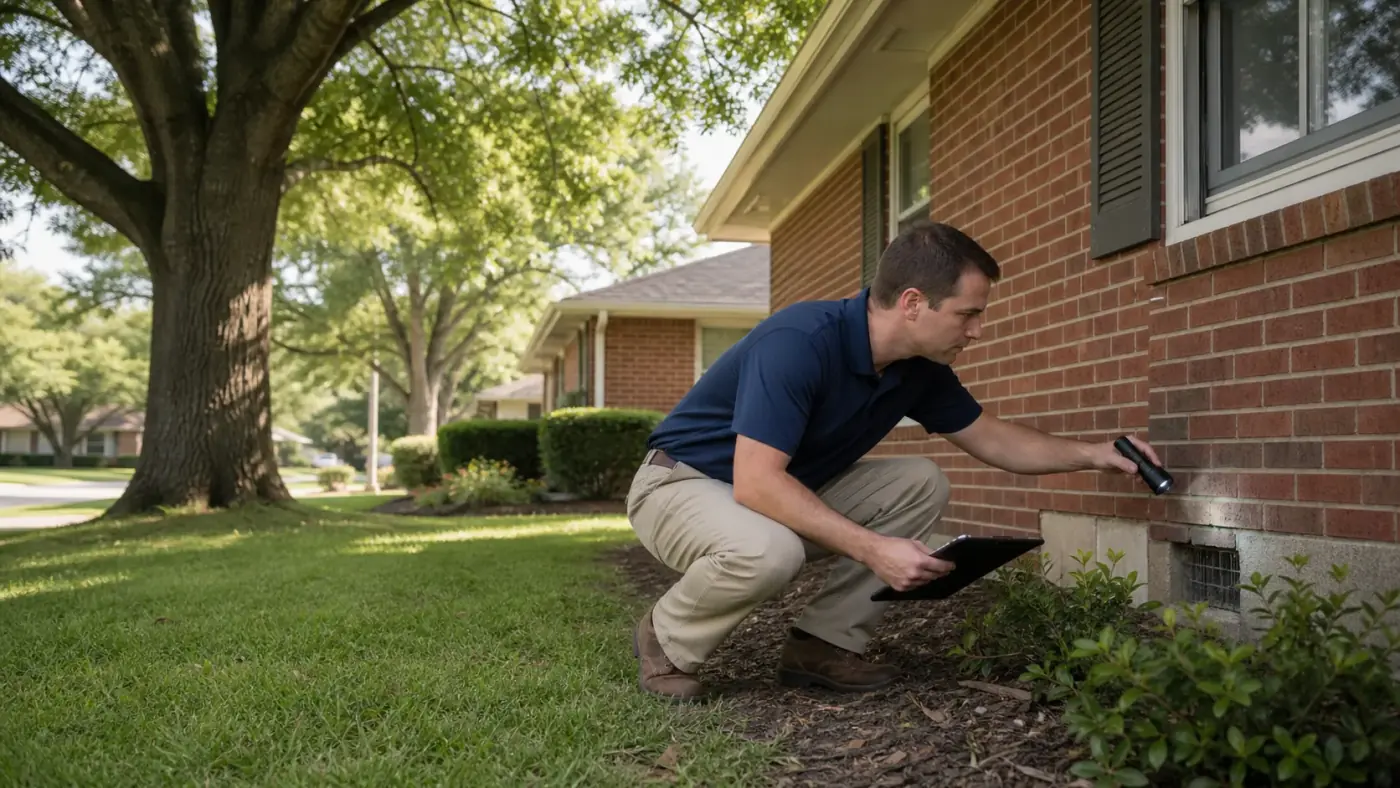
Dozens of ant species turn up around homes and each changes the method, which is why University of Kentucky extension entomologists tell householders to collect a few wingless workers in a vial before anyone treats. Pavement ants surrender to almost any bait. Odorous house ants shrug several off. Carpenter ants are a moisture problem wearing an insect costume.
| Ant | What you notice | What it means |
|---|---|---|
| Odorous house ant | An eighth of an inch, blackish, hard trails along counters; smells like rotten coconut when crushed | Many queens, colonies that split and relocate fast. Sweet gel baits and no spraying the trail |
| Pavement ant | Two visible nodes at the waist, grooves on the head; pushes soil out from under driveways and slabs | The good news ant. Responds to most baits and a treated perimeter |
| Carpenter ant | Three eighths to half an inch, black or red and black, single node, rounded thorax; sawdust piles nearby | Damp or decayed wood somewhere. Find the leak before buying treatment |
| Acrobat ant | Heart shaped abdomen raised over the body when disturbed; found around damaged wood and insulation | Usually a void or moisture issue along a roofline or wall cavity |
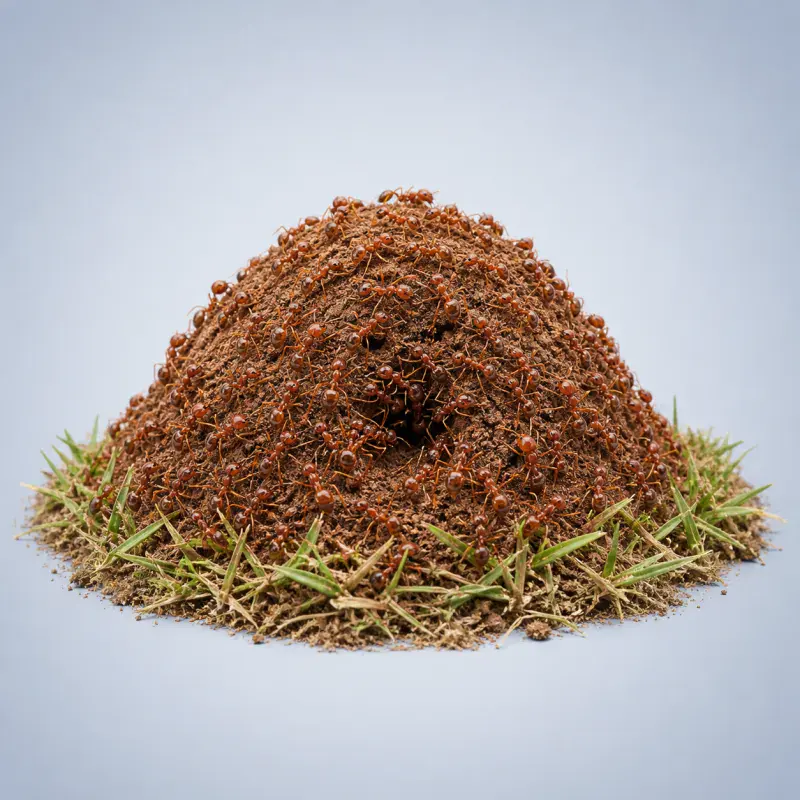
| Red imported fire ant | Dome shaped mounds with no central opening; the colony boils out and stings when disturbed | A stinging hazard, not a nuisance. Get it confirmed |
Fire ants in Oklahoma: what is established and where
Red imported fire ants are established in southeastern Oklahoma, not statewide, and the boundary moves. The Oklahoma Department of Agriculture, Food and Forestry says the species arrived around the 1930s and now infests more than 260 million acres across eleven southeastern states, including all or portions of Arkansas, Texas and Oklahoma. The United States Department of Agriculture Animal and Plant Health Inspection Service maintains a federal quarantine because of it.
The quarantine explains how fire ants travel. Regulated items include soil, grass sod, nursery stock with soil attached, used soil moving equipment, and baled hay stored in contact with the ground. ODAFF and Oklahoma State University Extension survey suspect sites with bait tubes, set out when temperatures sit between 65 and 95 degrees, since fire ants go quiet outside that window.
Quarantined county lists change, so do not assume your address is in or out based on a map you found online. If you have a stinging mound in your yard, have the ant identified. Plenty of Green Country mounds turn out to be something else entirely.
Winged ants versus termite swarmers
A cloud of winged insects indoors in spring is either a mature ant colony or a termite colony, and telling them apart takes five seconds with a specimen. University of Kentucky extension entomologists give three checks. An ant has a pinched wasp like waist, while a termite is the same width end to end. An ant's front wings are longer than its hind wings, while a termite's four wings match. And an ant's antennae are elbowed, while a termite's run straight.
The distinction matters financially. Winged ants indoors mean a nest somewhere in the structure and rarely mean damage. Swarming termites mean an active colony feeding on wood, worth acting on the same week. If your specimen has straight antennae and four equal wings, stop reading about ants and look at termite control instead.
Why ant control in Tulsa means baiting, not chasing trails
Spraying the ants you can see is the classic mistake, because foragers on a countertop are a fraction of a colony holding thousands of workers and one or more egg laying queens hidden in a wall void, under a slab or beneath the mulch outside. University of Kentucky extension guidance is direct: eliminating the queens is the whole job, and bait is what reaches them.
Bait works by being carried home. A worker feeds and shares it with the colony, which is why day one after placement looks like a disaster. You see more ants, not fewer, clustered on the bait. Do not spray them. That crowd is the delivery system working, and activity normally drops within a few days.
- Place bait beside the trail, never on top of it, and leave the trail intact so workers keep using it.
- Do not spray insecticide or wipe cleaner near the bait, since either will make ants avoid it.
- If one bait gets ignored, switch. Ants change food preference through the season, and sweet gels tend to work best on odorous house ants.
- Outdoor mounds and below ground nests can be drenched directly, which is a different job from indoor baiting.
- Blanket granular treatments across a whole yard are not recommended and almost never solve an indoor problem.
Spring swarms and the march indoors after rain
Two predictable surges hit Tulsa houses. The first is spring reproduction, when colonies produce winged swarmers; carpenter ants in particular mate from late May into early June, and a burst of winged adults inside means a nest is in the structure rather than passing through. The second is weather. Odorous house ant colonies relocate quickly in response to changes in weather and disturbance, so a heavy Oklahoma downpour that floods shallow nests under mulch and pavers pushes them toward the dry, warm building next to it.
What you control between visits is the invitation. Trim shrubs so nothing touches siding, pull mulch back from the foundation, seal gaps at door thresholds and where pipes enter, fix the drip under the kitchen sink, and get pet food off the floor overnight. Ants feeding on aphid honeydew in your landscaping will keep working the plants, but they will stop coming inside.
Typical ant pricing in the Tulsa market
These are ranges commonly seen across the Tulsa metro, not quotes. The species and where the nest sits move the price more than square footage.
- One time interior and perimeter ant treatment: roughly $150 to $300.
- Quarterly service that includes ants: roughly $100 to $175 per visit, often with a higher initial visit.
- Carpenter ant job with void treatment and moisture inspection: roughly $250 to $600.
- Fire ant mound treatment or yard broadcast bait: roughly $100 to $250 depending on acreage.
- Follow up visit inside the warranty window: usually included, so ask before you sign.
Ask whether the plan is bait based or spray based, and whether a return visit is included if ants come back inside thirty days. Every pest control business and applicator in Oklahoma is licensed through the Oklahoma Department of Agriculture, Food and Forestry, so requesting a license number is reasonable. The companies in our network are independent and licensed, and calls route by ZIP code across Tulsa, Owasso and Sapulpa. If the same kitchen has ants and roaches, bundle it with cockroach control.
How the call works
- Describe the problem. A recluse in a shoe, termite swarmers on a window sill, ticks coming in on the dog. A sentence or two is plenty.
- Get routed by ZIP code. The call lands with an independent, licensed company that already services your neighborhood, whether that is midtown Tulsa or Claremore.
- Set the appointment. Most companies can give you an inspection or treatment window before you hang up.
Whether a same-day or 24/7 visit is possible comes down to provider participation in your area, technician availability and demand on that day. It is never guaranteed, and open slots vary by market and by how full the schedule already is.
Frequently asked questions
Are there fire ants in Tulsa?
Red imported fire ants are established in southeastern Oklahoma under a federal quarantine, and the affected county list changes over time, so treat any Tulsa area sighting as something to confirm rather than assume. The Oklahoma Department of Agriculture, Food and Forestry and Oklahoma State University Extension survey suspect sites with bait tubes. Have a stinging mound identified before treating it.
Why do I have more ants after using bait?
That is the bait working. Foraging workers recruit nestmates to a food source, so the crowd around a fresh bait placement grows for a day or two before the colony starts to decline. Resist spraying them, because killing the carriers stops delivery to the queens. Activity usually falls off within several days if the bait is the right type.
How much does ant control cost in Tulsa?
A one time interior and perimeter treatment typically runs roughly $150 to $300, quarterly service that covers ants runs roughly $100 to $175 per visit, and a carpenter ant job with void work lands between $250 and $600. Those are typical Tulsa market ranges rather than quotes, and the species involved moves the price.
Are these winged insects ants or termites?
Check three things. Ants have a pinched wasp like waist, elbowed antennae, and front wings longer than the hind wings. Termites are the same width end to end, have straight antennae, and have four wings of equal length. Winged ants indoors usually mean a nest in the structure. Termite swarmers mean an active colony feeding on wood.