
What Tulsa County already does for free
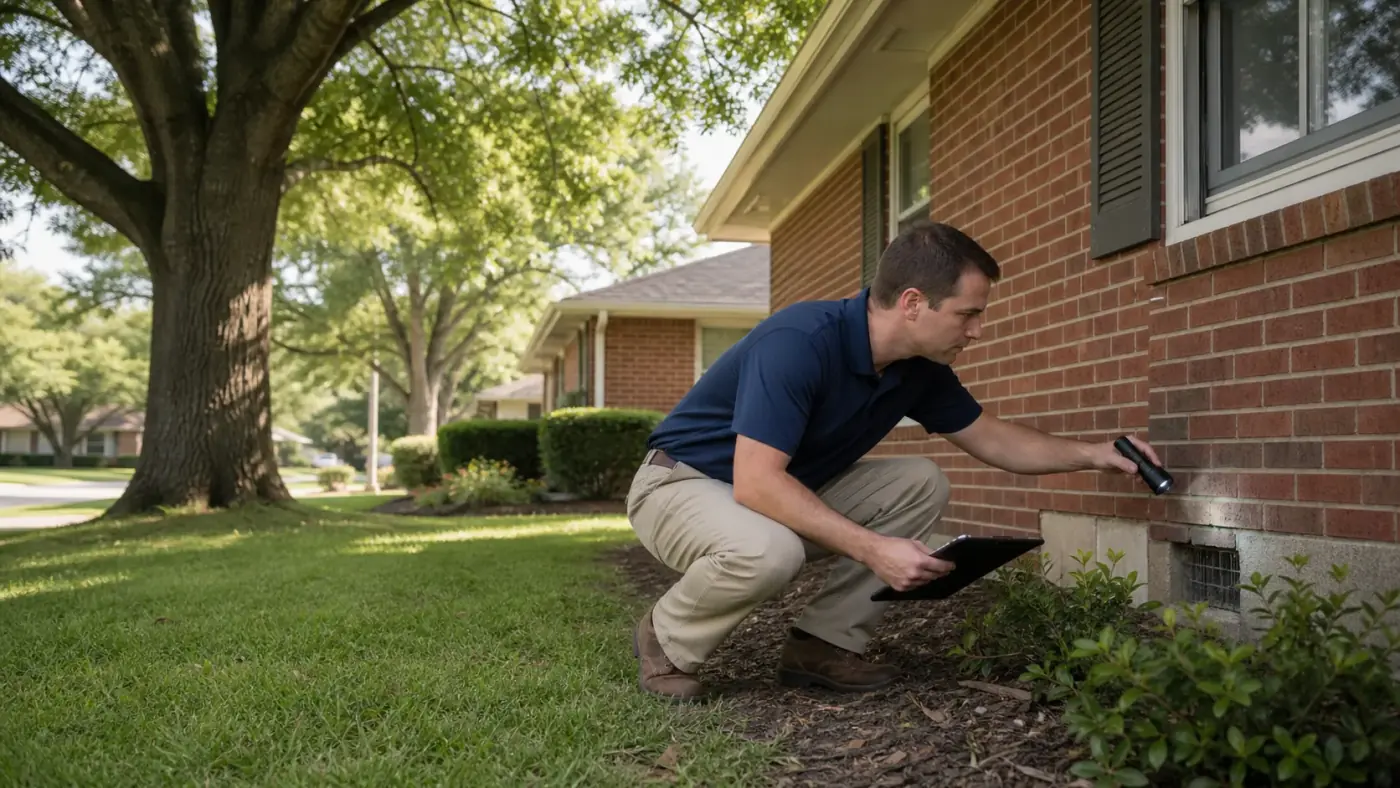
The Tulsa Health Department runs a mosquito surveillance program, and most homeowners have no idea they can call it. THD sets traps around Tulsa County, collects samples and tests them weekly in its own laboratory for West Nile virus, and in a typical season it sprays hundreds of square miles for adult mosquitoes. Control methods include larviciding and adulticiding when the surveillance data justify it. THD does this work alongside the Oklahoma State Department of Health and Oklahoma State University.
Tulsa County residents can request a mosquito surveillance inspection by calling the Tulsa Health Department at 918-595-4200 or filing a complaint online. That may include a trap installed at your address. Depending on what the inspector finds, the response can include larvicide on your property and an adulticide treatment with a truck mounted ultra low volume fogger, usually run after sunset.
None of that replaces a yard program, because county spraying is area wide and episodic while a barrier treatment is yours and repeated. Use both.
West Nile virus in Oklahoma, without the panic
West Nile virus is a reportable disease in Oklahoma and the leading cause of mosquito borne disease in the continental United States, according to the Oklahoma State Department of Health. It cycles between birds and Culex mosquitoes, and people are incidental. OSDH puts the greatest risk of exposure in our state between July and October, and notes that adults over fifty are far more likely to develop the serious neurologic form.
The numbers argue for consistency rather than fear. Eight out of ten people infected never become ill at all, per OSDH, and even where the virus is circulating less than one percent of mosquitoes generally carry it. OSDH teaches four Ds, which is the whole prevention message in a form you will remember: repellent with DEET, picaridin, oil of lemon eucalyptus or IR3535, avoid dusk to dawn, drain standing water, and dress in long sleeves.
The worst biters are usually the harmless ones
The mosquitoes that swarm you three days after an Oklahoma thunderstorm are usually not the ones carrying anything. OSDH explains that mosquitoes hatching after severe flooding are mostly nuisance species that bite aggressively and raise welts but are not typically involved in disease transmission, and those floodwater populations tend to die out about three weeks after the rain stops and the low ground dries. If a storm just rolled through, our after-the-storm pest checklist for Oklahoma homes walks the whole house in one lap, from the gutters that breed mosquitoes to the soffits that let mice in.
The dangerous ones behave the opposite way. Culex, the primary West Nile vector, builds up in mid to late summer when temperatures climb and the pattern turns dry, and OSDH notes that past Oklahoma outbreaks were characterized by hotter than normal summers and drought. The August week when the creek bottoms have dried up and the yard is crunchy is exactly when the stagnant water in a forgotten wheelbarrow matters most.
The container checklist that beats any spray
Eliminating standing water is the most effective thing a homeowner can do, because a neglected bird bath or clogged gutter can produce hundreds of mosquitoes in a few days. The National Pesticide Information Center points out that a bottle cap holds enough water, and that eggs stuck to a dry bird bath survive until it refills. Work this list before you pay anyone.
| Where the water sits | The fix |
|---|---|
| Clogged rain gutters and downspouts | Clear leaves and debris, then check that water actually runs to the downspout |
| Saucers under flower pots and potted plants | Dump weekly or remove the saucers entirely |
| Tarps, boat covers and hot tub covers | Pull them taut or store boats covered and upside down so nothing pools |
| Old tires and buckets | Dispose of them, or turn them over when not in use |
| Bird baths | Rinse, scrub and refill weekly, per OSDH guidance |
| Kiddie pools | Empty weekly and store indoors between uses |
| Pet water bowls | Empty and refill daily |
| Ornamental ponds and rain barrels | Aerate, stock with mosquito eating fish, or treat with Bti; screen barrels |
| Leaky irrigation heads and AC condensate | Repair, since a puddle that lasts several days is enough |
That table covers the water you can see. For the spots that hide in plain sight, like corrugated downspout pipes, clogged yard drains and tree holes, our backyard mosquito audit for Tulsa yards walks the whole lot in one lap.
What professional mosquito control in Tulsa actually buys
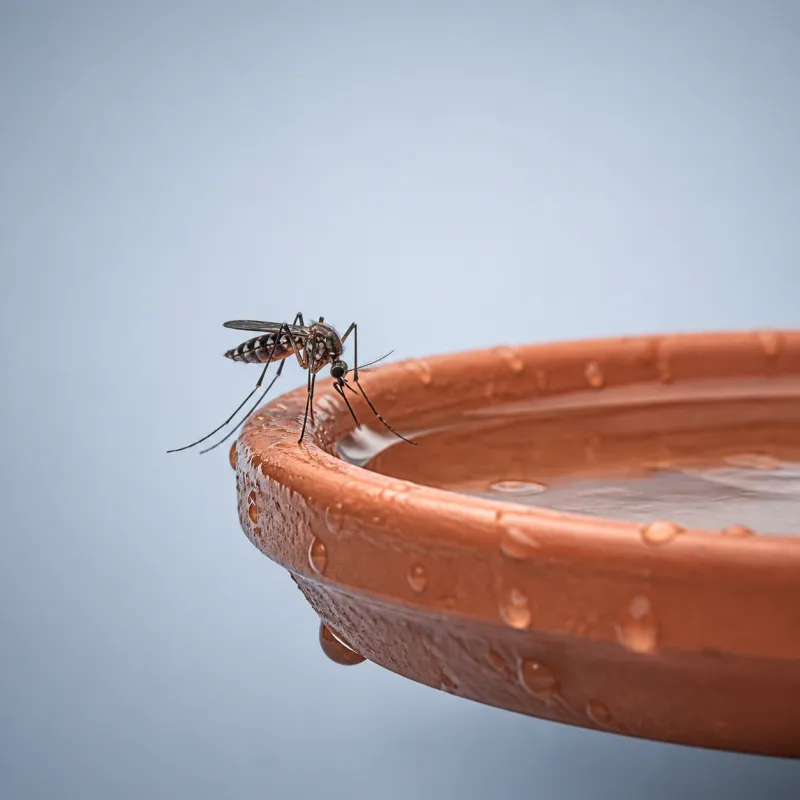
A yard program works by treating where adult mosquitoes rest during the day, not by fogging open air. Mosquitoes shelter in shade, so the targets are the underside of shrubs, lower limbs of shade trees, dense ivy and monkey grass, the shady side of the foundation and the space under a deck. Pyrethroids on those surfaces knock down the resting population and need reapplying every three to four weeks.
The second half is larvicide. Products based on methoprene or Bti, the toxin from the soil bacterium Bacillus thuringiensis israelensis, go into the water you cannot drain: the pond, the tree hole, the low corner that stays wet. Bti is lethal to mosquito wrigglers and a few related larvae and is not harmful to fish, waterfowl, pets or people when used per the label.
Misting systems get sold hard here. They are automated nozzle rings on a timer with a reservoir you refill, and my honest read is that most Tulsa yards do better putting the same money into a monitored barrier program with a technician who walks the property each visit. Skip the gadgets. University of Kentucky entomologists report that bug zappers do not meaningfully reduce biting, ultrasonic repellers have repeatedly failed testing, and costly carbon dioxide traps have not been shown to cut bites.
Typical mosquito pricing around Tulsa
These are ranges commonly seen across the Tulsa metro, not quotes. Lot size, tree cover and standing water on neighboring property drive the number, and the company you are connected with prices after walking the yard.
- Single barrier treatment, average lot: roughly $75 to $125.
- Seasonal program of seven to nine treatments, April through October: roughly $400 to $800.
- Larvicide added for ponds, tree holes and drainage: often $25 to $75 per visit.
- Special event treatment two to three days before a party: roughly $100 to $200.
- Misting system installation: commonly $2,500 to $4,000 plus refills.
Ask what active ingredient is used, how often the treatment is repeated, and whether the technician will actually inspect for larval sites or just spray and leave. Every pest control business and applicator in Oklahoma is licensed through the Oklahoma Department of Agriculture, Food and Forestry. Calls route by ZIP code, so you reach a company that covers your address, whether that is midtown Tulsa, Jenks or Bixby. If the yard also has a tick problem, deal with tick control at the same time, since both jobs target the same shaded edges.
How the call works
- Describe the problem. A recluse in a shoe, termite swarmers on a window sill, ticks coming in on the dog. A sentence or two is plenty.
- Get routed by ZIP code. The call lands with an independent, licensed company that already services your neighborhood, whether that is midtown Tulsa or Claremore.
- Set the appointment. Most companies can give you an inspection or treatment window before you hang up.
Whether a same-day or 24/7 visit is possible comes down to provider participation in your area, technician availability and demand on that day. It is never guaranteed, and open slots vary by market and by how full the schedule already is.
Frequently asked questions
Does mosquito control in Tulsa actually work?
A barrier program reduces biting noticeably when it targets daytime resting sites and gets repeated every three to four weeks. It does not eliminate mosquitoes, because adults fly in from neighboring property and from water you do not own. Pairing the treatment with draining containers on your own lot is what produces the difference people actually notice.
When does mosquito season start in Tulsa?
Treatment usually begins in April as temperatures climb and runs through October. The Tulsa Health Department starts its mosquito surveillance program each May, and the Oklahoma State Department of Health puts the greatest West Nile exposure risk between July and October. Early season larvicide work matters more than people expect, because it removes broods before they ever fly.
How much does mosquito spraying cost in Tulsa?
A single barrier treatment on an average lot typically runs roughly $75 to $125, and a full season of seven to nine treatments commonly lands between $400 and $800. Those are typical Tulsa market ranges, not quotes. Lot size, tree cover and standing water on adjoining property all move the price.
Will the Tulsa Health Department spray my neighborhood?
It might. Tulsa County residents can request a mosquito surveillance inspection at 918-595-4200 or file a complaint online, and the department may install a trap at the address. Based on what the data show, the response can include larvicide treatment and an adulticide application from a truck mounted ultra low volume fogger, usually after sunset.