
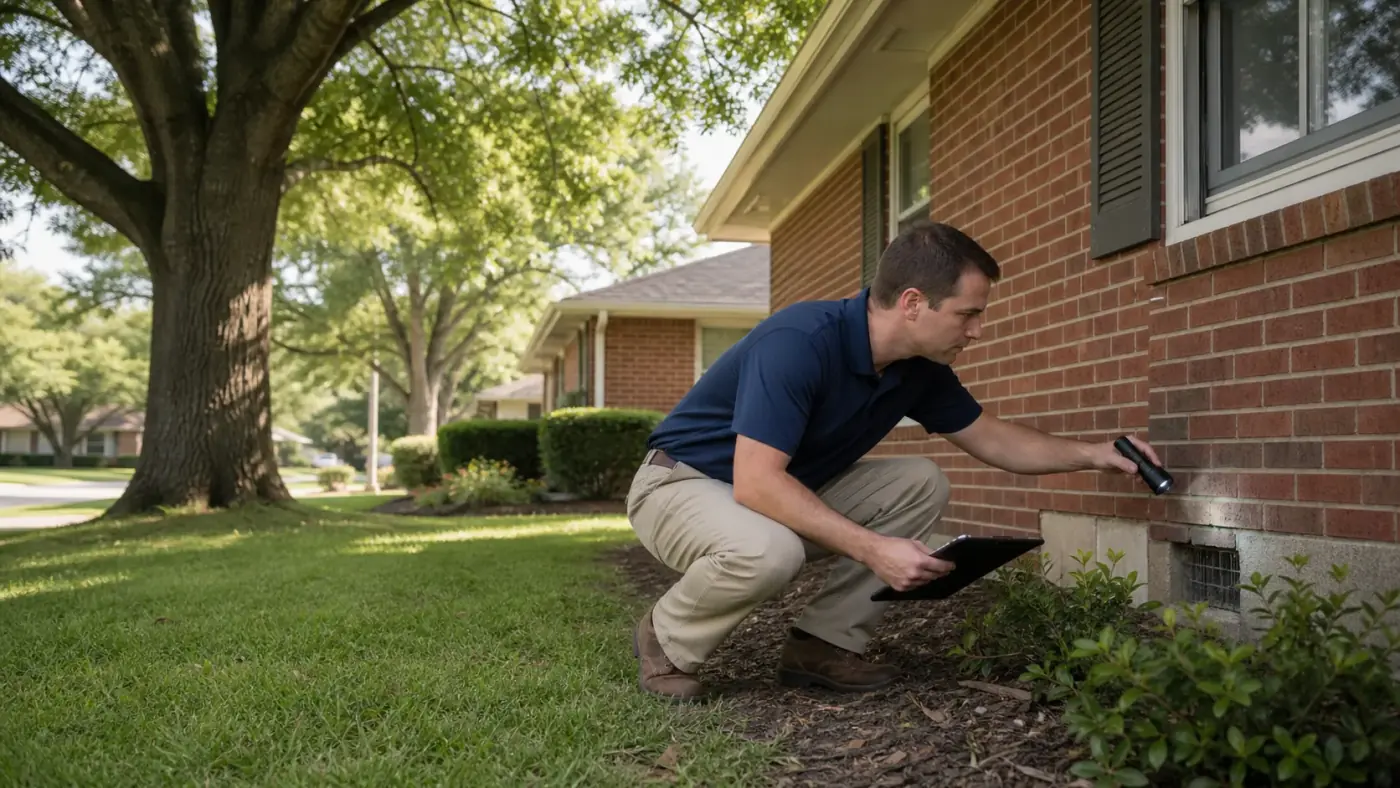
What pest control covers in the Tulsa metro
Pest control in the Tulsa metro covers about a dozen recurring problems, and most homes here need two or three handled rather than all twelve. A licensed local company inspects first and treats what it found. Here is the Green Country lineup.
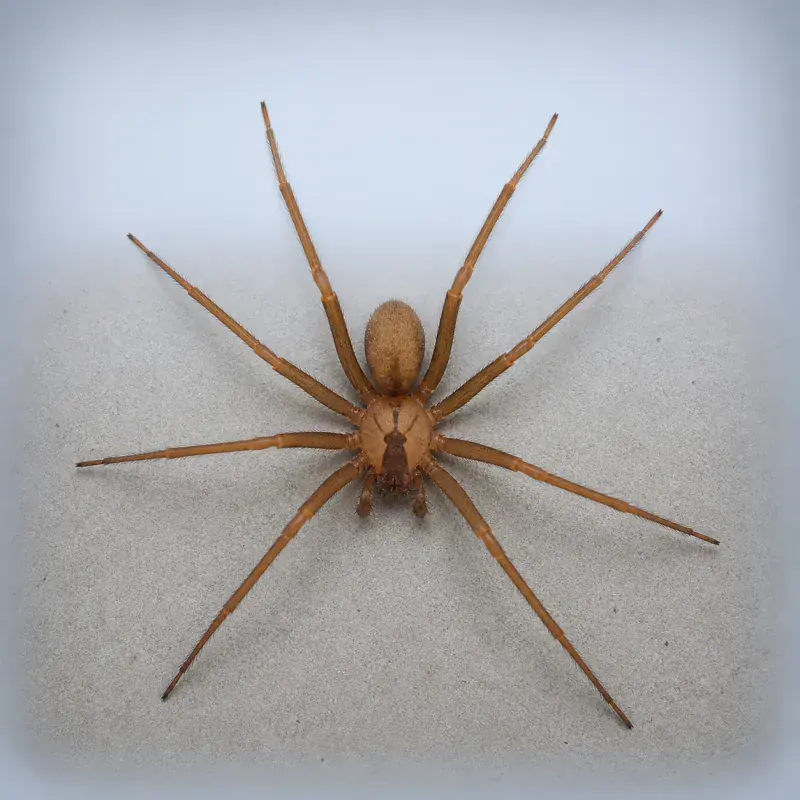
- Brown recluse control. Oklahoma sits inside the spider's native range, so the job is glue boards and void work, not a perimeter spray.
- Termite control. Subterranean termites swarm in spring, and most people find them as shed wings on a sill.
- Tick control. Lone star ticks run March through September, and the yard is where the family picks them up.
- Scorpion control. The striped bark scorpion uses the same gaps everything else does.
- Bed bug treatment. Whole home heat or a staged chemical program. The mattress does not go to the curb first.
- Rodent control. Mice arrive as the nights cool. Sealing the entry points is the job, not the bait.
- Mosquito control. Standing water after a storm plus a humid Oklahoma August.
- Ant control. Baiting beats spraying, since a sprayed trail just relocates.
- Wasp removal. Paper wasps under the eave in June, yellowjackets in your drink by September, and our late-summer yellowjacket guide explains why they get so bold.
- Cockroach control. Roaches out of a floor drain are a different problem than German roaches in a kitchen.
- Flea control. Pet and carpet on the same day, or you start the cycle over.
- Wildlife removal. Armadillos in the lawn, raccoons in the attic, a bill that is mostly carpentry.
What pest control costs around Tulsa
Typical pricing in the Tulsa market runs from about $150 for a single general pest visit to several thousand for a full termite job on a large home. These are ranges commonly seen across the metro, not quotes. The company you are connected with sets its price after it sees the structure.
| Service | Typical Tulsa range |
|---|---|
| One time general pest visit | $150 to $300 |
| Monthly plan | $45 to $75 per month |
| Bi-monthly plan | $65 to $110 per visit |
| Quarterly plan | $100 to $175 per visit |
| Termite treatment, liquid barrier | $1,200 to $3,000 |
| Brown recluse program with follow-up | $300 to $650 |
| Bed bug heat treatment, whole home | $1,200 to $2,500 |
| Rodent exclusion, sealing work | $300 to $1,500 |
| Tick and flea yard program | $75 to $150 per treatment |
Two questions save money. Does the initial price include the first follow-up, and what happens if the pest is still there in three weeks. A free retreat between scheduled visits beats twenty dollars off a quarterly plan. For a fuller breakdown of every line above, including what drives each number and when self-treatment stops paying, see our guide to how much pest control costs in Tulsa.
How to check a company before you let it in the house
Every pest control business in Oklahoma has to be licensed by the Oklahoma Department of Agriculture, Food and Forestry, through its Consumer Protection Services division. The state certifies applicators by category, and two matter for a house: 7a General Pest, meaning treatment inside and immediately adjacent to a structure, and 7b Structural Pest, meaning termites and other wood destroying organisms. A technician who applies product without being the certified applicator carries a state issued identification card. The department investigates complaints, unlicensed companies included, and publishes a searchable list of licensed applicators.
So the first question is short: what is your Oklahoma license number, and which categories are on it. A termite quote from a company licensed only in 7a is a red flag, not a bargain. Four more sort the serious companies from the ones selling a contract.
- What did the inspection find, and where. A quote with no findings is a price list.
- What product goes where, and does anyone need to stay off it while it dries.
- Is a follow-up included, how many, and what triggers a free retreat.
- For termite work, do I get the state's Official Termite and Wood Destroying Organisms Report, and what does the warranty cover.
A real quote is written, names the pests it covers and the ones it does not, and puts the follow-up schedule on paper. A number quoted before anyone has seen your crawl space is a guess.
Service area: Tulsa neighborhoods and the surrounding towns
Calls route by ZIP code to a licensed local company that covers that address, across Tulsa and the surrounding Green Country towns. Where you live changes the pest list more than most people expect.
Midtown is the older housing. The blocks around Brookside and Kendall-Whittier carry pre-war and mid-century construction with floored attics, basements, crawl spaces and decades of stored cardboard, which is close to ideal brown recluse and American cockroach habitat, and the water bug guide explains why those big roaches climb out of midtown drains every summer. Downtown adds shared walls and commercial kitchens, so roaches and rodents move building to building instead of yard to yard. South Tulsa is mostly newer slab construction with mature landscaping, which trades the recluse problem for ants, mosquitoes and whatever walks down a tree limb onto the roof.
Outside the city the network covers Broken Arrow, Owasso, Bixby, Jenks, Sand Springs, Sapulpa and Claremore. Newer subdivisions in Owasso, Bixby and Jenks usually import pests on stored belongings rather than harboring them in the structure, which tends to mean a shorter program.
The Green Country pest year
Oklahoma pest problems track the weather closely enough to plan around. Extension entomologists tie termite swarms to warming temperatures and rainfall, which here means spring, and those same storms leave the standing water that starts mosquito season.
- Spring, March into May. Winged termites emerge indoors and collect at windows and doors. The swarmers live about a day and cannot damage wood, but finding them inside almost always means an active colony under the house.
- Late spring into summer. Mosquitoes ramp up with heat and standing water. Lone star ticks are active from March through September, and the larvae called seed ticks are abundant in August and September, which is how one walk along a brushy fence line turns into forty bites.
- Late summer into early fall. Yellowjacket colonies reach full size and workers forage widely for sugar and meat, which is why September cookouts go sideways.
- Fall, first cool nights. House mice are most likely to invade structures as temperatures drop. The busiest rodent stretch of the year, and the cheapest time to seal a house.
- Winter. Brown recluse do not leave. They ride out winter in unheated basements and summer heat in attics, and holiday boxes coming down from storage is how they reach the living room.
When to get medical help: a sting followed by hives, swelling away from the sting site, wheezing or dizziness needs emergency care, and a sting inside the mouth or throat is an automatic emergency. For a suspected recluse bite, watch for a growing dark or blistered center, spreading redness, fever or nausea, and call a doctor. The Oklahoma Center for Poison and Drug Information answers at 1-800-222-1222 around the clock.

One visit or a recurring plan?
A single visit handles a single problem. A recurring plan is for a structure that keeps producing new ones. Wasps under one eave, pay for one treatment. A recluse in the laundry basket, which is more or less an Oklahoma rite of passage, needs a program with follow-up, because eggs already laid will hatch after the first round.
Recurring service earns its keep on older Tulsa homes with basements, crawl spaces and trees against the roof, and on lots backing onto a creek or woods. It earns much less on a tight newer slab home with a clean garage. Ask which one you are, and be suspicious if the answer is always the expensive one.
How the call works
- Describe the problem. A recluse in a shoe, termite swarmers on a window sill, ticks coming in on the dog. A sentence or two is plenty.
- Get routed by ZIP code. The call lands with an independent, licensed company that already services your neighborhood, whether that is midtown Tulsa or Claremore.
- Set the appointment. Most companies can give you an inspection or treatment window before you hang up.
Whether a same-day or 24/7 visit is possible comes down to provider participation in your area, technician availability and demand on that day. It is never guaranteed, and open slots vary by market and by how full the schedule already is.
Frequently asked questions
How much does pest control cost in Tulsa?
Typical Tulsa pricing runs about $150 to $300 for a one time general pest visit, $100 to $175 per visit on a quarterly plan, and $45 to $75 a month on a monthly plan. Specialty work costs more, with termite treatments commonly between $1,200 and $3,000. These are market ranges rather than quotes, since price depends on square footage, construction type and access.
How do I check that a Tulsa pest control company is licensed?
Ask for the Oklahoma license number and the certification categories on it, then verify with the Oklahoma Department of Agriculture, Food and Forestry, which licenses pesticide businesses and certifies applicators through its Consumer Protection Services division. Category 7a covers general household pests and 7b covers termites and other wood destroying organisms. The department also investigates complaints against unlicensed operators.
What is the worst pest month in Tulsa?
There are two. Spring brings termite swarms indoors, usually after warm rain, and it is when most Tulsa homeowners discover an infestation that has been quietly running for years. The first cool weeks of fall bring rodents, since house mice are most likely to move into a structure as temperatures drop. Ticks and mosquitoes fill the months in between.
Do I need quarterly service or can I just call when something shows up?
Call as needed works fine for isolated problems like a wasp nest or one ant trail. Recurring service is worth it for older homes with basements, crawl spaces or heavy storage, homes on wooded or creek side lots, and any structure with a history of recluse, roaches or rodents. A licensed local company should tell you honestly which category your house is in.