
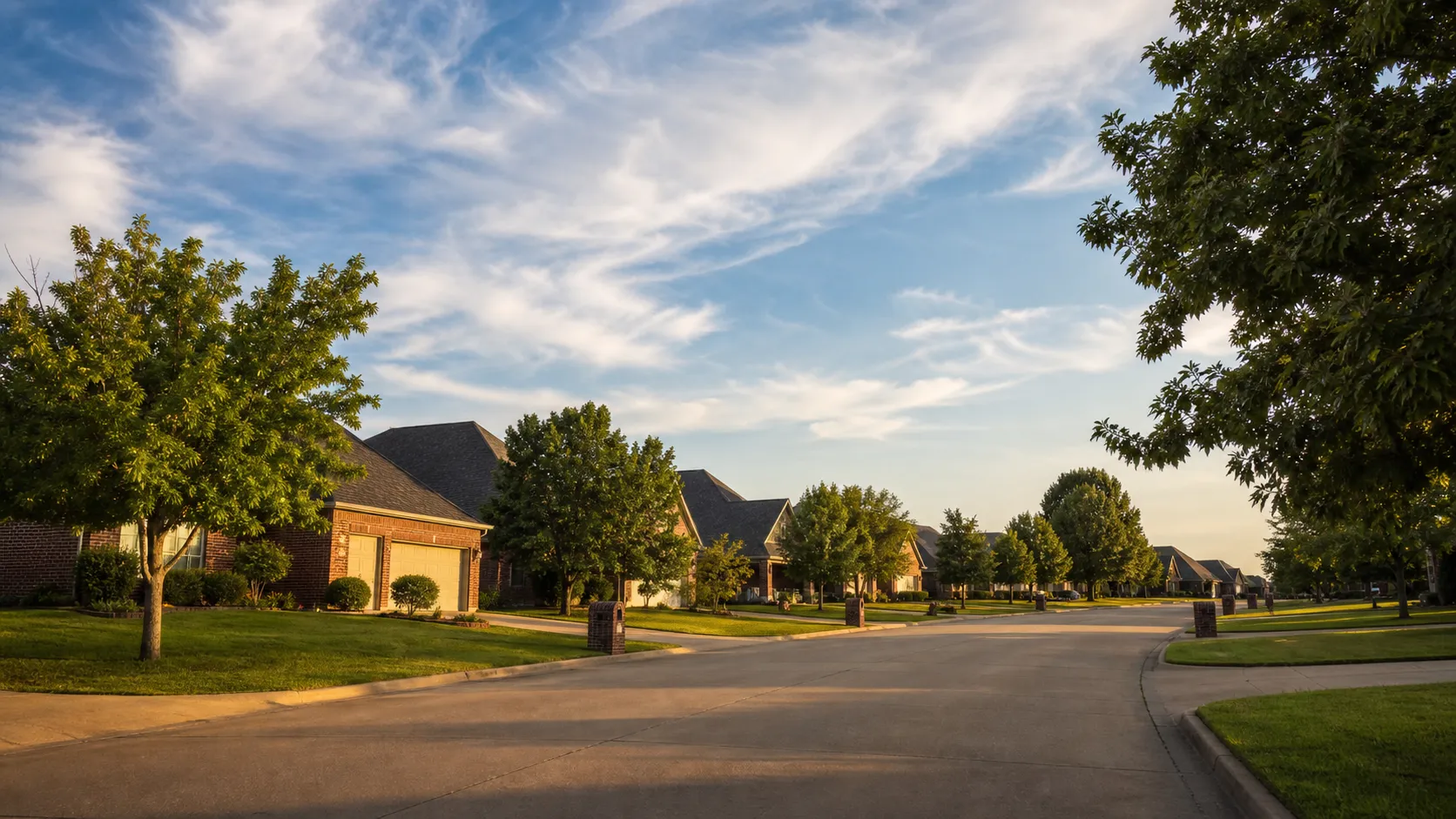
Old core, new edge, one river between them
Jenks is two towns sharing a name, and pest calls come from both. The original settlement was established in 1904 as a railroad community and platted on July 15, 1905, named for William Henry Jenks of the Midland Valley Railroad. That core, now known for its antique trade, has the old masonry, wood floors and cellars you would expect. Around it, the population went from 16,924 in 2010 to 25,949 in 2020 and an estimated 27,553 by 2023, all of it on new slab construction across 17.95 square miles at 617 feet of elevation. Jenks Public Schools spreads over more than 40 square miles and serves upward of 12,000 students, ranking eleventh largest in the state.
The river is the other half of the story. The Arkansas runs the town's eastern edge, the RiverWalk and the Oklahoma Aquarium sit on it, and the aquarium alone drew 410,826 visitors in 2023. A continuous green corridor with water, cover and food is a highway for armadillos, raccoons and rodents, and it dead-ends in somebody's backyard.

What gets called in from Jenks addresses
The mix here leans toward wildlife and moisture pests rather than the storage pests that dominate older parts of the metro.
| Pest | Why it shows up in Jenks |
|---|---|
| Armadillos and raccoons | The river corridor gives wildlife an unbroken path from cover into backyards, and armadillos find grubs through roughly eight inches of soil |
| Subterranean termites | Slab foundations on damp river-adjacent soil, with expansion joints and porch pours as entry routes |
| Mosquitoes | Low riverside yards hold water, and Culex mosquitoes peak nationally from July into October |
| House mice and rats | Older downtown buildings near the rail line, plus construction sites turning ground over |
Wildlife is the call that catches people out. A raccoon in an attic or an armadillo under a porch is not a bug job, it is trapping and exclusion work with its own rules, so ask specifically whether the company you reach handles it or only treats insects.
What you should expect to pay
These are typical ranges in the Tulsa market, not quotes. The licensed company you are connected with prices after a look at the property.
- Initial general pest service: roughly $150 to $300, inside and out.
- Quarterly maintenance: roughly $95 to $170 per visit, which is where most Jenks households land.
- Mosquito barrier treatment: roughly $70 to $130 per application, more on riverside lots with heavy cover.
- Wildlife trapping and exclusion: roughly $250 to $700, driven by how many entry points need closing.
- Liquid termite barrier: roughly $1,200 to $3,000, measured in linear feet of foundation.
- Termite inspection with the state report form: often free with service, otherwise about $75 to $150.
Wildlife work is the wild card in that list. One armadillo under a deck is cheap. Three entry points into a soffit plus an attic that needs cleanup is a different conversation.
The Jenks maintenance list
Most of what keeps a Jenks house clear is yard work rather than chemistry, because the pressure here comes from outside the walls. Riverside lots and new additions need slightly different attention, but this covers both:
- Close the gap under the garage door and seal utility penetrations. On new construction these are almost never finished properly, and they are the number one rodent entry.
- Treat for grubs before you chase armadillos. Remove the food and the digging usually stops without anyone trapping anything. The armadillo lawn damage guide shows how to count grubs in a square foot of sod.
- Screen under decks, sheds and porches with hardware cloth buried a few inches down. That is where wildlife dens.
- Keep mulch and soil below the top of the slab and off the siding, which closes the hidden route termites prefer.
- Dump standing water weekly through mosquito season, which in Oklahoma runs well into October.
How pest control in Jenks gets dispatched
Calls are routed by ZIP code to a licensed local company that already covers the address. Tulsa Pest Partners is an independent referral service: we do not treat property, and we do not send crews. We match your address to a company that does.
Two questions are worth asking before anyone starts. First, the Oklahoma license, since applicator licensing and service technician identification run through the Oklahoma Department of Agriculture, Food and Forestry. Second, whether findings go on the ODAFF-1, the state's official termite and wood destroying insect report. Jenks pricing tracks Tulsa and Bixby closely.
Jenks sits mostly in Tulsa County, while its school district reaches into Creek County, so a nearby address is not automatically inside the same service route. The ZIP check settles that before anyone gets in a truck.
How the call works
- Describe the problem. A recluse in a shoe, termite swarmers on a window sill, ticks coming in on the dog. A sentence or two is plenty.
- Get routed by ZIP code. The call lands with an independent, licensed company that already services your neighborhood, whether that is midtown Tulsa or Claremore.
- Set the appointment. Most companies can give you an inspection or treatment window before you hang up.
Whether a same-day or 24/7 visit is possible comes down to provider participation in your area, technician availability and demand on that day. It is never guaranteed, and open slots vary by market and by how full the schedule already is.
Frequently asked questions
Why do armadillos tear up Jenks lawns?
They are hunting grubs and beetles, not eating grass. A nine-banded armadillo pushes its snout into loose soil and can detect prey through about eight inches of dirt, which is why watered lawns near the river get hit first. Fixing the grub problem and closing off den sites under decks does more than chasing the animal.
Does living near the Arkansas River mean more termites?
It raises the moisture risk, which is the factor that matters. Eastern subterranean termites forage out of soil and follow damp conditions along foundations and porch slabs. On river-adjacent lots, grading water away from the house, keeping downspouts working and booking an annual inspection are worth more than any product.
How much does an exterminator in Jenks charge?
Initial general service usually falls between $150 and $300, with quarterly visits around $95 to $170. Wildlife exclusion and termite work quote separately because they are priced by entry points and linear feet. Those are typical ranges seen across the Tulsa market, not a quote for a specific Jenks address.
Do downtown Jenks buildings need different treatment?
Yes. The 1905 core has masonry, wood floors, cellars and shared walls, so rodents and roaches travel between units and treatment has to account for neighbors. New additions on slab are simpler jobs with a different pest list. Tell the company which side of town you are on when you call.