

What alpha-gal syndrome is
Alpha-gal syndrome is an allergy to alpha-gal, a sugar molecule that most mammals carry and people do not, and CDC describes it as a serious, potentially life-threatening allergy and a tickborne disease. The full name of the molecule is galactose-alpha-1,3-galactose. It sits in beef, pork, lamb, venison and rabbit, in dairy, and in some medications and gelatin products.
According to CDC, alpha-gal is also present in the saliva of some ticks; a bite can transfer it into a person's blood, and the immune system can decide that molecule is a threat. After that, eating a mammal sets off an allergic reaction. Most food allergies involve a protein. This one involves a sugar, and nearly everything strange about it follows from that.
Why the lone star tick, and why Oklahoma
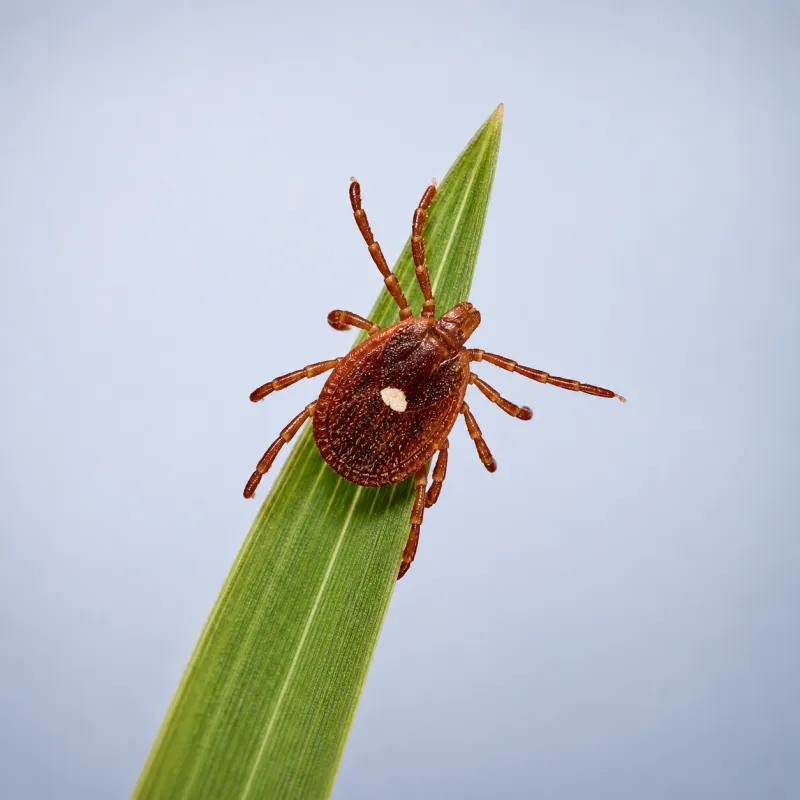
In the United States, CDC states that alpha-gal syndrome is primarily associated with the bite of the lone star tick, with a smaller number of cases following blacklegged and western blacklegged bites. Oklahoma State University Extension puts it plainly for this state: lone star ticks are considered the main tick involved with the development of red meat allergy.
Oklahoma sits in the heart of that range. OSU Extension calls the lone star the tick most commonly encountered by people during recreation here, active early spring to late fall, with larvae, nymphs and adults all feeding readily on humans. CDC reports that most cases in the country come from Southern, Eastern and Central states, the areas where lone star ticks are found.
A bite does not mean you will develop it. CDC is clear that not everyone bitten by a lone star tick develops the syndrome, and that why some people do and others do not remains unknown.
The delay that fools almost everyone
Alpha-gal reactions usually start two to six hours after eating, which is why people rarely blame the food. CDC gives that two to six hour window, and Mayo Clinic describes a reaction that often begins about two to six hours after eating something containing alpha-gal. A burger at six in the evening becomes hives at eleven at night, and nobody connects the two.
| What differs | Alpha-gal syndrome | A typical food allergy |
|---|---|---|
| Trigger | A sugar, galactose-alpha-1,3-galactose, in mammal meat and dairy, per CDC | Usually a protein such as peanut, egg or shellfish |
| Timing after eating | Usually two to six hours, per CDC | A few minutes to a few hours, per FDA |
| How it starts | After a tick bite. CDC says symptoms can take weeks to months to appear | Often present from childhood |
| Consistency | CDC notes people may not react to every alpha-gal product, and reactions can differ each time | Usually more predictable |
CDC lists reactions running from hives and itchy rash through nausea, vomiting, severe stomach pain, diarrhea, shortness of breath, a drop in blood pressure, swelling of the lips, throat or tongue, dizziness, and anaphylaxis. Stomach symptoms alone get filed under indigestion for years.
Emergency care: CDC says to seek immediate emergency care for a severe allergic reaction or anaphylaxis, which involves multiple organ systems and can be life-threatening. A provider may prescribe an epinephrine auto-injector, and CDC notes anyone who uses one should still get emergency care afterward. This page is a pest control resource, not medical advice. If you suspect alpha-gal syndrome, take it to an allergist.
Why it goes undiagnosed for years
Doctors miss alpha-gal syndrome largely because many have never heard of it. In a provider survey reported by CDC, 42 percent of those surveyed had never heard of alpha-gal syndrome and 35 percent said they were not too confident in their ability to diagnose it or manage patients who have it.
The numbers underneath say the same thing. CDC counted more than 110,000 suspected cases between 2010 and 2022, notes the condition is not nationally notifiable, and estimates as many as 450,000 people may be affected. Mayo Clinic adds that some people who suffer serious anaphylactic reactions for no identified reason may in fact have alpha-gal syndrome, precisely because the reaction runs hours behind the meal.
How it is actually diagnosed
Diagnosis rests on a blood test plus a careful history, not on the test alone. CDC describes the main diagnostic test as a blood test for immunoglobulin E antibodies specific to alpha-gal, written as alpha-gal sIgE and available through several large commercial laboratories, with allergy skin testing to beef or pork sometimes used alongside it.
Here is the part the internet gets wrong. CDC states that a positive alpha-gal sIgE test does not by itself mean a person has the syndrome, and that positive results turn up in people who do not have it, particularly in regions where lone star ticks live. Oklahoma is one of those regions. CDC says providers should weigh the test against symptoms, whether reactions are delayed, and a history of tick bites. Take the whole picture to an allergist.
Does it ever go away
It can ease over time for some people, and avoiding further tick bites appears to matter. Mayo Clinic states that symptoms of alpha-gal syndrome may lessen or go away over time. CDC goes further: some people with the syndrome who avoid additional tick bites may be able to tolerate alpha-gal containing products again, and calls that an individualized medical decision to make with a provider.
The reverse is the sentence that should stick. CDC warns that new tick bites may reactivate allergic reactions to alpha-gal. For anyone already living with this, tick prevention is not about avoiding a second diagnosis. It is about not restarting the clock on the first one.
Where lone star ticks live in a Tulsa yard
Lone star ticks occupy a predictable set of places on an Oklahoma property, and almost none of them is the open lawn. The map below follows the tick-safe zone guidance CDC publishes and OSU Extension reprints for Oklahoma homeowners.
| Where in the yard | Why they are there | What helps |
|---|---|---|
| The shaded edge where mowing stops and woods begin | Shade and humidity let ticks quest without drying out | A wood chip or gravel barrier three feet wide, plus cleared brush |
| Leaf litter under trees and shrub beds | Moisture at ground level | Rake it out and haul it off |
| Tall grass, ivy and heavy ground cover | Height to climb and wait on | Mow often, cut cover back from paths |
| Woodpiles and brush piles | Rodents that feed the immature ticks | Stack wood neatly, off the ground, in a dry spot |
| Swing sets and patios against the trees | Puts children inside the tick zone | Move play equipment away from yard edges |
On your body, CDC recommends EPA-registered repellents containing DEET, picaridin, IR3535, oil of lemon eucalyptus, para-menthane-diol or 2-undecanone, plus clothing treated with 0.5 percent permethrin. OSU Extension adds that DEET at 20 to 40 percent or higher works best, and both OSU Extension and the Oklahoma State Department of Health stress that permethrin goes on clothing only, never skin. Shower within two hours of coming in, run clothes through a hot dryer for 10 minutes, and check the waistband, armpits, hairline and behind the knees.
None of that touches the ticks living at the property line. That part is a treatment job. Tick control in Tulsa means treating the wooded edge, fence lines and ground cover on a schedule through the season, and one call connects you with a licensed local company. If ticks are one item on a longer list, start from the main service page. If one does latch on, our guide to removing a tick the right way and keeping them out of a Tulsa yard covers the pull and the weeks after it.
Frequently asked questions
How long after a tick bite would alpha-gal symptoms show up?
CDC states it can take weeks to months for symptoms to appear after a tick bite, which is much of why the connection gets missed. The first sign is usually a delayed reaction to a meal containing red meat or dairy, typically two to six hours afterward, not anything at the bite site.
Does every lone star tick bite cause alpha-gal syndrome?
No. CDC states plainly that not every person bitten by a lone star tick develops alpha-gal syndrome, and that the reason some people develop it and others do not is not known. Most reported cases are in adults, though CDC notes people of any age can develop it.
Can pest control prevent alpha-gal syndrome?
Not directly, and no honest company will promise it. CDC says the best protection is preventing tick bites, and yard treatment plus tick-safe zone landscaping reduces how many lone star ticks wait at your property line. Fewer ticks means fewer bites. That is risk reduction, not a guarantee.
Does a positive alpha-gal blood test mean I have it?
No. CDC states that a positive alpha-gal sIgE test does not by itself mean a person has alpha-gal syndrome, and that positives occur in people without it, especially where lone star ticks live. Providers weigh the test with symptoms, the delay pattern and tick exposure.