
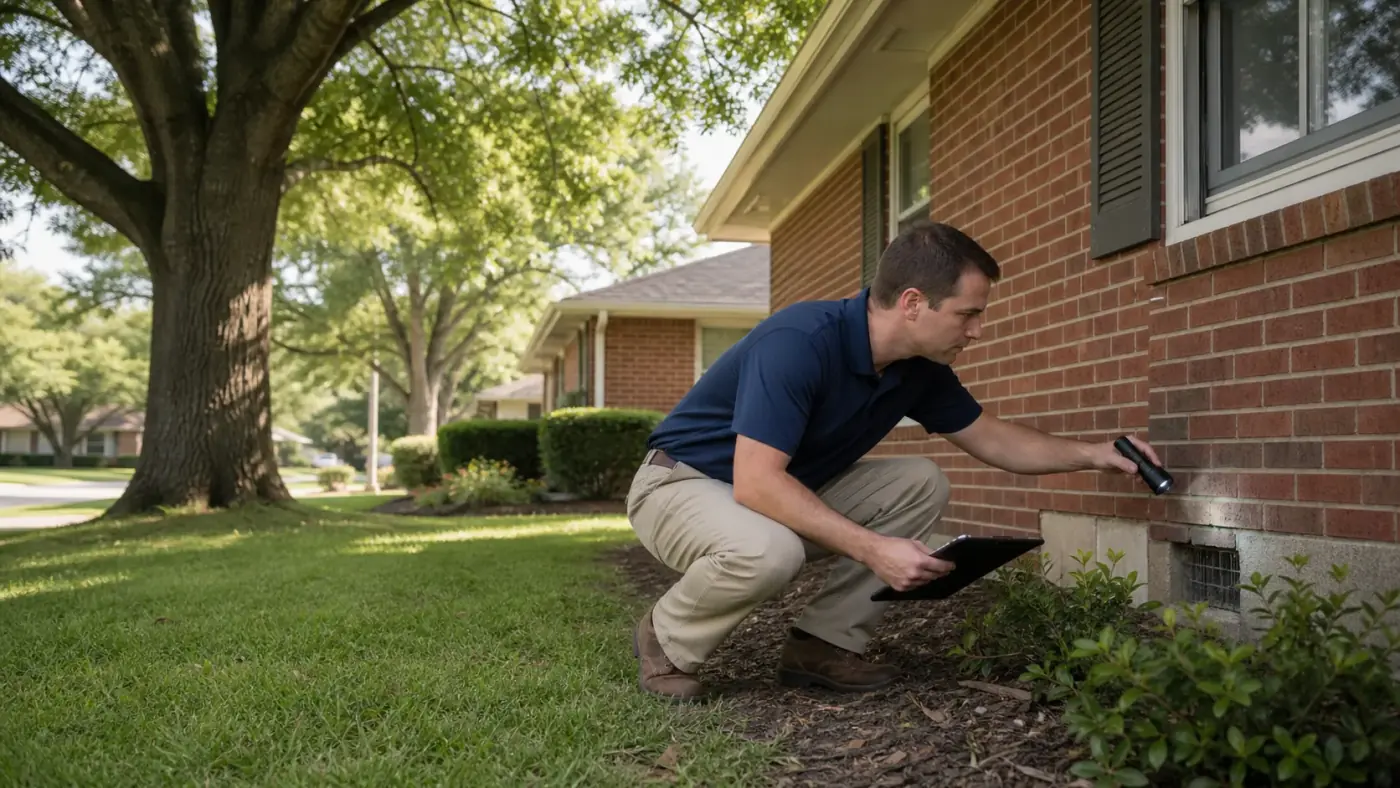
The three roaches Tulsa homes actually get
Three species cover almost every Tulsa call, and they live in different parts of the house. Identify the roach before anyone buys a product, because the treatment that works on one is close to useless on another.
| Roach | Where it lives here | What actually works |
|---|---|---|
| American cockroach, the big reddish brown one about an inch and a half long | Floor drains, sump pumps, sewers, crawl spaces, damp basements, mulch and trash outdoors. Travels far from where it aggregates | Treat the aggregation site, not the room. Drains, crawl space, exterior harborage, sealed utility penetrations |
| German cockroach, light brown, about half an inch, two dark stripes behind the head | Kitchens and bathrooms. Cracks under sinks and toilets, behind the refrigerator, dishwasher and stove, inside cabinets and small appliances | Gel bait in many small placements, crack and crevice work, follow-ups. Breeds indoors and never leaves on its own |
| Oriental cockroach, shiny black, about an inch, sluggish | Damp basements, crawl spaces, floor drains, under porches. Stays at ground level, seldom found upstairs | Moisture correction first, then perimeter and crawl space treatment. Fix the leak and half the problem leaves |
Extension entomologists attach the water bug label to the Oriental cockroach, because of its preference for dark, damp, cool places. Around Tulsa people use water bug and sewer roach for any large dark roach near a drain, which usually turns out to be the American cockroach.
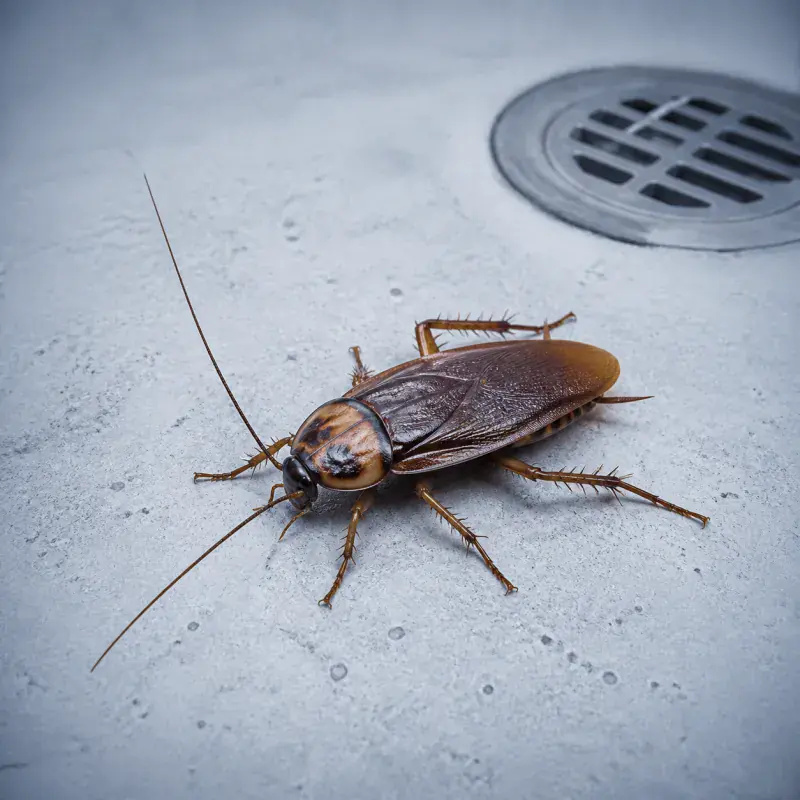
The ones that come up from the drain in summer
American cockroaches in a Tulsa house are usually visitors from a wetter, darker place nearby rather than residents. They congregate in floor drains, sump pumps, pipe chases, sewers and laundry areas, they are common outdoors around yards and trash in warm months, and they will move from one building to another when the weather suits them. Older midtown blocks with cast iron drains, unfinished basements and a storm sewer at the corner give them everything they want.
That is why the pattern is seasonal and why one indoor spray never ends it. Long term relief comes from finding the aggregation site and treating it: the drain, the crawl space, the mulch bed against the foundation, the pile of firewood beside the porch. Dry floor drains are worth checking first, since a trap that has evaporated is an open pipe. Our guide to why water bugs come up in a Tulsa summer walks through the five ways they get in and the weekend fixes for each.
German roaches are a different animal
German cockroaches are the species that turns into an infestation, because they live indoors permanently and reproduce fast. A single mated female can produce thousands of descendants inside a year, and each egg case releases up to forty nymphs. They come in on grocery bags, beverage cartons, used appliances and secondhand furniture, and in apartments and duplexes they travel between units through shared walls, pipes and wiring, which is why one neighbor's problem becomes yours.
They want warmth, moisture and food, so they hide in cracks under sinks and toilets, behind the refrigerator, dishwasher and stove, near trash containers, and inside toaster ovens and other warm electronics. Clean homes get them too. Sanitation slows them down, it does not prevent the introduction.
Gel bait works, bug bombs make it worse
Bait is the tool that ends a German roach problem, and placement decides whether it works. Roaches do not travel toward bait from across a room, they find it while foraging, so the technique is many small pea sized dabs pushed into cracks, corners and edges rather than a few large globs. More than a dozen placements can be needed under one kitchen sink. A roach that feeds dies in one to three days, and others in the harborage can be affected after it returns, so the population keeps dropping for weeks.
Spraying baseboards, countertops and open floor is mostly wasted effort, since roaches spend very little time on those surfaces and will not pick up a lethal dose crossing them. Total release foggers are worse than wasted. University of Kentucky guidance is direct: bug bombs rarely reach cracks and voids, their ingredients tend to be repellent so roaches scatter deeper into wall voids, and they have caused injuries and house fires when a pilot light was left burning.
Worth knowing: cockroach droppings and shed skins are a documented allergen. They trigger congestion and watery eyes in some people and are a well established asthma trigger in children, especially in dense housing where infestations run heavy. If someone in the home has asthma, roach control is a health job.
Drains, crawl spaces and the part you handle
The homeowner side of roach control is unglamorous and it matters more than usual, because you control the moisture and the food. None of this replaces treatment, but skipping it is how a program stretches from six weeks to six months.
- Run water in unused floor drains and bathroom drains so the traps stay full.
- Fix the leak under the sink and the sweating supply line. Damp is the whole reason they picked that cabinet.
- No dishes, pet food or crumbs left out overnight, and store loose food in sealed containers.
- Get cardboard out of the kitchen and garage. Bags, cartons and stacked boxes are both harborage and how German roaches arrive.
- Seal where plumbing and wiring pass through walls and floors with caulk, foam or copper mesh, and add sweeps under exterior doors. In a duplex this also slows migration from the unit next door.
Typical roach pricing in the Tulsa market
Roach pricing around Tulsa depends on the species and the building. These are ranges commonly seen in this market, not quotes, and the company you are connected with prices the job after an inspection.
- One time treatment for occasional large roaches: roughly $150 to $300.
- German roach program, initial visit plus two to three follow-ups: roughly $300 to $700.
- Multi-unit or duplex work, treating adjoining units together: usually quoted per unit, roughly $125 to $250 each.
- Ongoing quarterly service after cleanup: roughly $100 to $175 per visit.
One useful benchmark from university guidance: eliminating cockroaches from a single family home should not take a full year of service if the treatment is done correctly. If a company is still finding German roaches at month nine, the plan is wrong, not the house. Heavy roach populations also feed other pests, which is why brown recluse programs here often start with roach work, and why roaches and rodents in one building usually share the same gaps and moisture.
How the call works
- Describe the problem. A recluse in a shoe, termite swarmers on a window sill, ticks coming in on the dog. A sentence or two is plenty.
- Get routed by ZIP code. The call lands with an independent, licensed company that already services your neighborhood, whether that is midtown Tulsa or Claremore.
- Set the appointment. Most companies can give you an inspection or treatment window before you hang up.
Whether a same-day or 24/7 visit is possible comes down to provider participation in your area, technician availability and demand on that day. It is never guaranteed, and open slots vary by market and by how full the schedule already is.
Frequently asked questions
What are the big roaches in Tulsa basements?
Usually American cockroaches, the reddish brown species about an inch and a half long, which live in floor drains, sewers, crawl spaces and damp basements and move indoors in warm weather. Many people call them water bugs or sewer roaches. Extension entomologists apply the water bug name to the Oriental cockroach, the shiny black species that also favors damp basements and drains.
Do bug bombs work on cockroaches?
No, and they often make things worse. Total release foggers settle on open surfaces instead of penetrating the cracks and voids where roaches spend their time, and their ingredients tend to be repellent, which scatters roaches deeper into wall voids and adjoining rooms. They have also caused fires when pilot lights were left lit. Gel bait placed in cracks does the actual work.
How long does it take to get rid of German roaches?
A correctly treated single family home usually clears in about four to eight weeks, with a noticeable drop within the first two weeks after baiting. Follow-up visits matter because egg cases keep hatching. University guidance notes it should not take a full year of service to eliminate roaches from a house, so a program still finding them at month nine needs rethinking.
Can I get rid of roaches without a professional?
Sometimes, if the infestation is small and you use gel bait correctly, meaning many small placements pushed into cracks, corners and cabinet edges rather than sprays on open surfaces. Larger populations, apartments sharing walls with an infested unit, and repeated American cockroach entry from drains and crawl spaces are worth handing to a licensed local company.