

Two build eras, two different problems
Broken Arrow pest calls sort by decade of construction, which is unusual and genuinely useful. The city went from roughly 11,000 residents in 1970 to 50,000 by 1990, then 74,859 in 2000 and 113,540 at the 2020 census, making it Oklahoma's fourth largest city across 63.54 square miles of Tulsa and Wagoner counties. Whole neighborhoods share a build year.
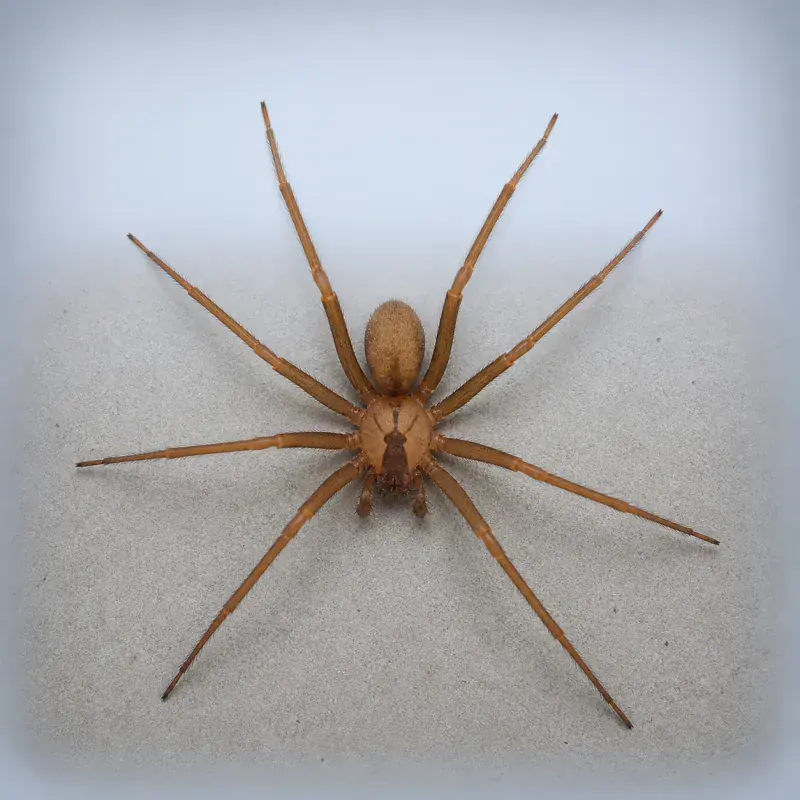
First-wave homes have crawl spaces, siding meeting soil, and attached garages holding cardboard since the Carter administration. That is recluse and rodent country. Post-2000 additions sit on slab, and a slab hands subterranean termites and ants expansion joints, plumbing penetrations and a stem wall to follow. Broken Arrow Public Schools fills 28 sites with over 20,000 students, so this is family housing: pets, playsets, cluttered garages.
Weather does the scheduling. Broken Arrow runs a humid subtropical climate, with a January average low near 22 degrees, a July average high near 93 and about 38.9 inches of rain a year. Pests get pushed indoors twice a year: once when July and August heat drives ants and spiders toward moisture inside, and again when the first hard freeze sends mice hunting for a warm wall. Those two windows produce most of the urgent calls we route.
What Haikey Creek does to the south side
The Haikey Creek basin drains about 40 square miles of Broken Arrow and south Tulsa, running roughly from 61st and 71st Streets down to the Arkansas River, and from Memorial Drive east to 145th East Avenue. A levee 5,860 feet long went in there in October 1985, after the June 8, 1974 flood that still holds the local record.
Water that size shifts the pest mix within a few blocks. Culex mosquitoes, the group carrying West Nile virus, peak nationally from July into October, so a shaded low yard near the creek runs a longer season than a breezy lot two miles north.
The five that fill local schedules
Five pests carry most of the local call volume, from the rebuilt storefronts of the Rose District, named in October 2012, out to new builds near the Wagoner County line.
| Pest | Where it turns up here | Treatment |
|---|---|---|
| Brown recluse | Garages, floored attics, box storage in pre-1990 homes | Glue boards and void dusting |
| Subterranean termite | Slab edges, expansion joints, porch pours | Liquid barrier or in-ground baits |
| House mice | Sill plates and garage door corners after the first cold snap | Exclusion first, trapping second |
| Mosquitoes | Shaded yards and drainage easements near the creek | Barrier spray plus water removal |
| Paper wasps | Soffits, porch ceilings and playsets from late July | Nest treatment at dusk |
Medical note: a recluse bite with a growing dark or blistered center, or a sting followed by hives, swelling away from the site or trouble breathing, needs a doctor. The Oklahoma Center for Poison and Drug Information answers at 1-800-222-1222.
What pest control in Broken Arrow typically costs
These are typical ranges in the Tulsa market, not quotes. The licensed company you reach prices the job after seeing the house, and crawl space access and linear feet of foundation move the number more than square footage.
| Service | Typical local range |
|---|---|
| Initial general pest service | $150 to $300 |
| Quarterly maintenance | $100 to $175 per visit |
| Termite inspection with the state report form | Often free with service, otherwise $75 to $150 |
| Full liquid termite treatment | $1,200 to $3,000 |
| Mosquito barrier, per application | $70 to $120 |
| Rodent exclusion and sealing | $250 to $600 |
Broken Arrow ranks third in Oklahoma for manufacturer concentration, so food-safe commercial accounts price separately by square footage.
How a Broken Arrow call gets handled
Calls are routed by ZIP code, so a Broken Arrow address reaches a company already running this side of the metro. Tulsa Pest Partners is an independent referral service: we do not treat houses, we connect you with a licensed local company.
Ask for the license first. Applicator licensing and service technician identification run through the Oklahoma Department of Agriculture, Food and Forestry, and the state publishes its own termite and wood destroying insect report form, the ODAFF-1, which is what a real inspection produces when a house changes hands. Pricing here tracks Tulsa proper.
Three questions save money. Ask whether the initial visit includes a follow-up or bills separately. Ask what the quarterly plan actually covers, because plenty of them exclude termites, mosquitoes and wildlife entirely. Ask who performs the work, since a company that subcontracts termite or wildlife jobs is quoting you somebody else's schedule. None of that is rude. It is the same homework you would do before replacing a roof.
How the call works
- Describe the problem. A recluse in a shoe, termite swarmers on a window sill, ticks coming in on the dog. A sentence or two is plenty.
- Get routed by ZIP code. The call lands with an independent, licensed company that already services your neighborhood, whether that is midtown Tulsa or Claremore.
- Set the appointment. Most companies can give you an inspection or treatment window before you hang up.
Whether a same-day or 24/7 visit is possible comes down to provider participation in your area, technician availability and demand on that day. It is never guaranteed, and open slots vary by market and by how full the schedule already is.
Frequently asked questions
Does a newer Broken Arrow home still need termite protection?
Yes. Eastern subterranean termites work from the soil up, so a slab gives them expansion joints, plumbing penetrations and a stem wall to follow. Age barely matters. What matters is soil contact, moisture, and whether a treated barrier or bait system was installed and kept current after the builder left.
Are brown recluse worse in older Broken Arrow neighborhoods?
Usually. Homes built in the 1970s and 1980s have the crawl spaces, floored attics and years of cardboard storage recluse prefer, and the spiders have had decades to settle in. Newer builds are not immune, but populations there usually arrive inside stored belongings rather than already living in the structure.
How much does an exterminator in Broken Arrow charge?
General pest work here usually starts around $150 to $300 for the initial service, then roughly $100 to $175 per quarterly visit. Termite jobs and rodent exclusion price separately, since they are measured in linear feet and access rather than square footage. Typical local ranges, not quotes.
When should mosquito service start in Broken Arrow?
Most homeowners near the Haikey Creek basin start in late spring and run into October, since Culex mosquitoes peak nationally from July onward. Barrier treatments do the heavy work, but emptying gutters, saucers, tarps and toys every week does more than people expect and costs nothing.