
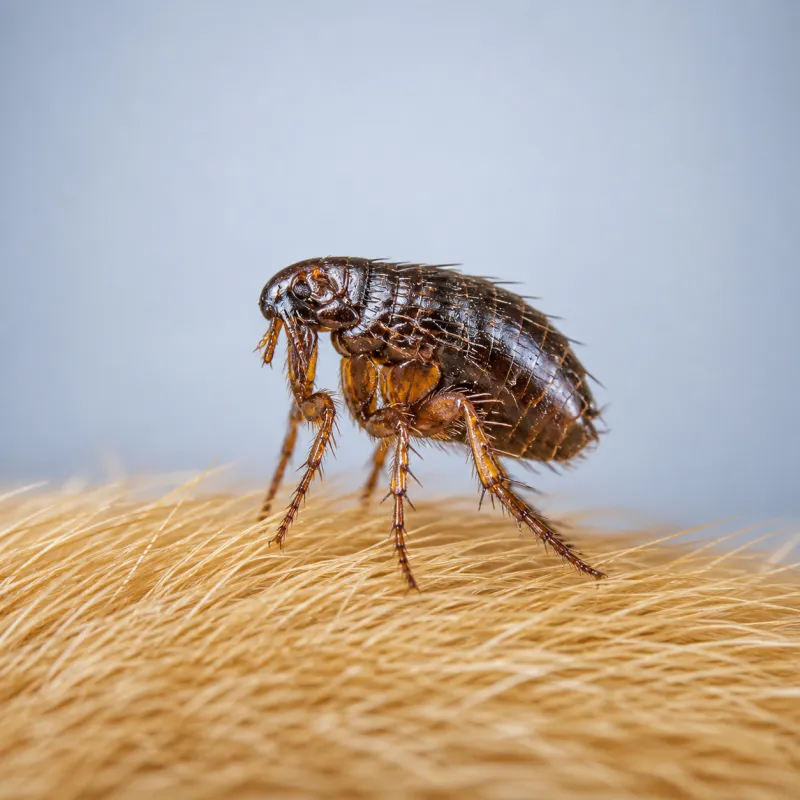
It is the cat flea, whether or not you own a cat
The species infesting American homes is the cat flea, and it does not care what animal you have. University of Kentucky extension entomologists identify Ctenocephalides felis as the most common flea infesting both dogs and cats, and it will happily feed on people, rabbits, opossums and raccoons too. Homes with no pet at all get infested every year in Green Country.
Oklahoma State University Extension describes the adult as dark brown, strongly flattened side to side, covered in spines, and roughly a sixteenth to a tenth of an inch long. The black specks in your pet's fur that turn rusty red on a damp paper towel are flea dirt, partly digested blood the adults pass while feeding, and it doubles as food for the larvae. Adults jump about six inches vertically, enough to catch a passing dog, a pant leg or a shoe. They rarely hop straight from one pet to another, which is why blaming the neighbor's dog misses the real source.
Why one treatment never finishes the job
The cocoon is the reason, and every failed flea treatment traces back to it. OSU Extension lays out the cycle: an adult female begins laying about two days after she starts feeding, lays only on the host, and produces roughly 2,000 eggs in her life. Those eggs fall off wherever the animal goes, which makes an infested pet, in the words of that fact sheet, a living salt shaker of flea eggs.
Eggs hatch in one to ten days. Larvae crawl to the base of the carpet away from light, feed on flea dirt, and spin cocoons after five to twelve days. Adults normally emerge one to four weeks later, but if nothing stimulates them the cocoon can sit dormant for roughly six months, and nothing you spray penetrates it. That is why the classic pattern is treat, feel relieved, then watch fleas reappear in ten to fourteen days. OSU Extension puts scale on it two ways: for every six fleas you see, roughly 300 are in the environment or on the pet, and about 95 percent of an infestation sits in about 5 percent of the house or yard.
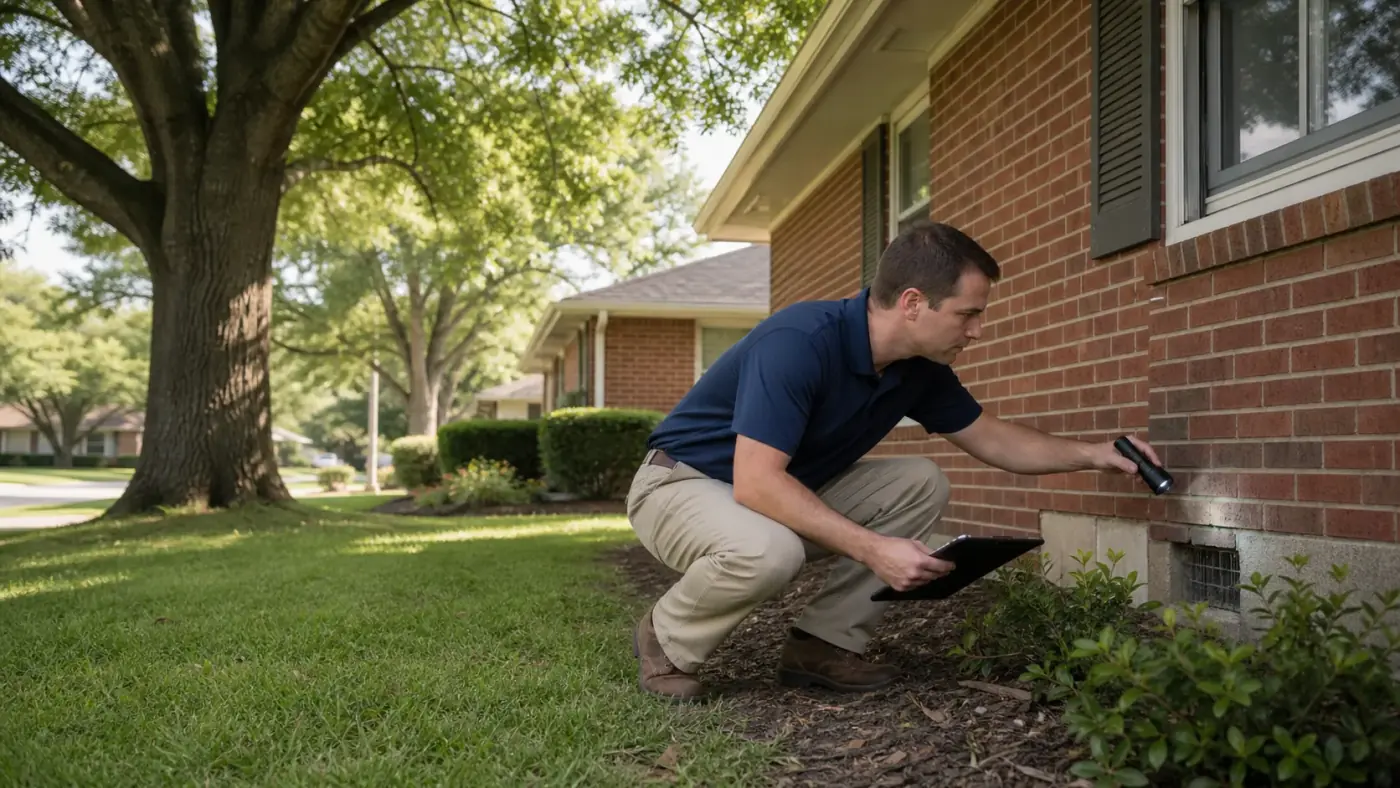
The sequence a flea exterminator in Tulsa should follow
Timing is the whole strategy, because the goal is to have insecticide and a treated pet in place when each new wave emerges from those cocoons. OSU Extension is explicit that pets and the indoor and outdoor environment have to be handled at the same time, and that every dog, cat and ferret in the house gets treated together.
| When | What happens |
|---|---|
| Day 1, morning | Every pet starts a veterinary flea product the same day. Ask the vet rather than grabbing a shelf product, since some formulations are toxic to cats |
| Day 1, before treatment | Wash pet bedding in hot water, clear floors and closets, and vacuum hard with a beater bar where the pet sleeps and under furniture. Seal the bag in an outdoor bin |
| Day 2 | Interior treatment: adulticide plus insect growth regulator on carpet, under furniture and beneath cushions the pet uses. Hard floors get vacuumed, not treated |
| Days 3 to 14 | Keep vacuuming daily. Vibration triggers cocoons to hatch early and pushes emerging adults into the treated surface. Expect to still see fleas |
| Day 10 to 14 | Retreat the source points, the small areas where the pet actually rests. This second pass is where most do it yourself attempts quit |
| Week 3 | Yard hot spots if pets go outside, focused on shade rather than the whole lawn |
| Week 4 | Reassess. Adults still appearing beyond four weeks means retreatment of the premises, the pet, or both |
Yard hot spots and the wildlife restocking them
Fleas do not develop in open lawn, so treating the whole yard wastes money. OSU Extension notes that areas in continuous sunlight will not support flea development while shady, moist areas will, which narrows the target list to dog houses and kennel runs, flower beds, under decks and porches, the crawl space and shaded fence lines. A field test from University of Kentucky: walk the property in white athletic socks pulled high, and adult fleas show up against the white.
If there are fleas and no pet, something else is dropping them off. University of Kentucky entomologists point to opossums, raccoons, skunks, squirrels and feral cats, and a family of any of them living in an attic, chimney or crawl space is a quiet, continuing source. Treating the house without removing the animal just resets the clock. That is a wildlife removal job first and a flea job second. While a technician is working those same shaded edges, it is worth asking about tick control, since lone star ticks favor the identical ground.
Oklahoma humidity stretches the season
Green Country weather is close to ideal for fleas, which is why the season here does not end in October. OSU Extension puts optimum egg hatch at 75 to 85 degrees with humidity between 50 and 90 percent, and a Tulsa summer supplies both for months. Indoors, a heated house holds those conditions year round, and dormant cocoons carry a population straight through winter.
Three products to skip. OSU Extension states that ultrasonic flea collars do not repel fleas, since fleas cannot perceive sound waves although pets can, and that some pets suffered temporary hearing loss from them. The same fact sheet notes brewer's yeast, B vitamins and sulfur products have not been proven as repellents. And University of Kentucky entomologists do not recommend total release foggers for fleas, because the ingredients go up into the air instead of down into the carpet base where the larvae live.
Typical flea pricing in the Tulsa market
These are ranges commonly seen across the Tulsa metro, not quotes. Square footage, how much carpet you have and whether the yard needs work move the number.
- Interior flea treatment, average home: roughly $150 to $350.
- Interior plus yard hot spots: roughly $250 to $500.
- Required follow up visit at ten to fourteen days: roughly $75 to $150, and often included in the initial price.
- Quarterly plan that covers fleas along with other pests: roughly $100 to $175 per visit.
- Veterinary flea product for the pets: separate, and not optional if you want this to end.
Ask two questions that separate a real flea program from a spray and pray. Does the interior treatment include an insect growth regulator, and is the two week follow up included or billed separately. A company promising one visit will do it has not read the same fact sheets. Every pest control business and applicator in Oklahoma is licensed through the Oklahoma Department of Agriculture, Food and Forestry. The companies in our network are independent and licensed, and calls route by ZIP code across Tulsa, Sand Springs and Bixby.
How the call works
- Describe the problem. A recluse in a shoe, termite swarmers on a window sill, ticks coming in on the dog. A sentence or two is plenty.
- Get routed by ZIP code. The call lands with an independent, licensed company that already services your neighborhood, whether that is midtown Tulsa or Claremore.
- Set the appointment. Most companies can give you an inspection or treatment window before you hang up.
Whether a same-day or 24/7 visit is possible comes down to provider participation in your area, technician availability and demand on that day. It is never guaranteed, and open slots vary by market and by how full the schedule already is.
Frequently asked questions
Why do I still have fleas after the exterminator came?
Because the pupal cocoon resists insecticides, so eggs and pupae already in your carpet keep producing adults for one to four weeks after treatment. Seeing fleas during that window is normal, not a failed treatment. Keep vacuuming daily to trigger early emergence, keep every pet on its veterinary product, and expect the follow up visit around day ten to fourteen.
Can I get fleas without owning a pet?
Yes, and it happens in Tulsa every year. The cat flea feeds on wildlife too, and University of Kentucky entomologists point to opossums, raccoons, skunks, squirrels and feral cats as the usual culprits when a home has fleas and no pets. An animal living in the attic, chimney or crawl space keeps seeding fleas until it is removed.
How much does flea treatment cost in Tulsa?
An interior treatment for an average home typically runs roughly $150 to $350, and interior work plus yard hot spots runs roughly $250 to $500. A follow up visit at ten to fourteen days runs roughly $75 to $150 and is often included. Those are typical Tulsa market ranges rather than quotes, and pet products are separate.
Do I have to treat the yard for fleas?
Only the shaded parts, and only if pets spend real time outdoors. Oklahoma State University Extension notes that open lawn in continuous sunlight will not support flea development, while shady moist spots will. That narrows treatment to dog houses, flower beds, under decks and porches, crawl spaces and fence lines rather than the whole property.