
Which rodent do you actually have?
Three rodents account for nearly every call in the Tulsa metro: the house mouse, the Norway rat and the roof rat. Telling them apart is not trivia. A roof rat lives above your head while a Norway rat lives at or below the ground floor, and the traps go in completely different places.
| Rodent | Where it lives | Signs it leaves | Opening it uses |
|---|---|---|---|
| House mouse | Wall voids and cover, often nesting near heat. Forages only ten to twenty five feet from the nest | Droppings one eighth to one half inch, dark, pointed at both ends. Fine gnaw marks, shredded nests | A gap narrower than a dime. Seal foundation cracks one quarter inch and up |
| Roof rat | Up high. Attics, wall and ceiling voids, cabinets, trees. Sleek, pointed muzzle, tail longer than head and body | Overhead running at night, torn attic insulation, gnawed wiring, runs along utility lines | Roof line gaps, soffit and fascia openings, a half inch door gap |
| Norway rat | Low. Burrows at foundations and under slabs, basements, ground floors. Stocky, blunt muzzle, short tail | Open burrows at the foundation, greasy rub marks, large droppings, gnawed door corners | Ground level gaps, broken sewer lines and drains, the same half inch door gap |
Norway rats are documented throughout the lower forty eight states. Roof rats have a narrower national range that is expanding, and they are the one to suspect when the noise is overhead rather than under the floor.

How they get into older Tulsa houses, and why October is loud
House mice are most likely to move into a structure as temperatures drop, which in Green Country means the first genuinely cool nights of fall. Nothing about the house changed. The outside just stopped being comfortable.
On midtown Tulsa homes the same handful of openings show up over and over:
- Foundation cracks and the gaps where water, gas and electrical lines enter the wall.
- Dryer vents with a broken damper, which is a heated tunnel into the laundry room.
- Garage door corners, where the seal never quite meets the concrete at the ends. The most common mouse entry on any house with an attached garage.
- Soffit and fascia gaps, especially where a limb touches the roof and gives a rat a bridge.
- Crawl space vents with torn screen, and basement window wells.
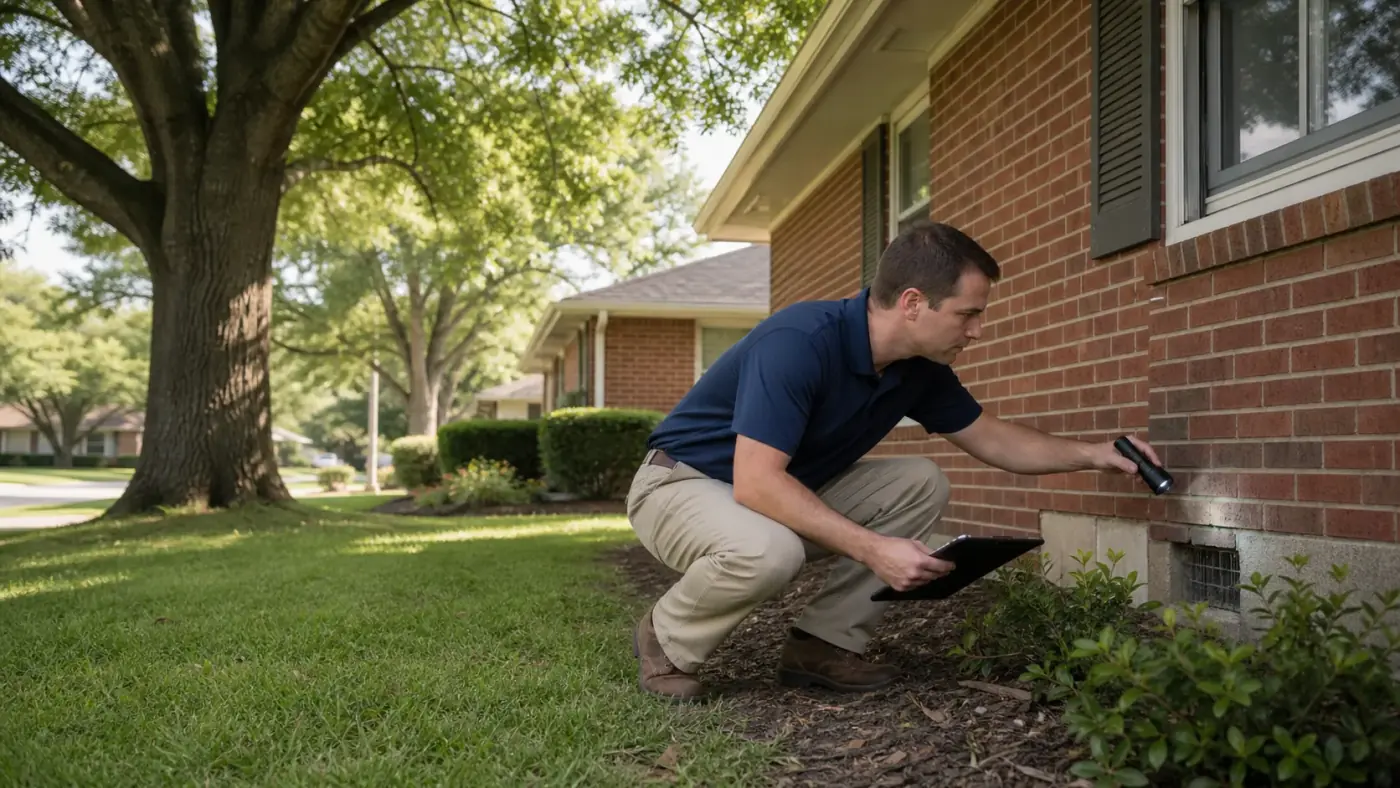
Sealing has to use material rodents cannot chew. Rats get through plastic, foam, wood and caulk, so the patch is steel wool, hardware cloth or sheet metal, with foam only as filler behind it. Trimming limbs back from the roof removes the highway before the sealing starts. If you want to do the first pass yourself, our fall rodent-proofing walk-around for Tulsa homes shows where to shine the flashlight and what to pack each gap with.
Why exclusion beats poison in an attic
Poison in an attic solves the census and creates the smell. A rodent that eats bait dies wherever it happens to be, and in a wall void or above a bedroom ceiling that means two to three weeks of odor and flies, with no way to reach the carcass without cutting drywall. University of California pest guidance is blunt about the order of operations: close the entry points before baiting outside, so poisoned rodents do not come inside to die.
There is a second cost. The EPA notes that second generation anticoagulant rodenticides stay in animal tissue longer than older compounds, which raises the risk to nontarget animals that feed on the bait or on a poisoned rodent. In practice that is the owl or hawk that catches a slow, dying rat, and the dog that finds an unsecured bait block. Those products are no longer registered for consumer sale and are limited to commercial and structural pest control use, which tells you how carefully they need handling.
Bait is not useless. It is the wrong first move indoors.
What a real trapping and sealing program looks like
A licensed local company should run rodent work in three passes rather than one visit: an inspection covering attic, crawl space, garage and roof line, then trapping, then the sealing work, with a return trip to read the results.
- Inspection. Species, runways, droppings and every opening. A program written without an attic and crawl space look is guesswork.
- Trapping. Snap traps against walls and edges where the droppings are, since mice travel edges and rarely cross open floor. Roof rat traps go up on ledges, beams and rafters.
- Patience with rats. Rats avoid new objects for days and sometimes weeks, so untouched traps in the first week are normal, not a failed job.
- Exclusion. Openings closed in steel or hardware cloth, vents rescreened, door sweeps replaced, garage door seal corrected.
- Sanitation. Pet food up at night, bird seed in sealed cans, tight garbage lids, no cardboard stacks on the garage floor.
Ask for the count. A company that tells you how many rodents came out of the traps and how many openings it closed is doing the work.
Insulation, wiring and attic cleanup
Rodents wreck attics two ways. They shred insulation for nesting, which flattens the material and drops its R value, and they gnaw wiring, which causes shorts, appliance failures and real fire risk. Roof rats do both while they are up there.
Cleanup is a separate line item from removal and it is worth doing when contamination is heavy: vacuuming droppings and nesting material with a HEPA equipped vacuum, treating the surfaces, then removing and replacing insulation in the fouled areas. If you go up yourself, wear gloves and a respirator, and never sweep dry droppings.
Typical rodent pricing in the Tulsa market
Rodent work around Tulsa is usually priced in two parts: the trapping program, and the sealing that keeps the next group out. These are typical local ranges, not quotes, and the company you are connected with sets its own price after seeing the roof line and the crawl space.
- Inspection: often free with service, otherwise roughly $75 to $200.
- Trapping program with follow-up visits: roughly $250 to $600.
- Exclusion and sealing work: roughly $300 to $1,500, driven by roof complexity, soffit condition and how much of the foundation needs attention.
- Attic cleanup with insulation removal and replacement: roughly $1,000 to $4,000 depending on square footage and how bad the contamination is.
The exclusion line is the one people try to cut, and it is the one that decides whether you are paying for this again next October. If the budget is tight, seal first and trap on a smaller scale rather than the reverse.
How the call works
- Describe the problem. A recluse in a shoe, termite swarmers on a window sill, ticks coming in on the dog. A sentence or two is plenty.
- Get routed by ZIP code. The call lands with an independent, licensed company that already services your neighborhood, whether that is midtown Tulsa or Claremore.
- Set the appointment. Most companies can give you an inspection or treatment window before you hang up.
Whether a same-day or 24/7 visit is possible comes down to provider participation in your area, technician availability and demand on that day. It is never guaranteed, and open slots vary by market and by how full the schedule already is.
Frequently asked questions
How small a hole can a mouse get through in Tulsa?
A house mouse can squeeze through an opening narrower than the diameter of a dime, which is why extension guidance says to seal foundation cracks a quarter inch and larger. Rats need more room but not much, and either rat can pass under a door with a half inch gap. Patch with steel wool, hardware cloth or sheet metal, since rodents chew through foam and caulk.
Why do mice show up in the fall?
House mice are most likely to invade structures as outdoor temperatures drop, so the first cool nights of a Green Country fall push them toward warm walls, garages and attics. Nothing about your house changed. October and November are the busiest rodent months in Tulsa and the best time to seal a home, before a small entry problem becomes a nesting population.
Should I use poison for rats in my attic?
Not as the first move indoors. A poisoned rodent dies inside a wall or ceiling void, which means weeks of odor with no way to reach it. The EPA also notes second generation anticoagulants persist in tissue and raise the risk to owls, hawks and pets that eat a poisoned rodent. Seal the structure, trap inside, and leave bait for secured exterior stations.
How long does rodent control take?
Plan on two to four weeks for a normal house. Trapping usually knocks down the population in the first week or two, though rats are wary of new objects and can ignore traps for days before touching them. The sealing work happens alongside or right after, and a follow-up visit confirms activity has stopped rather than just slowed.