
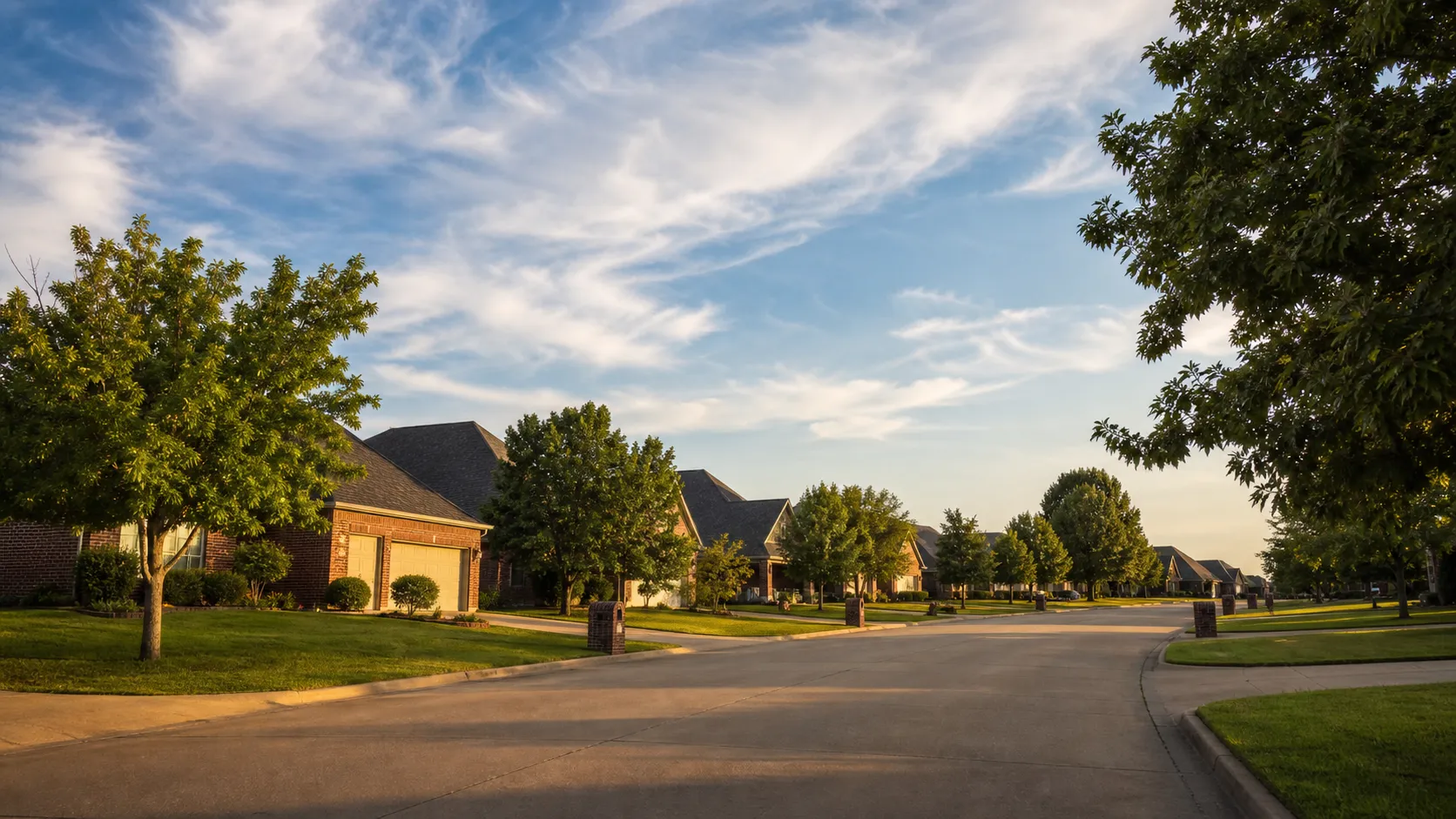
An industrial town wearing a suburb's address
Sand Springs pest problems come out of its building stock, and that stock is old. Charles Page founded the place in 1911 and it incorporated the following year with 400 residents, built around the Sand Springs Home he started for orphaned children, which began with 27 kids in a tent and still operates. Page also built the Sand Springs Railway in 1911, an interurban running to Tulsa, and a power plant the same year that was the town's only electricity until 1947.
Industry followed him. Kerr Glass Manufacturing moved down from Chicago in 1913, Commander Mills and a string of lamp and box plants came after, and Sand Springs became a center of glass production in Oklahoma. The 2020 census counted 19,874 residents, up only 5.1 percent from 18,906 in 2010, so very little of this town is new construction. What you get instead is basements, crawl spaces, board siding, stone foundations, detached shops and sheds that have been standing for generations. Every one of those is habitat, and the Sand Springs school district, the city's largest employer, runs eight campuses through the middle of it.
Post oak hills and 330 miles of shoreline
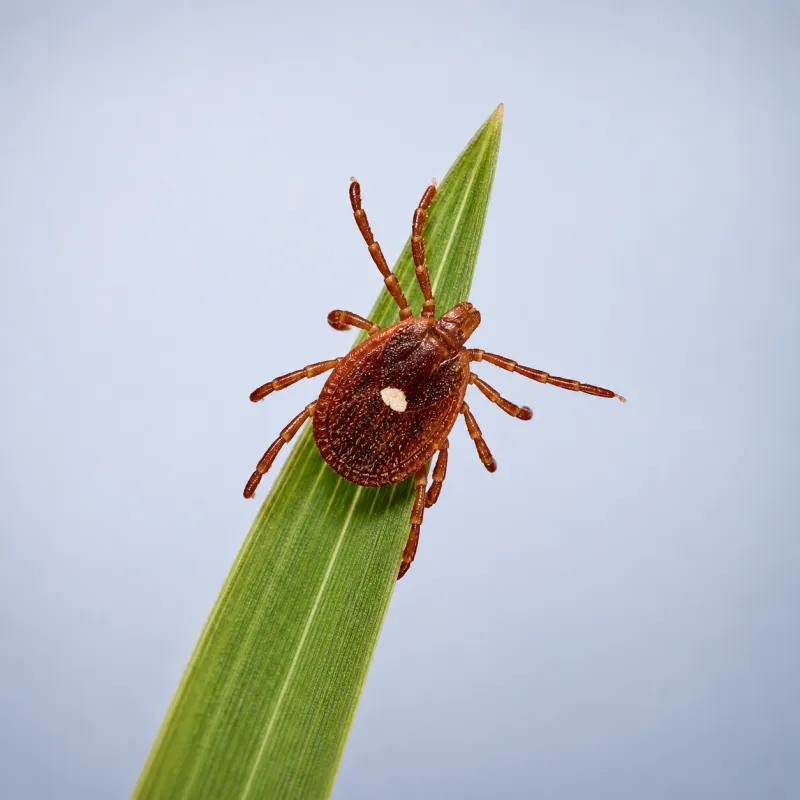
The land west of Tulsa is timbered and broken, and that rewrites the pest list. The western suburbs of the Tulsa metro sit inside the Cross Timbers, a belt of post oak and blackjack oak on coarse sandy soils that runs from southeastern Kansas across central Oklahoma into Texas, now heavily invaded by eastern redcedar. Second-growth woods with dense underbrush is precisely the habitat lone star ticks prefer, and deer move through it without hurrying.
Then there is the water. Sand Springs sits about seven miles west of downtown Tulsa, spread over 22.07 square miles at 650 feet, right up against Keystone Lake and Keystone State Park. The lake covers roughly 23,600 acres with about 330 miles of shoreline behind a dam the Tulsa District of the Army Corps of Engineers finished in 1968. Shoreline, timber and a town squeezed between them adds up to a wildlife corridor with your back fence at the end of it.
What the woods and the old houses send you
The Sand Springs call mix leans woodland and structural rather than agricultural.
| Pest | The terrain that feeds it | Typical service |
|---|---|---|
| Lone star ticks | Oak and cedar woods with thick underbrush, deer trails to the yard | Perimeter yard treatment plus a mowed buffer strip |
| Brown recluse | Basements, crawl spaces, shops and outbuildings from the mill years | Heavy glue board program plus void dusting |
| Raccoons, opossums, skunks | Lake and creek cover running straight to the back fence | Trapping plus exclusion at soffits and crawl doors |
| American cockroaches | Older sewer lines, floor drains and damp basements | Crack and crevice work plus drain treatment |
Tick note: lone star ticks carry ehrlichiosis and tularemia, and their bites are linked to alpha-gal syndrome, a delayed allergy to red meat. Fever, headache or a spreading rash within two weeks of a bite needs a doctor, and so does hives or stomach trouble hours after eating beef or pork. The Oklahoma Center for Poison and Drug Information answers at 1-800-222-1222.
What pest control in Sand Springs costs on an older home
Older houses cost more to service than new ones, and it is not a markup. A crawl space that has to be entered, a basement with block walls, and two outbuildings that also need treatment are simply more work. These are typical ranges in the Tulsa market, not quotes.
| Service | Typical local range |
|---|---|
| Initial general pest service | $150 to $325 |
| Quarterly plan | $100 to $180 per visit |
| Recluse program with glue boards and follow-up | $250 to $500 initial |
| Yard tick treatment | $80 to $160 per application |
| Wildlife trapping and exclusion | $300 to $800 |
| Crawl space or basement dusting | $150 to $400 depending on access |
Ask whether the price covers the detached garage and the shed. In this town that is where half the problem lives, and plenty of quarterly plans quietly stop at the house wall.
Three counties, one phone call
Sand Springs spans Osage, Creek and Tulsa counties, which is more paperwork than most people expect from a town of twenty thousand. Calls are routed by ZIP code, so your address reaches a licensed local company that actually covers it. Tulsa Pest Partners is an independent referral service: we do not treat property, we connect you with the company that will.
Ask for the Oklahoma license before scheduling. Applicator licensing and service technician identification run through the Oklahoma Department of Agriculture, Food and Forestry, which also publishes the ODAFF-1, the state's official termite and wood destroying insect report. On a house this old, that inspection is worth doing whether or not anyone is buying. Rates here sit near Tulsa and Sapulpa.
How the call works
- Describe the problem. A recluse in a shoe, termite swarmers on a window sill, ticks coming in on the dog. A sentence or two is plenty.
- Get routed by ZIP code. The call lands with an independent, licensed company that already services your neighborhood, whether that is midtown Tulsa or Claremore.
- Set the appointment. Most companies can give you an inspection or treatment window before you hang up.
Whether a same-day or 24/7 visit is possible comes down to provider participation in your area, technician availability and demand on that day. It is never guaranteed, and open slots vary by market and by how full the schedule already is.
Frequently asked questions
Are ticks worse in Sand Springs than the rest of the metro?
On wooded lots, yes. Lone star ticks favor second-growth woods with thick underbrush, which describes much of the Cross Timbers country west of Tulsa, and deer keep the population fed. A mowed buffer between lawn and treeline, cleared leaf litter and a treated perimeter cut exposure sharply without touching the woods themselves.
Do older Sand Springs homes get more brown recluse?
Generally yes. Recluse want undisturbed, cluttered, dry spaces, and basements, crawl spaces, floored attics and detached shops supply all of it. Homes here have had decades to accumulate both storage and spiders. Glue boards placed heavily are the only honest way to size the population before anyone quotes a treatment.
How much does an exterminator in Sand Springs charge?
Initial general service commonly runs $150 to $325 here, with quarterly visits around $100 to $180. Older homes with crawl spaces, basements and outbuildings land at the upper end because there is more structure to cover. Recluse and wildlife programs quote separately. Figures below reflect what Sand Springs homeowners commonly report paying, and none of them is a quote.
Why do raccoons show up in the fall?
Cooler nights and shorter food supply send them looking for a dry, defensible den, and an uncapped chimney, an open soffit or a crawl space door is ideal. Sand Springs backs onto lake and creek cover, so the supply is constant. Trapping alone fails. Sealing the entry points is what ends it.