
Armadillos and the lawn that got tilled overnight
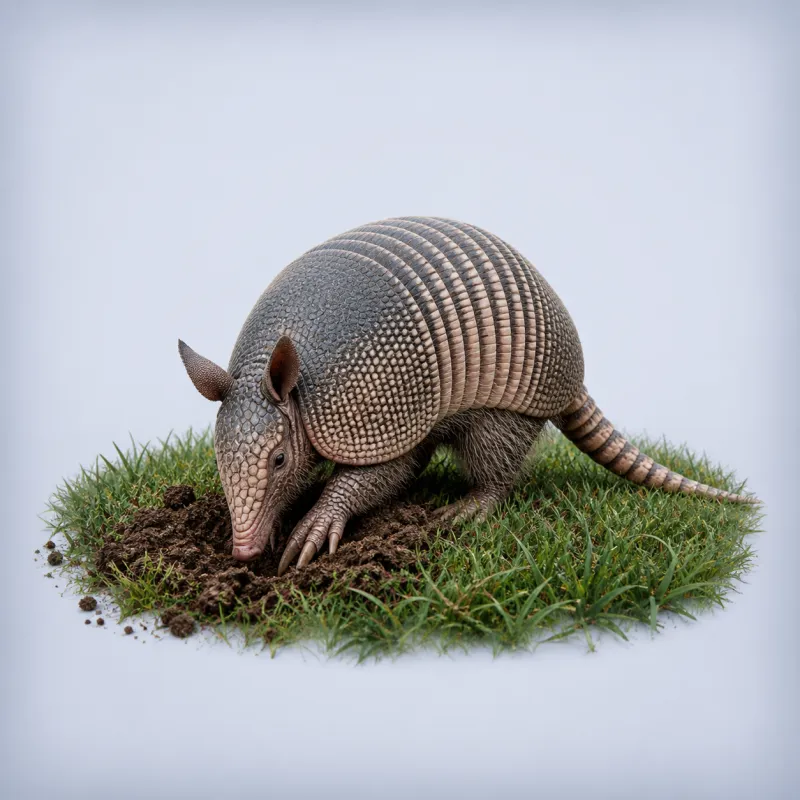
Armadillo damage is the most recognizable wildlife complaint in Oklahoma yards: cone shaped holes, one to three inches deep and three to five inches wide, punched across the lawn overnight. The animal is not eating your grass. More than ninety percent of a nine banded armadillo's diet is insects, especially beetle larvae, so it is digging for grubs and the turf is collateral. The damage resembles raccoon work closely enough that identification comes before anybody sets a trap.
The bigger problem is underground. Armadillos dig burrows seven to eight inches across and up to fifteen feet long, often under foundations, slabs and decks. That is structural, not landscaping.
What does not work is worth saying plainly. There are no registered repellents, no toxicants and no frightening device that reliably moves them. Cutting soil insects makes a yard less attractive, clearing brush removes their cover, and a fence buried twelve to eighteen inches, three feet high and angled outward protects one area. Past that, removal means trapping by someone permitted to do it. Never handle one bare handed, since armadillos can carry the bacterium that causes leprosy. If the holes are still in the lawn rather than under the slab, our guide to armadillo lawn damage in Tulsa covers the repairs, the grub count and the fixes that do not work.
Raccoons, opossums, squirrels and skunks
The attic and deck crowd arrive the same way: a gap, a limb, an easy meal. Raccoons take chimneys and attics, and are strong enough to peel back flashing and soffit panels. Squirrels chew into soffits where trim has already rotted, and their gnawing on wiring is why a squirrel overhead is not a joke. Opossums move under decks and into crawl spaces, and skunks den under sheds and porches, which you usually learn downwind.
The Oklahoma Department of Wildlife Conservation publishes a prevention list worth doing before you need it: Cap the chimney with sheet metal and heavy screen, repair soffits and fit metal vent covers, prune limbs about ten feet back from the roof, skirt the deck with hardware cloth, and keep garbage in heavy cans. Quarter inch hardware cloth buried one to two feet deep stops digging into a crawl space.
Bats are protected, and the calendar decides the job
Bats are the one attic animal where timing is not negotiable. Eviction and exclusion generally should not be attempted between May 15 and August 15, because that is maternity season. A one way door installed then lets the adults out and seals flightless pups inside, and the mothers work into the living space trying to reach them.
Legal status matters too. Several Oklahoma bat species are federally protected, including the Indiana bat and the northern long eared bat, and the state nuisance wildlife permit covers bats except certain endangered species.
Done right, bat work is exclusion and carpentry: no toxicants are registered for bats and trapping is not recommended. The operator finds active openings by rub marks and guano, installs one way devices, seals everything else down to gaps a quarter inch by an inch and a half, then closes the rest once the colony is out.
Snakes, including the ones you do not handle
Oklahoma has forty six native snake species and seven are venomous, so most snakes in a Tulsa yard are harmless rodent eaters. The copperhead is the venomous one Green Country homeowners actually meet, since it lives across the eastern and central parts of the state. Its venom is considered mild and rarely fatal with prompt treatment, and the snake is not aggressive. Bites happen because copperheads hold still and trust their camouflage until somebody steps near one.
A venomous snake call goes to a professional. Back away, get the pets inside, and let a permitted operator handle it. Rodent control does more in the long run, since snakes follow the food, which is why rodent work and snake calls travel together.
If someone is bitten by a venomous snake: call 911 or get to an emergency department immediately. Do not cut the wound, apply ice or use a tourniquet. Keep the person calm, the limb below heart level, and remove rings before swelling starts. The Oklahoma Center for Poison and Drug Information answers at 1-800-222-1222 around the clock.
What removal involves, and what Oklahoma allows
Anyone charging for nuisance wildlife removal in Oklahoma needs a Nuisance Wildlife Control Operator permit from the Oklahoma Department of Wildlife Conservation, which requires certification, a documented complaint and the owner's approval. Traps are tagged with the operator's name and checked at least every twenty four hours, and poison is not allowed under the permit.
| Animal | What you see | What removal involves |
|---|---|---|
| Armadillo | Cone shaped holes across the lawn overnight | Trapping at burrows and routes, brush removal, burrow fill |
| Raccoon | Heavy night noise, torn soffit, chimney sounds | Removal, chimney cap, soffit and roof repair |
| Opossum | Slow animal under a deck or crawl space | Removal, hardware cloth skirting, crawl space closure |
| Squirrel | Daytime scratching overhead, chewed fascia and wiring | One way door, fascia repair, limbs pruned back |
| Skunk | Odor near a shed or porch, grub holes in turf | Careful removal, buried barrier under the structure |
| Bat | Guano at a gap, evening flights from the roof line | One way devices outside maternity season, then sealing |
| Snake | Shed skins in a crawl space, snake under a step | Removal by a permitted operator, harborage cleanup |
Relocation is limited too. Captured wildlife goes back inside Oklahoma, outside any city limit, no more than one county from the capture site, and never on private land without written permission. The department discourages urban releases of raccoons, opossums, skunks and squirrels, since that hands your problem to somebody else. That is the honest argument for exclusion: relocation is not the tidy ending people picture, and the repair is what ends the cycle.
Typical wildlife pricing around Tulsa
Wildlife work is priced by the animal, the access and the repair, and the repair is usually the bigger half. Oklahoma does not regulate what an operator charges. Typical local ranges, not quotes:
- Inspection: roughly $75 to $250, often credited toward the job.
- Trapping program over one to two weeks: roughly $250 to $700.
- Exclusion and repair, from a chimney cap to soffit rebuilding: roughly $400 to $2,500.
- Attic decontamination after raccoons or bats: roughly $600 to $3,000.
Ask what happens if the animal returns within thirty days, and get the repair scope in writing with the trapping. A company that quotes trapping and stays quiet about the entry point is selling a subscription. Yards with heavy wildlife traffic usually need tick control too, and the Tulsa pest control overview covers the season.
How the call works
- Describe the problem. A recluse in a shoe, termite swarmers on a window sill, ticks coming in on the dog. A sentence or two is plenty.
- Get routed by ZIP code. The call lands with an independent, licensed company that already services your neighborhood, whether that is midtown Tulsa or Claremore.
- Set the appointment. Most companies can give you an inspection or treatment window before you hang up.
Whether a same-day or 24/7 visit is possible comes down to provider participation in your area, technician availability and demand on that day. It is never guaranteed, and open slots vary by market and by how full the schedule already is.
Frequently asked questions
How do I stop armadillos from digging up my Tulsa lawn?
There are no registered repellents or toxicants for armadillos and no frightening device that reliably works, so removal means trapping by a permitted operator. Between visits, reduce soil insects, clear brush piles that provide cover, and fence sensitive beds with wire buried twelve to eighteen inches deep, three feet high, angled outward at the top so the animal cannot climb it.
Can a wildlife operator relocate a raccoon in Oklahoma?
Yes, but within limits. Under Oklahoma Department of Wildlife Conservation rules, released animals must stay inside Oklahoma, go outside any city limit, travel no more than one county from the capture site, and land only where the property owner gave written permission. The department discourages urban releases of raccoons, opossums, skunks and squirrels, since a relocated nuisance animal usually becomes someone else's.
When can bats be removed from an attic?
Outside maternity season. Eviction and exclusion generally should not be attempted between May 15 and August 15, because one way devices installed then trap flightless pups inside while the adults leave. Spring before mid May and late summer into fall are the working windows. Several Oklahoma bat species are federally protected, so this is not a do it yourself project.
What should I do about a snake in my yard?
Leave it alone and identify it from a distance. Oklahoma has forty six native snake species and only seven are venomous, and the copperhead is the one most likely to turn up in Green Country. Most bites happen to people trying to kill or move the snake. If you want it gone, a permitted wildlife operator removes it. For a bite, get emergency care immediately.