

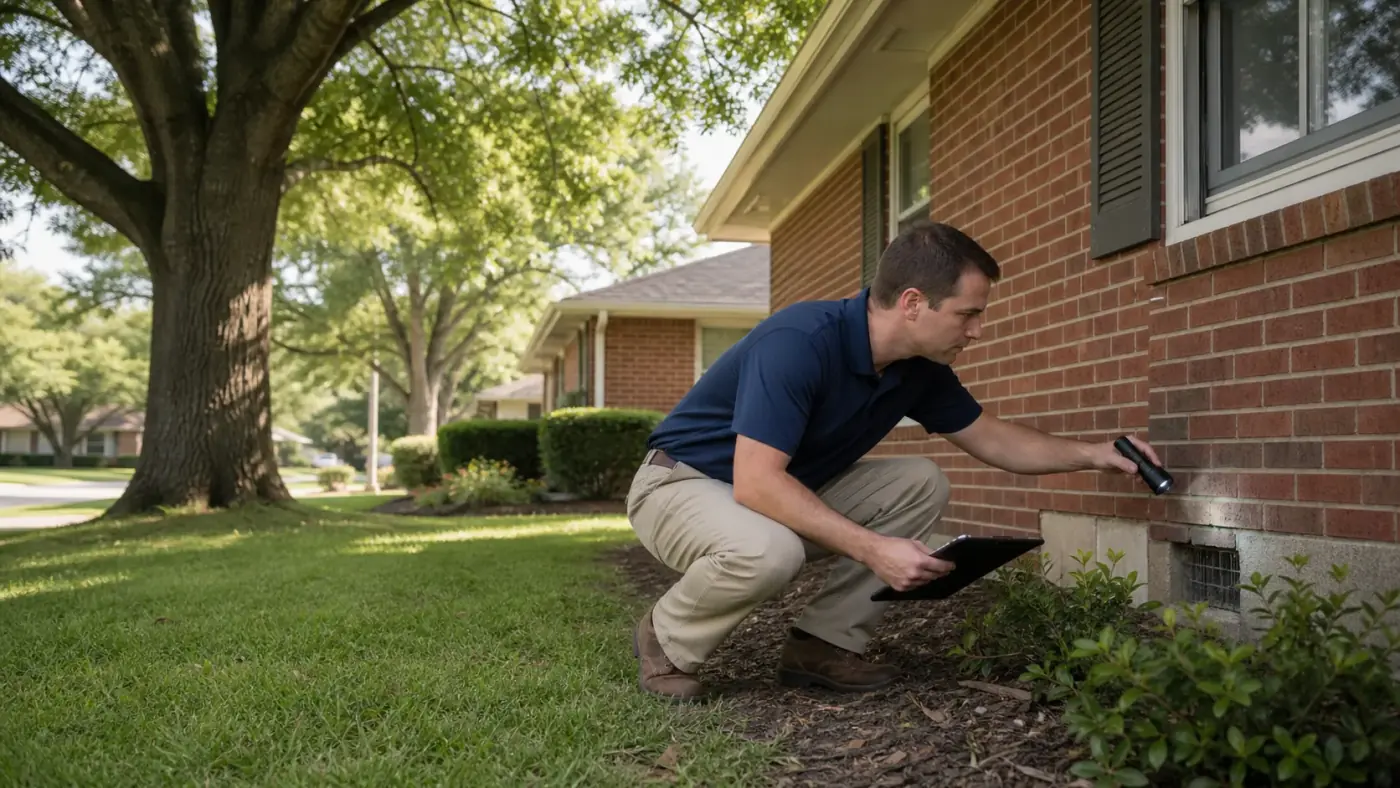
The short answer: it wants the grubs, not the grass
An armadillo tearing up a Tulsa lawn is hunting grubs and earthworms under the turf, and the grass is just in the way. The Internet Center for Wildlife Damage Management (ICWDM) says more than 90 percent of an armadillo's diet is insects, especially larvae. It is basically grocery shopping with its face.
Oklahoma State University Extension says armadillo damage peaks in summer on watered lawns, where soft soil pulls the food up near the surface. It is also a night-shift job. OSU Extension wildlife specialist Dwayne Elmore notes that in the hottest months armadillos are most active from 2 to 5 a.m. Fine at bedtime, wrecked at breakfast.
What a few weeks of waiting looks like
An armadillo that finds good digging in your yard keeps coming back as long as the food does, and the expensive part is rarely the grass.
Picture late August. Around 3 a.m., with the house dark and the AC cycling, something armored works the front yard in a slow zigzag, snout down, punching holes that ICWDM measures at 1 to 3 inches deep and 3 to 5 inches wide. By sunrise the lawn looks like somebody went over it with a garden trowel and a grudge: sod plugs drying roots-up, mulch flung across the walk, the mums you planted Saturday lying on their sides. You fill the holes. It comes back the next night, because the grubs are still there.
Then one morning the hole by the porch step looks different: round, dark, about the width of a salad plate, and going somewhere. ICWDM says armadillo burrows run 7 to 8 inches across and up to 15 feet long, dug under foundations, concrete slabs, driveways and pools. That is a tunnel under concrete you paid for.
Filling all those holes also means kneeling in their dirt. The CDC says some armadillos in the southern United States naturally carry the bacteria that cause leprosy, and that the risk to people is very low. OSU still says wear gloves, and so do we.
Armadillo, skunk or raccoon: reading the holes
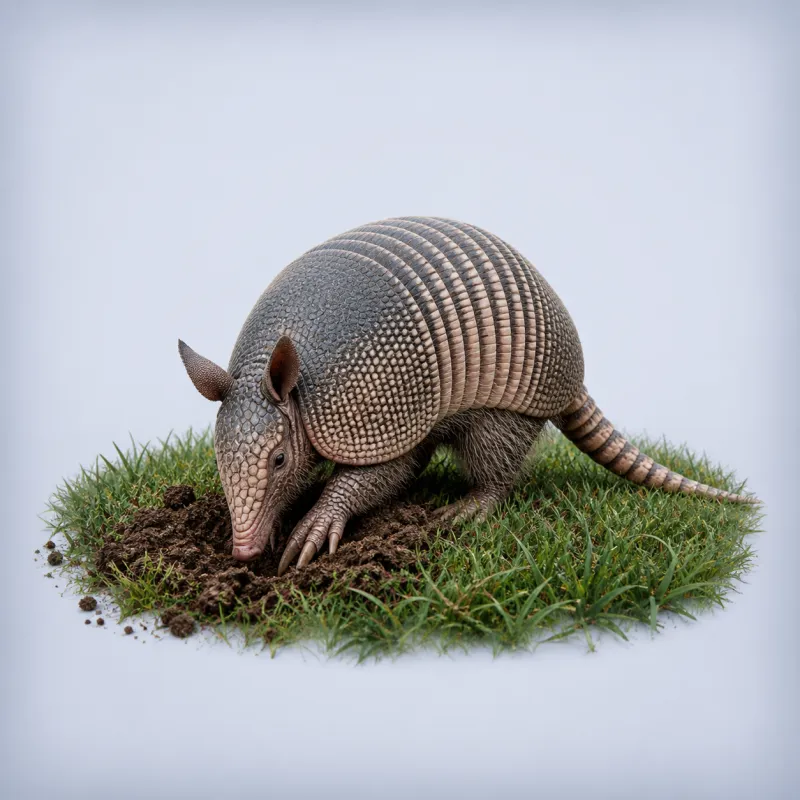
Armadillo damage looks like cone-shaped holes, 3 to 5 inches wide and 1 to 3 inches deep, that appear overnight on the softest, best-watered part of the yard. Skunks and raccoons dig for the same grubs, so check first.
- Size. OSU Extension says skunk digging is usually smaller and shallower. A hole you could sink a fist into points to the armadillo.
- Raccoons. ICWDM says raccoon turf damage can be hard to tell from armadillo work, so the holes alone are not proof.
- A burrow. A round opening 7 to 8 inches across under a brush pile, beside a stump or under a deck is the strongest armadillo tell.
- A camera. A cheap trail camera aimed at the worst patch settles it in a night or two.
Fixes that work, in the order I would do them
Most armadillo damage in a Tulsa yard can be cut way back by the homeowner, starting with the food and the water, not the animal.
- Repair the holes, gloves on. Press the plugs back roots-down and water them in. OSU Extension says Bermudagrass fills bare patches fast, while cool-season grass such as fescue needs reseeding in the fall. September and October are your window.
- Water less, and deeper. OSU suggests cutting back irrigation to break the foraging cycle, and says the extra water fescue needs makes it a favorite target. Bermuda can take a leaner schedule. The shady fescue under your big oak cannot, so pick your battles.
- Count the grubs. Fold back a one-foot square of sod and count the C-shaped white grubs. OSU Extension treats five or more May or June beetle larvae per square foot as the point where treatment makes sense. Armadillos eat earthworms too, so this shrinks the buffet without closing it.
- Clear the cover. ICWDM says armadillos burrow where there is cover and recommends removing brush piles.
- Fence the beds you care about. OSU says a fence more than 12 inches tall, fitted tight to the ground, stops most armadillo activity. Great around a vegetable bed, impractical for a whole lawn.
- Trap, if you are up for it. OSU says armadillos are not protected in Oklahoma and may be trapped year-round, and recommends a live cage trap about 12 by 12 by 32 inches with a door. No bait needed.
The snag: OSU says it is illegal to move an armadillo and release it somewhere else unless that landowner gives permission. So at 7 a.m. you are standing over a cage holding a heavy, clawed animal with no legal place to drive it, and OSU warns that a startled armadillo can jump several feet straight up. For a lot of people, that is where DIY ends.
What not to try
Nearly everything sold to chase armadillos off fails, and OSU Extension says it plainly: repellents and scare tactics are not effective. Spend the money on grass seed.
| What people try | Why it fails |
|---|---|
| Mothballs down the holes | ICWDM: mothballs are a pesticide, legal only as the label directs, and not recommended for wildlife |
| Castor-oil granules, predator urine | ICWDM: no repellent is registered for armadillos |
| Ultrasonic stakes, motion sprinklers, lights | ICWDM knows of no frightening device that works on armadillos |
| Poison bait | No toxicant is registered for armadillos, and improvised baits put pets at risk |
| Releasing it out past Keystone Lake | Illegal without that landowner's permission, per OSU Extension |
| Shooting it in a subdivision | ICWDM: only where discharging a firearm is legal, so check local law first |
When DIY is not enough: five signs
An armadillo problem is past DIY once the digging moves from the lawn to the structure, or the holes keep coming after the yard work above. Here are the five signs.
- A burrow under concrete: the porch slab, front stoop, AC pad, driveway edge or pool deck.
- Fresh holes every night for two weeks after you cut the watering and repaired the damage.
- More than one burrow on the lot. ICWDM says armadillos often keep several dens in one area.
- You trapped one and the digging kept going.
- You would rather not handle a live armadillo or the legal end of trapping.
If two or more of those fit your yard, the sensible next step is a phone call to (844) 212-9836. We connect you with a licensed local provider that handles wildlife, routed by ZIP code to a company already working your part of the metro. Paid wildlife removal in Oklahoma requires a Nuisance Wildlife Control Operator permit from the Oklahoma Department of Wildlife Conservation, so asking to see it is a fair first question.
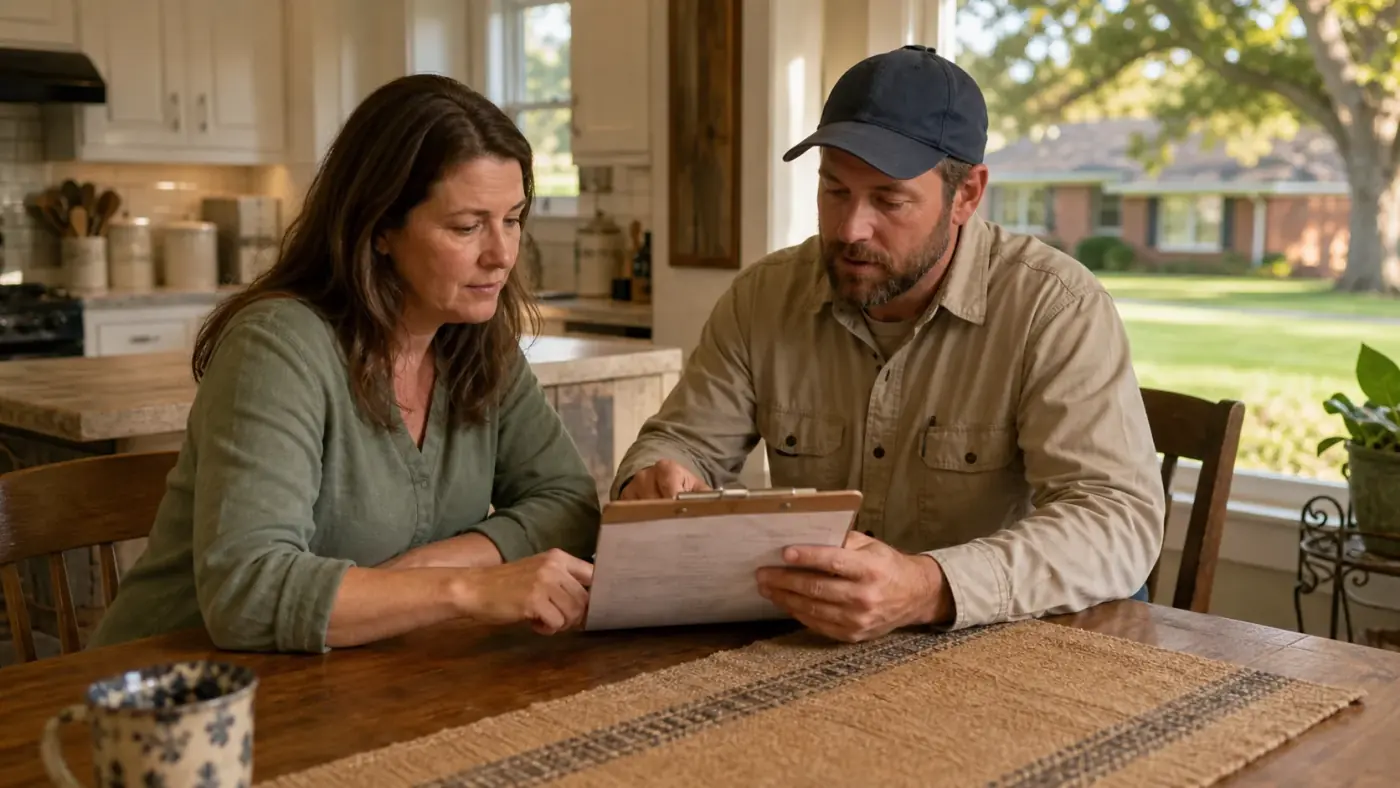
As typical Tulsa market ranges, not a quote: an inspection runs roughly $75 to $250 and is often credited toward the work, and a one-to-two-week trapping program roughly $250 to $700, with burrow repair priced on top. The Tulsa wildlife removal overview covers the other animals these companies handle, and the pest control cost guide puts the numbers in context.
The good news: this is mostly a lawn problem
For most Tulsa homeowners armadillo damage is a fixable lawn problem. OSU's Dwayne Elmore calls it mostly aesthetics or nuisance and warns that control often costs more in time and money than the damage itself, so the yard work comes first and trapping is for burrows under concrete and diggers that will not quit.
Bermuda closes the holes on its own once the visits stop, and fescue gets a fall overseed. Greenbelt yards see more of this, since ICWDM says armadillos favor cover near creeks and rivers, and the Jenks pest control page covers the Arkansas River corridor in detail. Wherever you live, the order is the same: fix the food and the water, clear the cover, and pick up the phone when concrete gets involved or the holes will not stop.
How the call works
- Describe the problem. A recluse in a shoe, termite swarmers on a window sill, ticks coming in on the dog. A sentence or two is plenty.
- Get routed by ZIP code. The call lands with an independent, licensed company that already services your neighborhood, whether that is midtown Tulsa or Claremore.
- Set the appointment. Most companies can give you an inspection or treatment window before you hang up.
Whether a same-day or 24/7 visit is possible comes down to provider participation in your area, technician availability and demand on that day. It is never guaranteed, and open slots vary by market and by how full the schedule already is.
Frequently asked questions
Why do armadillos dig up my lawn at night?
Armadillos dig lawns at night because they are hunting insect larvae and earthworms, and more than 90 percent of their diet is insects, according to the Internet Center for Wildlife Damage Management. Oklahoma State University Extension says that in the hottest months they are most active from 2 to 5 a.m., and watered lawns get hit hardest because the soil is soft and the food sits near the surface.
Do armadillo repellents work?
No. Oklahoma State University Extension says repellents and scare tactics are not effective against armadillos, and the Internet Center for Wildlife Damage Management notes that no repellent is registered for them and no frightening device is known to work. Cutting irrigation, reducing grubs, clearing brush and fencing small beds do more.
Can I trap an armadillo myself in Oklahoma?
Yes. Oklahoma State University Extension says armadillos are not protected in Oklahoma and may be trapped year-round, using a live cage trap about 12 by 12 by 32 inches. The catch is what comes next: it is illegal to move an armadillo and release it elsewhere unless that landowner grants permission, which is why many homeowners hand the job to a permitted wildlife operator.
Can you get leprosy from an armadillo in your yard?
It is possible but unlikely. The CDC says some armadillos in the southern United States naturally carry the bacteria that cause leprosy, but the risk is very low and most people who come into contact with armadillos are unlikely to get the disease. Oklahoma State University Extension still advises gloves when filling holes or working disturbed soil, and never handling the animal bare-handed.