


How to remove a tick: tweezers, straight up, right now
A tick comes off cleanly with fine-tipped tweezers and one slow, steady pull, and CDC's instructions fit on an index card. Grab the tick as close to your skin as the tweezers allow. Pull away with even pressure. Do not twist, do not jerk. Then wash the bite and your hands with soap and water, rubbing alcohol or hand sanitizer.
That is it. No match, no Vaseline, no nail polish. CDC says those tricks can agitate the tick and push infected material into your skin, which is the exact opposite of what you wanted. I have heard of people holding a hot match head to a tick on a toddler. Please don't.
Tick disposal is the step people improvise. CDC lists four acceptable ways: a sealed container, wrapped tight in tape, dropped in alcohol, or flushed. The one method it rules out is crushing the tick between your fingers.
What a tick you never found can do in Green Country
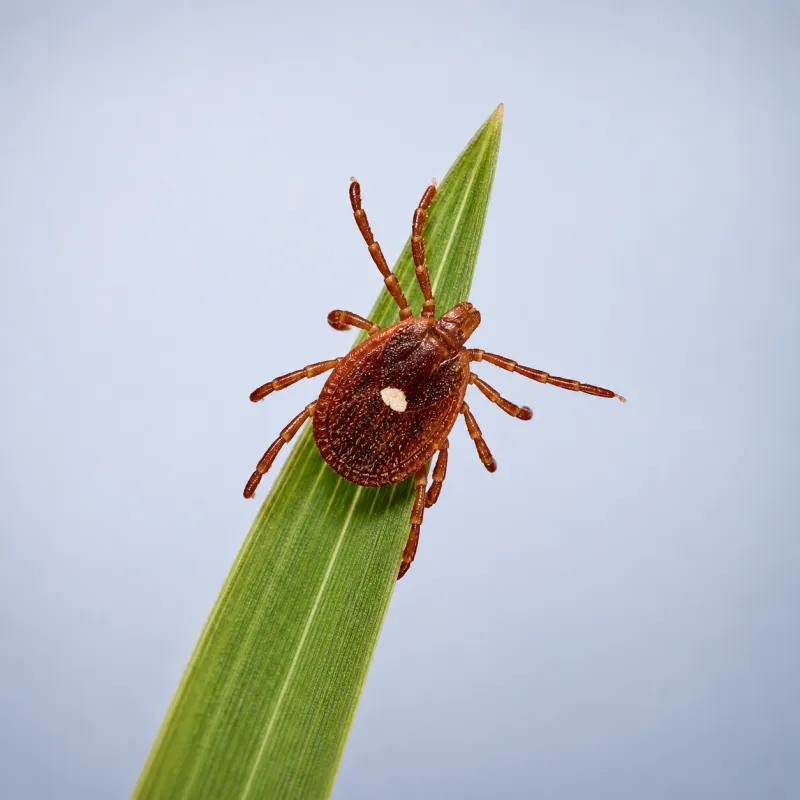
The tick that matters in Oklahoma is the one nobody noticed, because a tick left to feed has all the time it needs. Picture a June Saturday. Your kid spent the afternoon on the creek bank behind the neighborhood, came in sunburned and happy, skipped the bath, and went to bed. Behind one ear, under the hair, something the size of a sesame seed is settling in. It does not itch. It will not hurt tonight or tomorrow.
A few days later your kid runs a fever and says their head hurts. You blame a summer bug. Tylenol, fluids, the couch. This is the worst plausible case, and it is not a scare story: Oklahoma State University Extension notes that Oklahoma and North Carolina together account for more than a third of the country's Rocky Mountain spotted fever cases, with the peak here in May, June and July. CDC says the early signs are nothing special, fever and headache, and that the disease can be deadly if it is not treated early with doxycycline. The telltale rash often shows up late.
Most tick bites end with nothing at all. The point is that you cannot tell which one will not, so you find them early and you mention them to the doctor. Lone star ticks add their own long tail: our guide on lone star ticks and alpha-gal syndrome in Oklahoma explains the red meat allergy some people develop months after a bite.
After the tick is off: the next few weeks
After you remove a tick, CDC's advice is simple: watch for a rash or a fever over the next several weeks, and if either shows up, see a doctor and say when and where you were bitten. Write the date on the calendar. Future you will not remember it.
Skip mailing the tick to a lab. CDC does not recommend commercial tick testing, because those labs are not held to clinical quality standards, a positive result does not mean you were infected, and a negative one can make you relax when you should not. If something feels wrong, the Oklahoma Center for Poison and Drug Information answers at 1-800-222-1222 day and night.
The ten-minute routine that stops ticks at the back door
The cheapest tick prevention in Tulsa happens in the laundry room and the shower, not in the yard. Here is the routine I would pin on the fridge from April through October, built from CDC's prevention guidance:
| When | What to do | Why it works |
|---|---|---|
| Before going out | Use an EPA-registered repellent with DEET, picaridin, IR3535, oil of lemon eucalyptus, PMD or 2-undecanone | These are the active ingredients CDC names |
| Before the season | Treat boots, pants and camping gear with 0.5% permethrin | CDC says it stays protective through several washings |
| Walking in the door | Clothes into the dryer on high heat for 10 minutes | CDC says that kills ticks on dry clothing |
| Within two hours | Shower | CDC cites research linking it to lower Lyme risk |
| Every time | Full body check: armpits, ears, belly button, backs of knees, hair, between the legs, waistband | Those are the spots CDC tells you to look |
Check the dog too, every time it comes in off the fence line. Ears, armpits, between the toes. A dog is a very efficient tick taxi.

Keeping ticks out of a Tulsa yard
Ticks in a Tulsa yard live along the edges, so the edges are where your weekend goes. A sunny, freshly mowed lawn is poor tick country. The shaded strip where the grass meets the trees, the brush pile, the ivy along the fence: that is where they wait.
- Mow often and keep the grass short right up to the tree line.
- Rake out leaf litter and cut back brush along the lawn edge.
- Put down a wood chip or gravel strip, three feet wide or more, between the lawn and any woods.
- Stack firewood off the ground in a dry spot, away from the house.
- Move the swing set and patio chairs into the sun, away from the yard edge.
Rodents matter more than people think, since mice and other small mammals feed young ticks. Oklahoma State University Extension reports that bait boxes treating wild rodents with an acaricide, used correctly, have cut ticks around homes by more than half. A house with mice in the garage has a tick supply line, which is why rodent control sometimes belongs in the same plan.
When DIY is not enough: four signs the yard needs a pro
DIY stops being enough when the yard itself keeps producing ticks despite the routine above. Watch for these:
- You or the kids are still pulling ticks off weekly after the edge work is done.
- You brushed past a plant and came away with dozens of tiny seed ticks, the clustered larvae OSU Extension describes.
- The property backs onto a greenbelt, creek or pasture you cannot clear.
- The dog is on a vet preventive and ticks still show up on the carpet.
If two of those sound like your place, the sensible next step is a phone call. Dial (844) 212-9836 and we connect you with a licensed local provider who treats the wooded edge, fence lines and shrub beds on a seasonal schedule instead of fogging the whole lawn. Typical market ranges in Tulsa for seasonal tick control are listed on our service page, and those are ranges, not a quote. Many of the same companies handle mosquito control, since both pests love the same shady, humid corner.
How the call works
- Describe the problem. Ticks on the kids after every trip to the back fence, seed ticks on the dog, a greenbelt behind the house. A sentence or two is plenty.
- Get routed by ZIP code. The call lands with an independent, licensed company that already services your neighborhood, from midtown Tulsa out to Jenks and Claremore.
- Set the appointment. Most companies can give you an inspection or treatment window before you hang up.
Whether a same-day or 24/7 visit is possible comes down to provider participation in your area, technician availability and demand on that day. It is never guaranteed, and open slots vary by market and by how full the schedule already is.
The good news is that ticks are a very beatable problem. Tweezers in the bathroom drawer, a dryer, a shower and a mower handle most of it for most Tulsa families. And if your yard is the stubborn kind, one call gets a pro on the edge of it.
Frequently asked questions
What is the right way to remove a tick?
Use clean fine-tipped tweezers, grip the tick as close to the skin as you can, and pull straight away with steady, even pressure. CDC says not to twist or jerk it. Then clean the bite and your hands with soap and water, rubbing alcohol or hand sanitizer, and check the rest of your body for more ticks.
Should I save the tick to get it tested?
CDC does not recommend sending a tick off for testing. Commercial tick tests are not held to the quality standards clinical labs follow, a positive result does not prove you were infected, and a negative one can reassure you falsely. Dispose of it in a sealed container, wrapped in tape, in alcohol, or down the toilet, and watch yourself instead.
What symptoms after a tick bite mean I should see a doctor?
A rash or a fever in the several weeks after a tick bite is the signal CDC gives for seeing a doctor. Tell the doctor when and where the bite happened. In Oklahoma that matters, because Rocky Mountain spotted fever starts with plain fever and headache, and CDC says it can be deadly if not treated early.