

The short answer: it is a roach, and it lives under the street
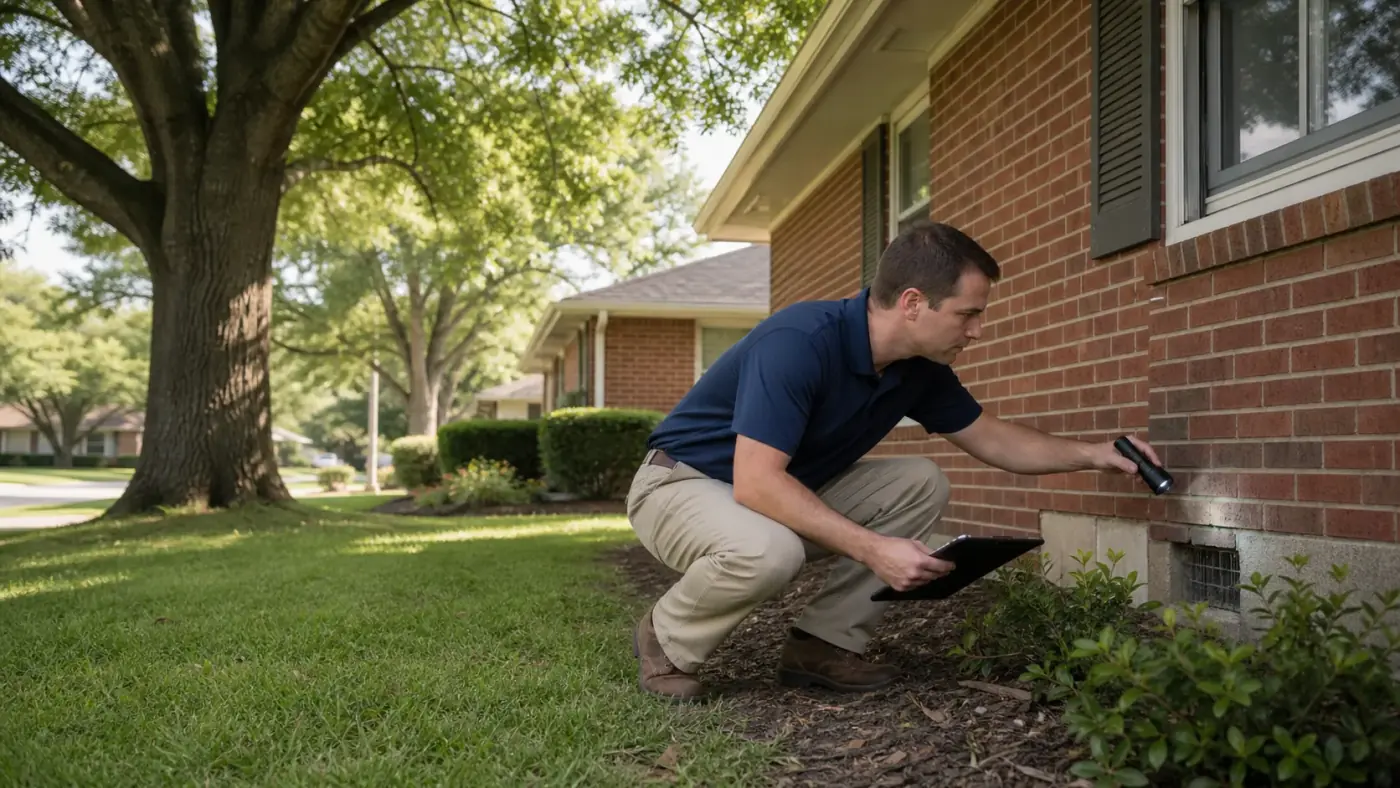
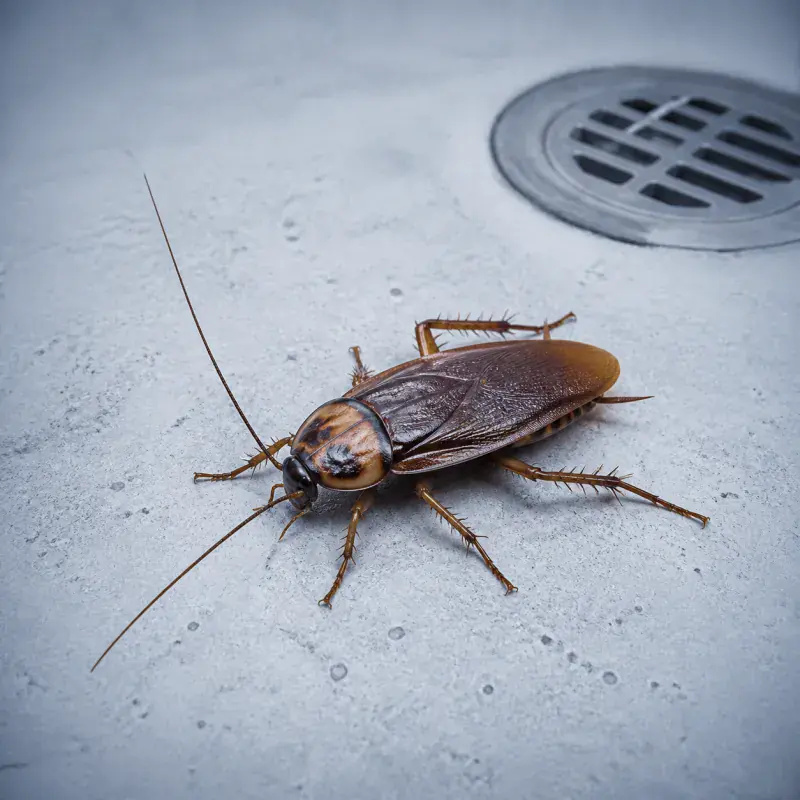
The water bug in a Tulsa bathtub or laundry room is almost always an American cockroach, the biggest roach that gets into homes around here. Oklahoma State University Extension describes it as about one and one-half inches long with red-to-brown wings and lighter markings behind the head, and calls it a common inhabitant of sewage systems and basements. So yes. It came from exactly where you suspect.
The real water bug is another animal. The University of Kentucky describes giant water bugs as pond and stream predators with grabbing front legs, and University of Maine Cooperative Extension says they fly to porch lights and bite hard enough to earn the name toe-biter. That one came from a pond. The one that ran out of the shower drain did not.
What a summer of ignoring it looks like
One American cockroach in August is usually a visitor, but every visit you shrug off means the door is still open.
Picture it. Two in the morning, the AC humming, and you pad barefoot into the dark kitchen for a glass of water. The light clicks on and something the length of your thumb bolts across the counter, over the cutting board you set out for breakfast, and under the dishwasher. It may well have spent the evening in the sewer line under your street. University of Florida entomologists have recorded more than 5,000 American cockroaches in a single sewer manhole, and they list at least 22 species of disease-causing bacteria, viruses, fungi and protozoans isolated from wild-caught ones. Penn State Extension says food-poisoning illness is the main thing they spread, on their legs, onto your dishes.
Give it a few weeks. Penn State says their droppings and cast skins carry allergens that trigger sneezing and asthma, and heavy populations leave a telltale odor you notice every time you open the laundry room. If one likes your damp crawl space, it moves in: the University of Florida says a female glues egg cases of about 16 eggs near food and turns out around 150 young in her lifetime. And roaches are dinner for the brown recluse in your garage boxes, which is why so many brown recluse control plans in Tulsa start with roach work.
Why May rain and August heat bring them up
American cockroaches come up in a Tulsa summer because their outdoor homes flood in spring and bake in August, and your house is the nearest shelter with water on tap. OSU Extension says that during the summer months, alleyways and yards may be badly infested.
First the water. The National Weather Service office in Tulsa ranks May as the wettest month, with normals of 5.0 to 5.5 inches across northeast Oklahoma, and the University of Florida notes house infestations can follow heavy rain. When the corner storm drain runs full, whatever lives in it heads uphill.
Then the heat. The University of Florida says they wander inside for food and water or to escape extreme weather, and Penn State says an adult lasts two or three months without food but only about a month without water. By the time the yard cracks, the damp spots left are your drain traps, the sweating AC line and the slab under the water heater. And yes, Penn State says they are capable of flight, and UC IPM says some roaches glide on warm nights. That explains the one that launched off the porch screen at your face.
Five ways in, and how to tell which one is yours
Most American cockroaches reach a Tulsa living space by one of five routes, and each one leaves a tell. Texas A&M AgriLife explains the most common: when a rarely used floor drain dries out, the water that seals the trap is gone and roaches walk straight up from the sewer line.
| Route in | What you notice | The fix |
|---|---|---|
| Dry drain trap: guest shower, basement or laundry floor drain | Roaches keep turning up near one drain nobody uses | A gallon of water weekly, or a drain screen |
| Cracked or loose drain pipe | Roaches at a drain used every day, sometimes a sewer smell | A plumber with a camera, not a spray can |
| Gaps where pipes and wires pass through ground-level walls | Roaches under sinks, behind the washer, by the water heater | Caulk, foam or copper mesh around every penetration |
| Gaps under exterior and garage doors | Roaches just inside the door the morning after a storm | Door sweeps and weather stripping |
| Mulch, leaf litter, woodpiles and branches touching the roof | Roaches on the patio at night, the odd one in the attic | Pull mulch back, clear litter, trim limbs off the roofline |
The University of Florida backs up that last row: these roaches migrate indoors from shrubs and overhanging branches.
What you can do this weekend
Most summer water bug problems in Tulsa are homeowner-fixable, because the job is more plumbing and sealing than poison. In the order I would do it:
- Refill every trap. Texas A&M AgriLife recommends flushing rarely used drains weekly with about a gallon of water, or screening them. Guest bath, basement floor drain, laundry drain: Sunday routine.
- Plug unused drains. A stopper in the tub nobody uses closes a door for free.
- Seal the ground floor. The University of Florida recommends caulking penetrations through ground-level walls, meaning every spot a pipe or wire comes through. UC IPM adds door sweeps and weather stripping.
- Dry things out. UC IPM says to fix plumbing and irrigation leaks. Check the AC condensate line, the dripping hose bib and the sprinkler soaking the foundation.
- Clean up the yard edge. The University of Florida advises removing rotting leaves and limiting moist areas around the house. Pull mulch back from the slab and move the firewood off the wall.
- Bait, do not bomb. The University of Florida calls loose pellet baits extremely effective on this species, and UC IPM suggests baiting drains, water meter boxes and under slabs outdoors. Penn State says indoor foggers are of little value and can scatter them. Follow the label, keep kids and pets clear, give it a week.
- Monitor with sticky traps. Penn State says a week of trapping usually shows where they come from. Put one by each drain. The one that fills up is your problem.
Bonus: the gaps roaches use in July are the ones mice use in October, and the fall rodent-proofing guide walks them gap by gap.
When DIY is not enough: five signs
A water bug problem is past DIY once the roaches are breeding indoors, or getting in through something a jug of water and a tube of caulk cannot fix. These are the five signs.
- Nymphs or egg cases. Small wingless roaches, or the dark brown purse-shaped egg cases the University of Florida puts at about a third of an inch, mean breeding, not visiting.
- Sticky traps still filling two to three weeks after you refilled the traps, sealed the gaps and baited.
- Daytime sightings, or several a night instead of the odd straggler.
- Roaches at a drain used every day, or a sewer smell, which points at a cracked line or failed seal that needs a plumber and a pest pro.
- A source you cannot reach: the crawl space, wall voids or attic. Or someone at home has asthma and you want it done right once.
If two or more of those sound like your house, the sensible next step is a phone call to (844) 212-9836. We connect you with a licensed local provider that treats drains, crawl space and yard edge together, routed by ZIP code to a company already working your part of the metro. As typical market ranges, not a quote: a one-time treatment for occasional large roaches runs roughly $150 to $300, and quarterly service after the cleanup roughly $100 to $175 a visit. The pest control cost guide puts those numbers in context, and the Tulsa cockroach control page covers German roaches.
The reassuring part: most of them are just visiting
For most Tulsa homes the summer water bug is a visitor, not a roommate. The University of Florida notes American cockroaches are rarely found living in houses, unlike the German roaches that breed in kitchen cabinets, so the fix is mostly mechanical.
Keep the traps wet, the gaps sealed, the mulch pulled back and the leaks fixed, and the sewer crowd stays under the street where it belongs. If they keep coming anyway, you know which number to call.
How the call works
- Describe the problem. A recluse in a shoe, termite swarmers on a window sill, ticks coming in on the dog. A sentence or two is plenty.
- Get routed by ZIP code. The call lands with an independent, licensed company that already services your neighborhood, whether that is midtown Tulsa or Claremore.
- Set the appointment. Most companies can give you an inspection or treatment window before you hang up.
Whether a same-day or 24/7 visit is possible comes down to provider participation in your area, technician availability and demand on that day. It is never guaranteed, and open slots vary by market and by how full the schedule already is.
Frequently asked questions
Is a water bug the same as a cockroach?
In a Tulsa house, almost always yes. The water bug in a tub or floor drain is usually an American cockroach, about one and one-half inches long and reddish brown, according to Oklahoma State University Extension. True giant water bugs are aquatic predators of ponds and slow streams, per the University of Kentucky, and University of Maine Cooperative Extension says they fly to lights at night, which is how they end up by a porch.
Does one water bug mean I have an infestation?
Usually not. University of Florida entomologists say American cockroaches live mainly in sewers, drains and outdoor cover and are rarely found living in houses, although infestations can follow heavy rain. One big roach near a drain in July is typically a visitor. Small wingless nymphs, egg cases, daytime sightings or sticky traps that keep filling up mean they are breeding indoors.
How do I stop roaches from coming up my drain?
Keep water in the trap. Texas A&M AgriLife recommends flushing rarely used floor drains weekly with about a gallon of water, or screening them, because a dry trap is an open path from the sewer line. If roaches keep appearing at a drain that gets used every day, suspect a cracked or loose pipe and get a plumber to look.
What kills water bugs fast?
A shoe kills one. For the population, bait beats spray. University of Florida entomologists call loose pellet baits extremely effective against American cockroaches, and UC IPM says it may take 7 days or longer to see fewer of them. Penn State Extension says indoor foggers and residual sprays are of little value against this species and can scatter the roaches deeper into the house.