
What to do in the first hour
Wash the brown recluse bite with plain soap and water, put a cold compress on it, and keep the limb raised. That is the whole protocol, and it lines up with what Poison Control advises for recluse bites: clean the site, cool it, and skip the heroics. A bag of frozen peas wrapped in a dish towel, ten to fifteen minutes on and then a break, does more good than anything sold in a first aid aisle.
Over-the-counter pain relief is fine if the site starts to sting. Then note the date and time somewhere you will not lose it, because if the wound changes later, the first question any doctor asks is when the bite happened. Take a photo too. A daily picture of the bite is the cheapest diagnostic tool you own, and it settles the "is it bigger or am I imagining it" debate that every household has by day three.
- Wash with soap and water, gently, no scrubbing.
- Cold compress, ten to fifteen minutes at a time.
- Elevate the arm or leg while resting.
- Photograph the bite and write down the time.
- Trap the spider if it is still in sight. More on that below.
What the bite does over the next few days
A brown recluse bite usually announces itself hours after the fact, not at the moment it happens. Cleveland Clinic puts the typical window at two to eight hours before the site turns red, tender and sore, which is why so many Tulsa bites get blamed on the wrong spider, or on nothing at all. You pulled on a work glove at seven, and by lunch there is an angry mark you cannot explain.
From there, most bites simply fade. Cleveland Clinic notes that most heal within about three weeks without treatment, and that fewer than roughly ten percent develop the blistering or ulcerated wound the internet loves to photograph. The minority that go the ugly route follow a pattern: the center darkens or sinks, a blister forms, and over several days the middle of the wound turns into a slow-healing sore. That progression is the thing you are watching for, not the initial redness.
When to see a doctor: the actual signs
See a doctor for a brown recluse bite when the wound is getting worse instead of better, or when your whole body joins in. The table below is the short version of the escalation path. When in doubt, the Oklahoma Center for Poison and Drug Information answers 1-800-222-1222 around the clock, free, and the specialists there will tell you straight whether the wound needs to be seen tonight or watched at home.
| What you see | What to do |
|---|---|
| Red, tender mark that stays about the same or shrinks | Home care. Wash, cool compress, daily photo. |
| Growing dark, blue or sunken center; blistering | Doctor or urgent care within a day. Bring your photos. |
| Redness spreading outward, warmth, cloudy drainage | Same-day medical visit. This is infection territory. |
| Fever, chills, body aches, nausea, widespread rash | Prompt medical care, and call 1-800-222-1222 on the way. |
| A child with any of the above after a suspected bite | Do not wait it out. Kids are the group doctors watch closest. |
One more honest note: there is no antivenom for brown recluse bites in the United States, a point Poison Control makes plainly. What a doctor actually does is manage the wound, watch for infection and handle the rare body-wide reaction. That is worth knowing before you pay for an emergency room visit expecting a miracle shot that does not exist.
Catch the spider if you safely can
A captured spider turns a guessing game into a diagnosis, so if the recluse is still sitting there, trap it under a glass, slide paper underneath, and keep it, even squashed. Doctors treat "spider bite" claims with justified suspicion because studies of bite reports keep finding staph infections and other causes wearing a spider costume. A specimen in a jar ends that argument in seconds.
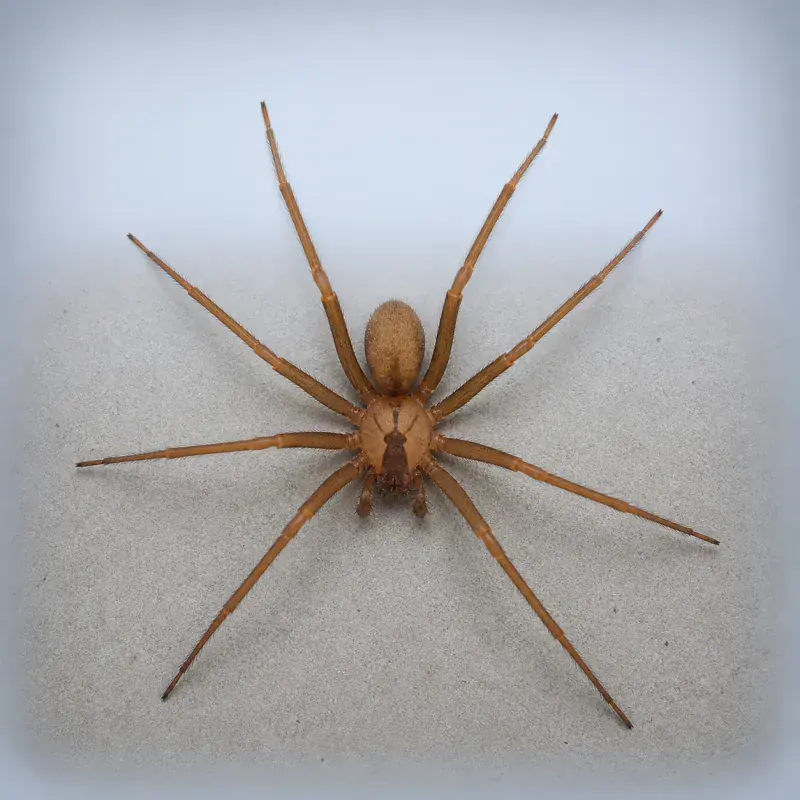
The identification itself is quick. A brown recluse is uniformly tan to brown with thin, unmarked legs, six eyes in three pairs, and the violin shape on its back with the neck pointing toward the abdomen. Big, hairy, striped or fast across the open floor means you are probably looking at a wolf spider, the most common case of mistaken identity in Green Country homes, and a harmless one.
What not to do, and yes, people do all of these
Do not cut, squeeze or suck a brown recluse bite, and do not put heat on it. The venom is already in the tissue, and every one of those moves either spreads it, damages more skin or invites infection. Oklahoma has a deep bench of folk remedies for spider bites, and the kindest thing to say about most of them is that they keep people busy while the bite heals on its own.
- No heat packs. Warmth makes recluse venom activity worse, not better. Cold is the right temperature.
- No cutting or "draining" the site. That trick belongs to old westerns, and it did not work there either.
- No bleach, gasoline, tobacco or essential oils on the wound. Skin damage on top of skin damage.
- No waiting weeks on a wound that is clearly growing. Slow healing is normal; steady growth is not.
What a bite says about your house
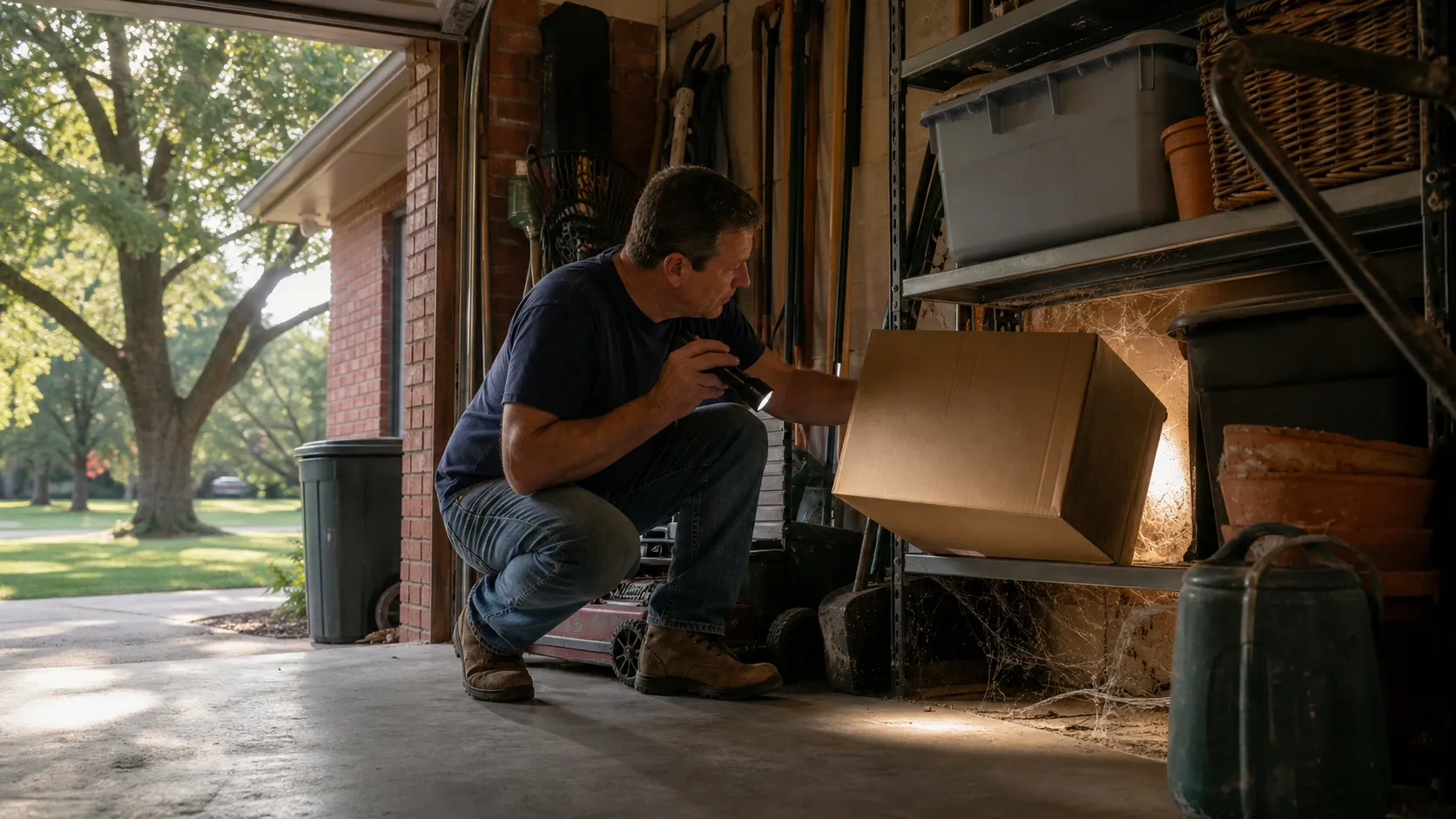
A brown recluse bite indoors almost always means the house has more spiders than the one that bit you. Oklahoma State University Extension describes the brown recluse as a common resident in and around Oklahoma homes, living in exactly the places you never disturb: boxes, closets, attics, garages, the gap behind the water heater. Bites happen when a wandering spider ends up in a shoe, a stored jacket or the bedding, and gets pressed against skin. The spider that bit you was the unlucky scout, not the whole population.
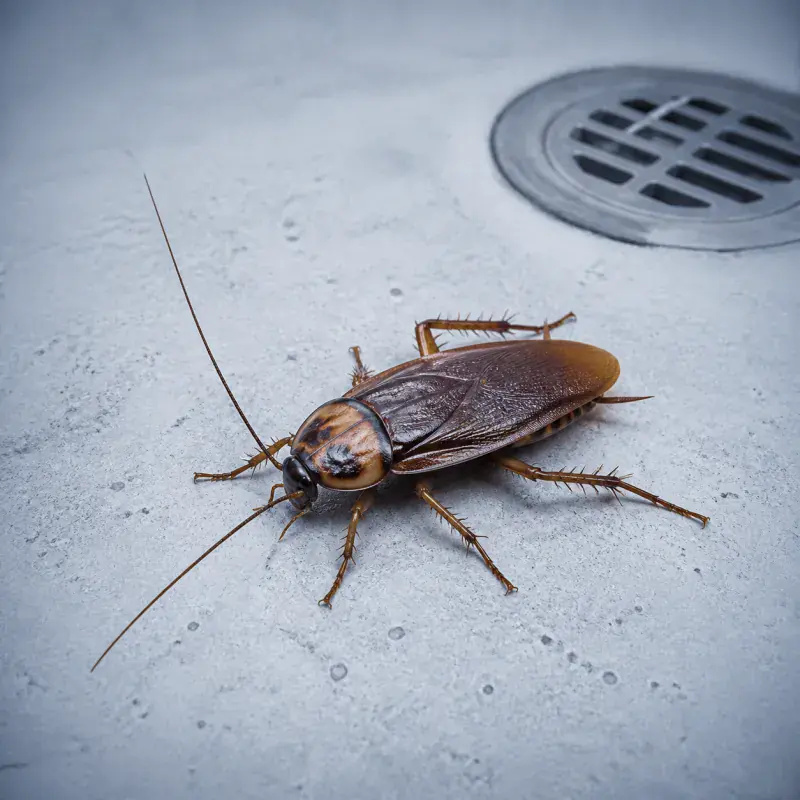
So after the wound is handled, deal with the source. We connect you with a licensed local provider who treats recluse the structural way, glue boards placed heavily, crack and crevice work, and dusted voids, because a one-time perimeter spray does not touch this spider. Our brown recluse control page covers what a real program looks like, and if the glue boards turn up crickets and roaches feeding the spiders, cockroach control often gets folded into the same plan. To get that count before anyone quotes you, run the glue board check for a Tulsa house first; it shows where the boards go and how to read them. For a whole-home look at what else is moving in your walls, start with pest control in Tulsa.
On money: expect an inspection with glue board placement, an initial treatment and at least one follow-up. Figures you see quoted around the Tulsa metro for recluse work, roughly $250 to $500 for an initial treatment on an average home, are typical market ranges, not a quote. The company that inspects your home sets the actual price.
How the call works
- Describe the problem. A bite overnight, a recluse in a boot, glue boards filling up in the garage. A sentence or two is plenty.
- Get routed by ZIP code. The call lands with an independent, licensed company that already services your neighborhood, whether that is midtown Tulsa or Claremore.
- Set the appointment. Most companies can give you an inspection or treatment window before you hang up.
Whether a same-day or 24/7 visit is possible comes down to provider participation in your area, technician availability and demand on that day. It is never guaranteed, and open slots vary by market and by how full the schedule already is.
Keep finding recluses after the bite? That usually means an established population in the house, and that is a job for a licensed pro, not more glue boards. Call (844) 212-9836 and a Tulsa-area provider will price an inspection on the call, no obligation. For the bite itself, follow the medical steps above.
Frequently asked questions
Should I go to the ER for a brown recluse bite?
Usually no. Most brown recluse bites are managed at home with washing, a cold compress and watching, and Poison Control reports that serious illness from these bites is rare. Go to a doctor or urgent care if the wound develops a dark or sunken center, blisters, spreading redness, or if fever, chills, body aches or a rash show up. Call 1-800-222-1222 first if you are unsure; the poison specialists will tell you whether the wound needs to be seen.
How long does a brown recluse bite take to heal?
Cleveland Clinic notes that most brown recluse bites heal within about three weeks without treatment. The small share of bites that turn necrotic take longer, sometimes months, and need a doctor following the wound while it closes. Slow healing alone is not an emergency, but a wound that is growing rather than shrinking after the first week deserves medical eyes.
Can a brown recluse bite kill you?
Deaths are rare. Poison Control states that serious illness and death from brown recluse bites are uncommon, and there is no antivenom in the United States because treatment is wound care, not an antidote. Children are the group doctors watch most closely, since the rare body-wide reaction shows up more often in kids. A child with fever, vomiting or a spreading rash after a suspected bite should be seen promptly.
Does one bite mean my house is infested?
It means at least one recluse got pressed against your skin indoors, and in Oklahoma that usually points to more spiders you have not seen. Brown recluse live in undisturbed storage, closets, attics and wall voids, so the honest way to answer the question is glue boards placed through the house for a few weeks. The count tells you whether you have a stray hitchhiker or an established population that needs a structural treatment plan.