
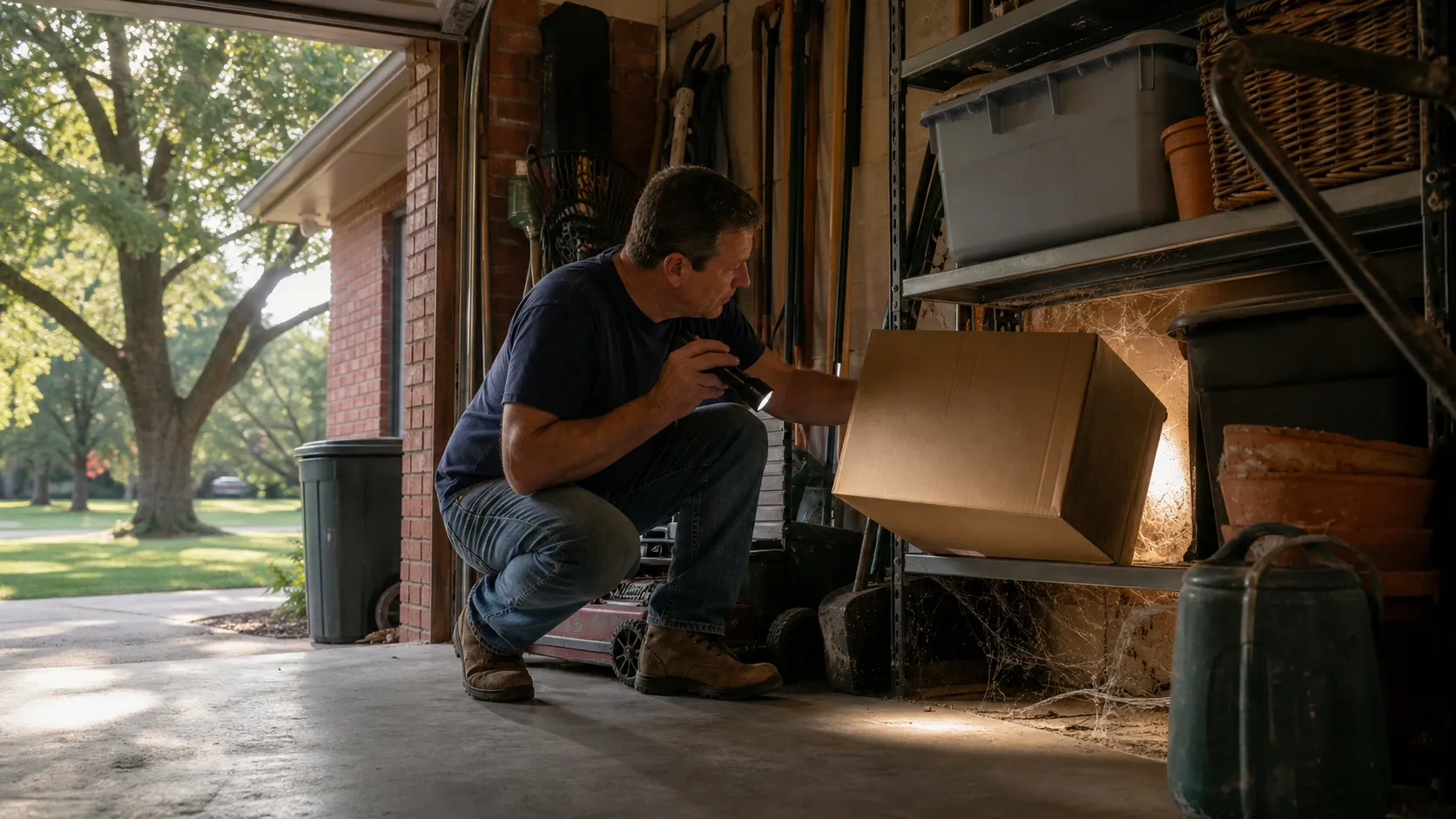

What the glue board method is, and why licensed companies start with it
The glue board method for brown recluse is simple: flat sticky traps go where the spiders walk at night, and a few weeks later you count what they caught. Kansas State University Research and Extension, whose entomologists work the same recluse country Tulsa sits in, says sticky traps or glue boards can be used to monitor brown recluse populations, and its own research found the traps also help reduce established ones. A brown recluse rests hidden by day and hunts along edges after dark, so a board pressed flat against a baseboard sits squarely in its lane. No spray, no smell, no guessing.
One recluse in a work boot is an anecdote. A dozen on boards across three rooms is a population, and the two get treated and priced very differently. Our brown recluse control page covers the full program. This guide covers the census that comes first.
What a recluse population does while you put off checking
A brown recluse population in a Tulsa house grows quietly all summer, and the coat closet is where most people finally meet it. Picture the hall closet nobody has opened since the last cold snap in March. Behind the winter coats, in the dark fold of a sleeve, a female recluse has been working since spring. Kansas State puts one female at as many as five egg sacs of twenty to fifty eggs each, so the spider you glimpsed on the garage wall in June has company you have never seen, and the attic, with its softening cardboard and untouched holiday boxes, has more.
Then the first real front rolls down from Kansas in October. You reach for the coat. You push your arm down the sleeve, feel something give against your wrist, and the spider does what a recluse pinned against skin does. The Alabama Cooperative Extension System notes most bites stay local and heal within about three weeks, but the minority that turn into a sunken, slow-healing sore can take months. Those are what make this spider a real subject in Green Country.
Here is the part the scare pages leave out. Bites are uncommon even in badly infested houses. Rick Vetter and Diane Barger, writing in the Journal of Medical Entomology in November 2002, documented a nineteenth-century home in Lenexa, Kansas where a family of four collected 2,055 brown recluse in six months without a single bite. That is not a reason to relax. It is proof a house can hold thousands of spiders you never see, and a bite-free year says nothing about the count. Kansas State notes adults live two to three years and can go ten months without food. Waiting does not shrink the problem. It moves the reckoning to a colder month.
What you need before you start
A proper brown recluse check needs twenty to thirty flat glue boards and one afternoon. Skip the little folded roach motels for this job; flat, open boards read faster and slide under furniture without a gap the spider can step around.
- Twenty to thirty flat glue boards from any hardware or farm store in the metro. Buy extra. Spares become sentinels later.
- A flashlight, because the spots that matter are the dark ones.
- A marker, to write the room and the date on every board before it goes down.
- A notebook or phone note for a room-by-room count. This becomes your map.
- Gloves and long sleeves for the attic and garage. Shake out anything you move, especially stored clothing and shoes.
- A few sealed plastic totes, so the cardboard you disturb does not go back the way it was.
Where the boards go in a Tulsa house
Brown recluse travel edges, not open floor, so every board goes tight against a wall, a corner or the underside of something. The Alabama Cooperative Extension System puts it plainly: position traps where the spider hides and forages, meaning the corner of the closet, along the baseboard and wall-floor junctures, and behind furniture. In a typical Tulsa house that works out to the map below.
| Location | Boards | Why it matters |
|---|---|---|
| Bedroom closets, floor corners behind hanging clothes | 1 to 2 per closet | Dark, undisturbed, and one door from where you sleep |
| Baseboards behind beds, dressers and sofas | 1 per wall run | The night runway between hiding spot and hunting ground |
| Under the bed, especially with a bed skirt or under-bed storage | 1 to 2 | Bedding that touches the floor is the classic bite setup |
| Behind the water heater, furnace, washer and dryer | 1 each | Warm, still and rarely disturbed |
| Garage, along the back wall and both sides of the door into the house | 3 to 4 | The usual entry route and the usual reservoir |
| Attic, near the hatch and along joists beside stored boxes | 3 to 4 | Where the population lives when the rooms are quiet |
| Basement or crawl space entry in older midtown homes | 2 to 3 | Cool voids with decades of storage |
Keep boards out of reach of toddlers, cats and dogs, which in practice means behind and under things, never mid-room. Then the hard part: leave them alone. A recluse deep in a wall void on night one may not pass your board until night ten, so two weeks is the floor and four is better. Season matters too. Kansas State notes the spiders slow down from October through March even indoors, so a winter count runs low and can make a garage full of recluse look like a garage with two.
How to read the boards after two to four weeks
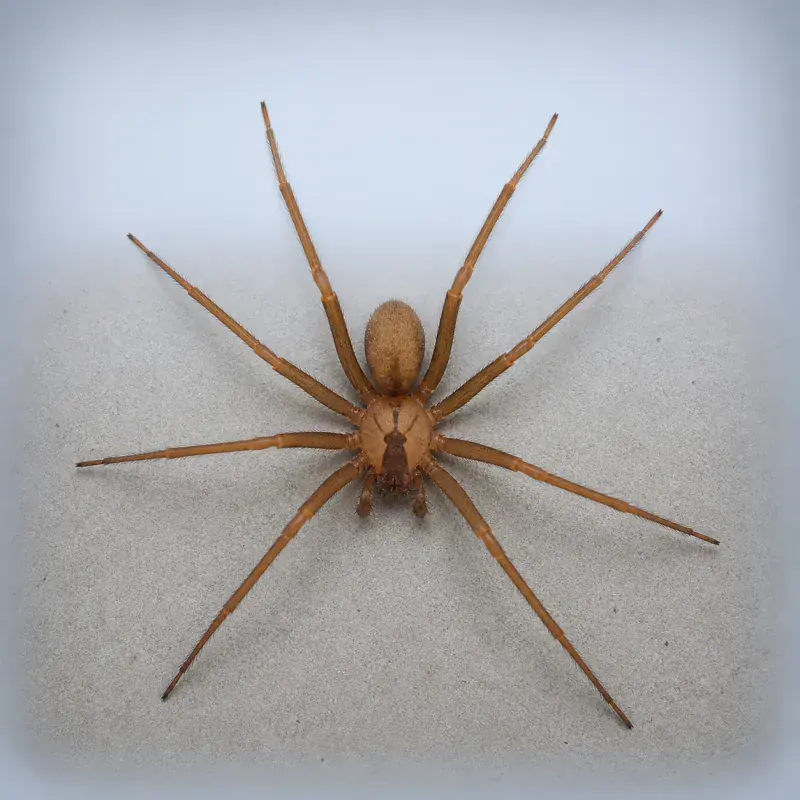
Read a brown recluse glue board by counting per room, not per house, because the pattern tells you where the population lives. First confirm the catch: tan to brown, thin plain legs with no bands, a violin on the back with the neck pointing toward the abdomen, six eyes in three pairs under a magnifier. Wolf spiders, the usual mistaken identity in Green Country, are bigger, hairy and patterned. Not sure? Bag the board and keep it. A licensed inspector can settle it in seconds.
Then look at your map. Clean boards in the bedrooms and a busy board in the garage describe a garage population that has not moved in yet, the good version of this story. Recluse in closets, under the bed and behind the headboard describe spiders living where you sleep. Alabama Extension notes traps mostly catch males and older juveniles, the wanderers, while females and egg sacs stay put in voids and boxes, so every recluse on a board stands in for others that stayed home.
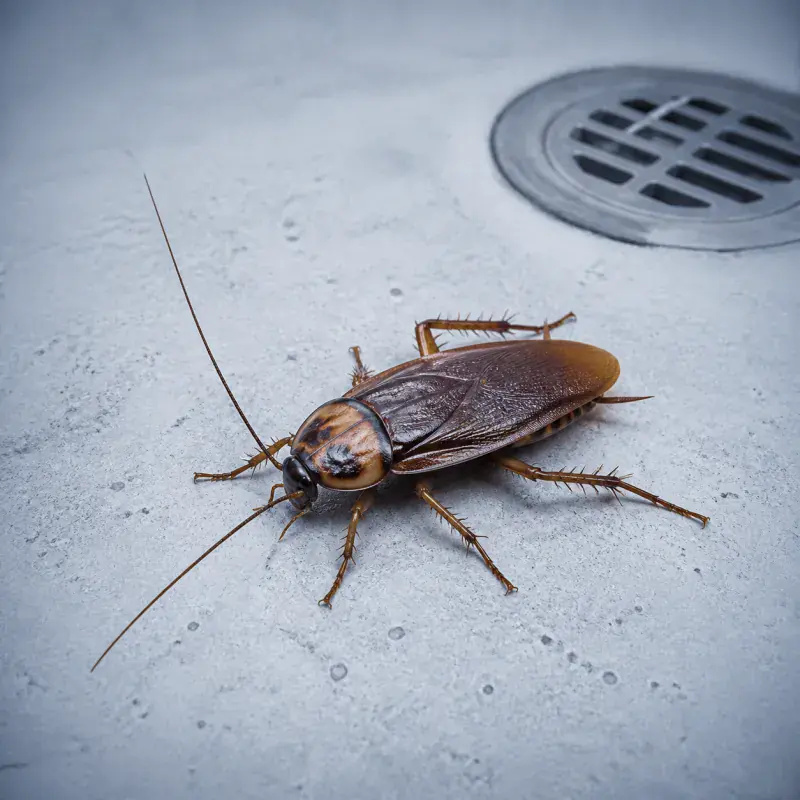
Read the bycatch too. Crickets and roaches on the same boards are the recluse grocery store, and a house that feeds its spiders keeps them, which is why cockroach control often lands in the same plan.
When DIY is not enough: five signs the count is past self-treatment
Glue boards are a census, not a cure, and there is a clear point where the count says stop treating a Tulsa house yourself. Any one of these is that point:
- Recluse on boards in more than one bedroom, or in any child's room at all.
- Recluse in the attic or garage and in the living space. The reservoir is already feeding the rooms.
- Egg sacs or shed skins in boxes, behind furniture or in attic storage. Females and eggs are the part no board touches.
- A second round of boards, a month after the first, that catches about as many. The population is replacing what you remove.
- Someone in the house already has a suspected bite. Read what to do after a brown recluse bite in Oklahoma for the wound, and treat the house as established.
That is the point to call (844) 212-9836. We connect you with a licensed local provider in the Tulsa metro who treats recluse the structural way: boards by the dozen, crack and crevice work, dust in the voids and attic, and a follow-up visit to catch the hatch. Bring your board map to the call. A room-by-room count turns a vague 'we have spiders' into a plan, and it often saves money, because the company knows where to work before it arrives. Initial recluse treatments seen around the Tulsa metro, roughly $250 to $500 for an average home, are typical market ranges, not a quote.
What to keep doing after the boards come up
The habits that keep brown recluse counts down in Tulsa are the same ones that make the boards work: less clutter, fewer edges to hide along, nothing soft touching the floor. The Kansas State list is worth taping inside the closet door: shake out shoes and clothing before putting them on, keep bed sheets off the floor, hang clothes instead of dropping them. Alabama Extension adds decluttering storage rooms, sealing cracks where spiders get in, and vacuuming any spider or web you find.
Leave four or five boards down year-round as sentinels, in the garage, at the attic hatch and in the main bedroom closet, and swap them each spring. A house in this part of Oklahoma with a recluse or two is normal, not a failure. You now have an actual count, a map, and a clear line for when to hand it off. For everything else moving in your walls this season, start with pest control in Tulsa.
How the call works
- Describe the problem. Three recluse on a closet board, egg sacs in the attic boxes, a bite last week. A sentence or two is plenty.
- Get routed by ZIP code. The call lands with an independent, licensed company that already services your neighborhood, whether that is midtown Tulsa or Claremore.
- Set the appointment. Most companies can give you an inspection or treatment window before you hang up.
Whether a same-day or 24/7 visit is possible comes down to provider participation in your area, technician availability and demand on that day. It is never guaranteed, and open slots vary by market and by how full the schedule already is.
Frequently asked questions
How long should glue boards stay out to check for brown recluse?
Two weeks at the least, and four is better, because a brown recluse can sit in a wall void for days before it wanders past a board. Kansas State University Research and Extension notes the spiders slow down from October through March even indoors, so a winter count runs low. Do the main check between spring and early fall, then leave a few sentinel boards down all year.
Do glue boards get rid of brown recluse on their own?
Boards reduce a brown recluse population but rarely finish one. Kansas State research found sticky traps help reduce established populations, and the Alabama Cooperative Extension System notes they mostly catch males and older juveniles, the spiders that wander. Females and egg sacs stay in wall voids, attics and boxes where a board never reaches, which is why an established population needs crack and crevice work and dusted voids from a licensed company.
How many brown recluse on the boards means my Tulsa house is infested?
There is no fixed number, and the pattern matters more than the total. A single recluse on a garage board is a scout. Recluse on boards in more than one bedroom, in the attic and the living space together, or a second round of boards that catches as many as the first all describe an established population. For scale, Rick Vetter and Diane Barger documented a Lenexa, Kansas home in the Journal of Medical Entomology in 2002 where a family collected 2,055 brown recluse in six months.