

The short answer: they breed in water you forgot you own
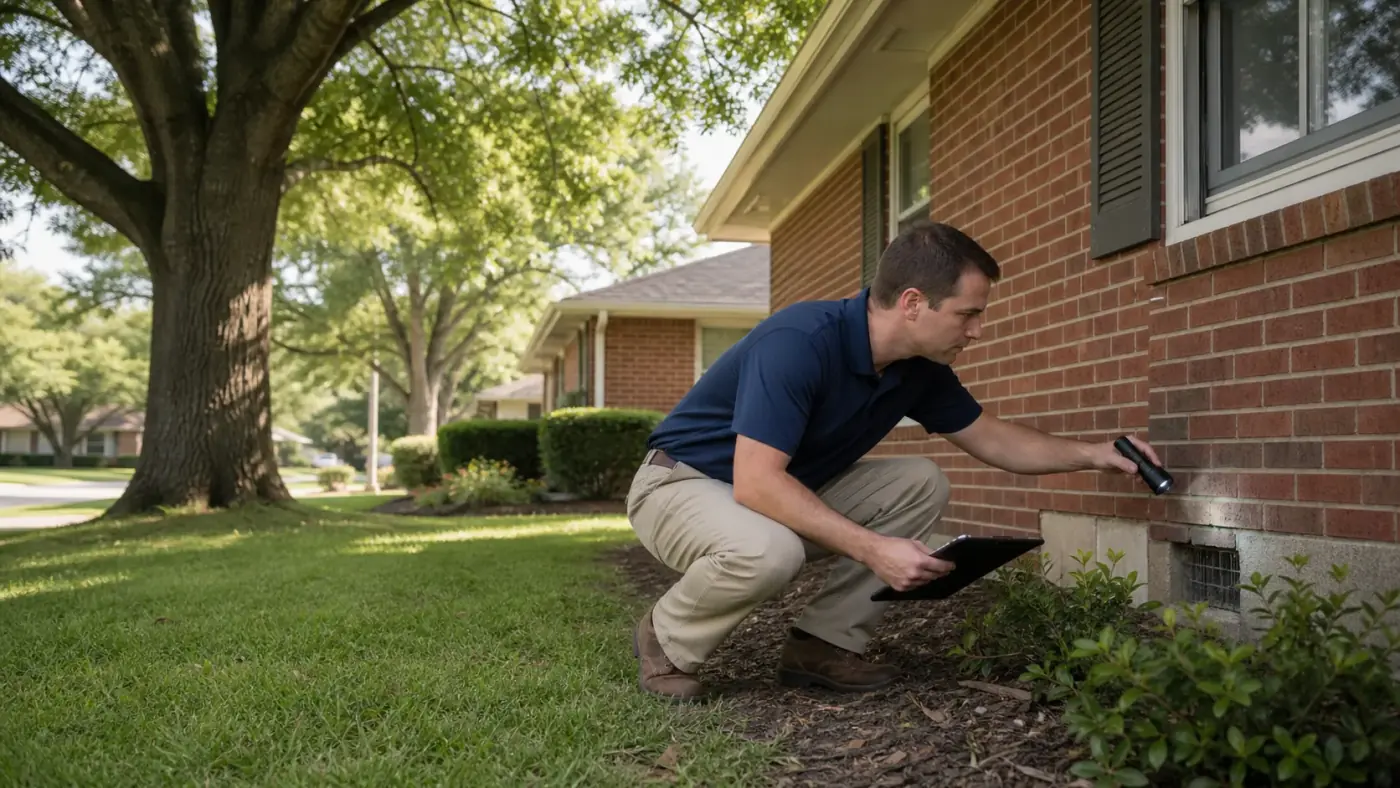
Mosquito breeding sites in a Tulsa backyard are almost always small, still and forgotten: a saucer under a pot, a wheelbarrow, a fold in a tarp, a hole in an old oak. Clemson Cooperative Extension's Home & Garden Information Center says some species develop in about a tablespoon of water, and water standing five days or more can become a breeding site. The CDC puts egg to adult at seven to ten days. So the math is simple. Anything holding water longer than a week is a nursery.
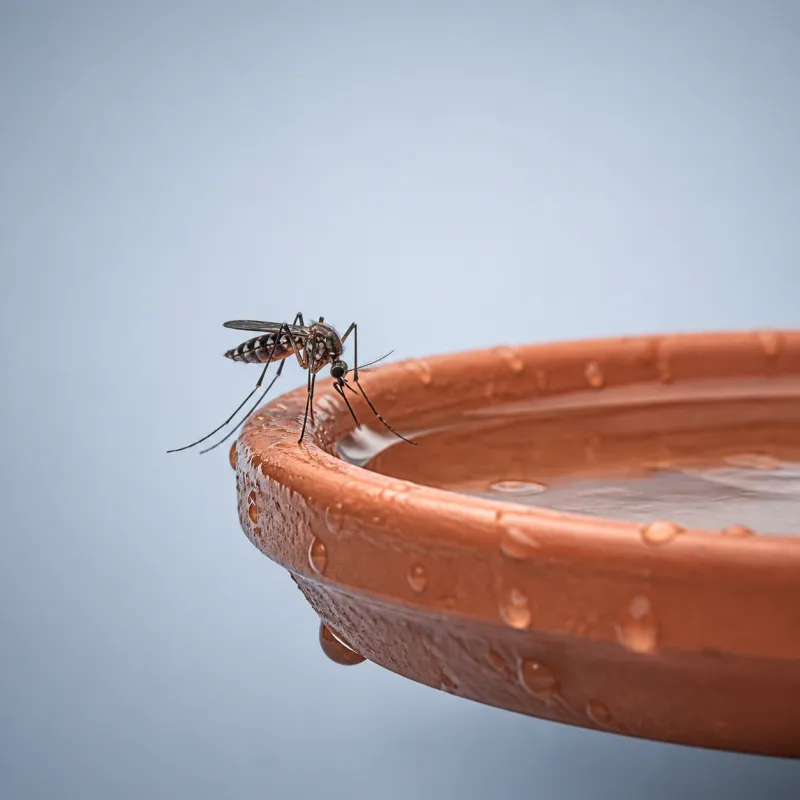
Bitten in broad daylight? Oklahoma State University Extension says the Asian tiger mosquito, the small black one with white stripes, lays eggs in buckets and flower pots, feeds mainly by day and prefers people. Its night-shift partner, the common house mosquito, likes fouled water, and OSU calls it probably the most common vector of West Nile virus. Two species, one job: find the water.
What one forgotten wheelbarrow costs by August
One forgotten container left through a Tulsa summer costs more than itchy ankles, and the worst version is worth picturing once.
It is a warm August evening. You are on the patio with a plate of burgers and the light is going gold over the fence. Behind the shed sits the wheelbarrow you meant to flip in June, holding three inches of tea-brown water over rotting leaves. Lean in and the surface twitches. Dozens of wrigglers jerk up and down, each one days from flying. Then the whine starts at your ear. You slap your neck and miss.
The dog is asleep on the cool concrete by the back door, because the dog is always outside. OSU lists the Asian tiger mosquito among the carriers of dog heartworm, which the American Heartworm Society describes as foot-long worms that live in the heart and lungs for five to seven years, causing severe lung disease and heart failure. It calls treatment expensive and complex.
Then there is West Nile. The common house mosquito works dusk to dawn, exactly when you are out there. Most infected people never feel sick, the CDC says, but severe illness gets likelier with age and chronic conditions, and there is no licensed vaccine or medicine for West Nile in people. In August 2025 the Tulsa Health Department confirmed the virus in one of its mosquito traps in north Tulsa, KTUL reported.
None of this needs a swamp. It needs one wheelbarrow nobody flipped.
The audit: twelve places Tulsa water hides
A backyard mosquito audit is one slow lap of the lot looking for anything that holds water, and the bird bath is the least of it. Walk it twice if you can, once on a dry afternoon and once the morning after a good rain, when every hiding spot is full.
| Where the water sits | Why it gets missed | The fix |
|---|---|---|
| Corrugated downspout extensions | Ridges and sags hold water out of sight | Swap for a smooth extension or splash block |
| Yard drains and pop-up emitters | Grass clippings plug the grate | Clear the grate, flush the line |
| Back and valley gutters | Invisible from the driveway | Clean, then run a hose to test the flow |
| Tree holes and rotted stumps | Look dry, hold a cup of rain | Fill them, as the CDC advises |
| Tarps over grills, boats, woodpiles | Every fold is a little pond | Pull taut or store under a roof |
| Recycling bins and trash cans | Rain pools in the bottom | Drill drain holes, keep lids shut |
| Tire swings and spare tires | Clemson flags swings without drain holes | Drill the swing, haul off old tires |
| Wheelbarrows, wagons, sandbox covers | Parked right side up behind the shed | Store upside down |
| Saucers and self-watering pots | Water sits below the soil line | Scrub weekly or skip the saucer |
| Rain barrels | Open top or torn screen | Seal or screen it, per the CDC |
| AC condensate lines, leaky hose bibs | One drip keeps a puddle alive all summer | Fix the drip or reroute the line |
| Low spots in the lawn | Floodwater mosquito eggs wait in damp soil | Fill the spots that puddle for days |
Older midtown yards with big oaks deserve a hard look at tree holes: OSU says the eastern treehole mosquito breeds there and is the primary vector of La Crosse virus.
The fixes you can make this weekend
Most backyard mosquito control is homeowner work, and a Saturday with a drill, a stiff brush and a hose beats any spray you could buy.
- Scrub, do not just dump. The CDC says Aedes eggs stick to container walls like glue and survive drying out for up to eight months. Tipping a saucer leaves them. A brush does not.
- Drill what you cannot flip. Tire swings, recycling bins, planters with no drainage. Two or three holes at the low point and it is fixed for good.
- Cover or screen what stays full. The CDC says to cover rain barrels tightly or use wire mesh with holes smaller than an adult mosquito.
- Fill the tree holes with sand or expanding foam, so they stop refilling every storm.
- Treat what you cannot drain with Bti. The EPA says Bti affects only the larvae of mosquitoes, black flies and fungus gnats and has no toxicity to people. The common dunk's EPA-registered label covers bird baths, fish ponds and rain barrels, up to 100 square feet of water for 30 days per dunk.
Clearing water cuts the mosquitoes born on your lot, but adults rest in shade, so the shrub line can stay buggy. Our Tulsa mosquito control page explains how a barrier treatment hits those resting spots, the same damp edges where ticks in Tulsa yards wait.
When DIY is not enough: five signs
A backyard mosquito problem is beyond do-it-yourself once the water is somewhere you cannot dump, reach or find. Five signs:
- Three weeks of weekly laps, still bitten by day. The CDC says the Asian tiger mosquito flies only a few blocks in its lifetime, so the source is close and still hidden: a buried drain line, a two-story gutter, a hollow fence post.
- Water you cannot drain. A pond, a drainage ditch or a corner that stays wet for over a week needs larvicide on a schedule.
- Wrigglers in something you cannot open. A sump pit, a catch basin, a cracked septic tank. The CDC says to repair septic cracks and cover vent pipes, not a Saturday job.
- Someone at higher risk at home. An older parent, a family member with a chronic illness or weakened immune system, or dogs that live outdoors.
- The source is next door. The Tulsa Health Department takes mosquito surveillance requests at 918-595-4200, and your own lot can still be treated.
If any of those sound like your yard, the sensible next step is a phone call, not another bag of granules. Call (844) 212-9836 and we connect you with a licensed local provider in your part of Green Country who can walk the property, find the water you missed and set up larvicide or a barrier program if the yard needs one. Around Tulsa a single barrier treatment typically runs roughly $75 to $125, and an April to October program roughly $400 to $800. Those numbers are typical ranges for Tulsa, not a quote.
The good news: this is the most fixable pest you have
Backyard mosquitoes are the most fixable pest problem a Tulsa homeowner has, because the breeding sites sit on your own lot and most cost nothing to fix. Termites do not let you dump them out.
Reading this in the fall? The National Weather Service office in Tulsa puts the average first freeze on November 3, but eggs glued to a saucer can outlast it. Scrub every pot and bucket once more, store them upside down, and April starts clean. After a big spring storm, our after-the-storm pest checklist for Oklahoma homes covers gutters and soggy soil, and the Tulsa pest control overview covers everything else that bites or chews.
How the call works
- Describe the problem. A recluse in a shoe, termite swarmers on a window sill, ticks coming in on the dog. A sentence or two is plenty.
- Get routed by ZIP code. The call lands with an independent, licensed company that already services your neighborhood, whether that is midtown Tulsa or Claremore.
- Set the appointment. Most companies can give you an inspection or treatment window before you hang up.
Whether a same-day or 24/7 visit is possible comes down to provider participation in your area, technician availability and demand on that day. It is never guaranteed, and open slots vary by market and by how full the schedule already is.
Frequently asked questions
What are the most common mosquito breeding sites in a backyard?
The most common backyard mosquito breeding sites are small containers holding rainwater: plant saucers, buckets, tires, wheelbarrows, toys, tarp folds, bird baths and clogged gutters. Oklahoma State University Extension says the Asian tiger mosquito prefers small containers such as buckets and flower pots. The ones people miss are tree holes, yard drains, corrugated downspout pipes and recycling bins with water in the bottom.
Are mosquito dunks safe to use in a bird bath or fish pond?
Mosquito dunks are labeled for exactly those spots. They contain Bti, which the EPA says affects only the larvae of mosquitoes, black flies and fungus gnats and has no toxicity to people. The common dunk label registered with the EPA lists bird baths, fish ponds and rain barrels, with each dunk treating up to 100 square feet of water for 30 days. Follow the label.
Why do I still have mosquitoes after dumping the water in my yard?
Mosquitoes that keep biting after a cleanup usually mean a source is still close by. The CDC says the Asian tiger mosquito and its cousin Aedes aegypti fly only a few blocks in their lifetime, so the water is likely in your yard or the next one over: a back gutter, a tree hole, a buried drain line. Tulsa County residents can request a mosquito surveillance inspection from the Tulsa Health Department at 918-595-4200.