

The short answer: chase the water, then the gaps
An Oklahoma spring storm pest checklist comes down to three jobs, in this order: get standing water off the property, dry out the soil and wood touching the house, and close every gap the wind or hail opened. Water breeds mosquitoes and draws termites. Gaps let in mice and anything bigger. The National Weather Service office in Tulsa counts May as the wettest month in northeast Oklahoma, so this list comes around more than once a season.
The termite half is the reason to bother. Oklahoma State University lists March, April and May as swarming months, with warm temperatures and spring rain as the trigger, and OSU entomologist Brad Kard puts it plainly: "Wet soil, and water around or under a house, creates conducive conditions for termite survival and proliferation." The storm is not the problem. The soggy week after it is.
What skipping the walk-around costs by July
Skipping the walk-around after a storm costs nothing the first week, which is exactly the trap. Here is the honest worst case for a Tulsa house, one corner at a time.
Start with the gutter over the back bathroom, the one that spills over every storm. The dirt under it stays dark and soft for days. One warm April afternoon you sweep a drift of clear wings off the windowsill and decide they were flying ants. Meanwhile, behind the tile, a subterranean colony is working through the sill plate in the dark while your family sleeps down the hall. No sound. No smell. Just wood being hollowed out from the inside. OSU's own warning is that termites left to feed inside the walls "can turn a small problem into a pain in the neck and a huge dent in the wallet," and Bankrate's homeowners insurance guide notes that standard policies generally exclude termite damage. Our Tulsa termite control page puts a full liquid treatment at $900 to $2,200, a typical market range, not a quote, and that is before anyone prices the lumber.

Then there is the soffit. Hail knocked one vented panel loose at the corner, and you meant to get the ladder out. The University of California IPM program says a house mouse can squeeze under a gap a quarter inch tall. By June there is a soft scratching over the bedroom ceiling at 2 a.m., right where the wire runs to the ceiling fan. UC IPM notes that mice gnaw wires inside walls, and that many fires of unknown origin are believed to be caused by rodents chewing on wiring.
And the backyard: the planter saucers, the kid's wagon, the tarp sagging over the grill. The CDC says the mosquito species able to spread viruses can build up two weeks to two months after heavy rain, even where nothing flooded. The Oklahoma State Department of Health puts West Nile risk highest from July through October. The bucket you ignored in May is breeding August.
None of this is exotic. It is what a wet Oklahoma spring does to a house nobody walked around.
The first-week checklist, outside in
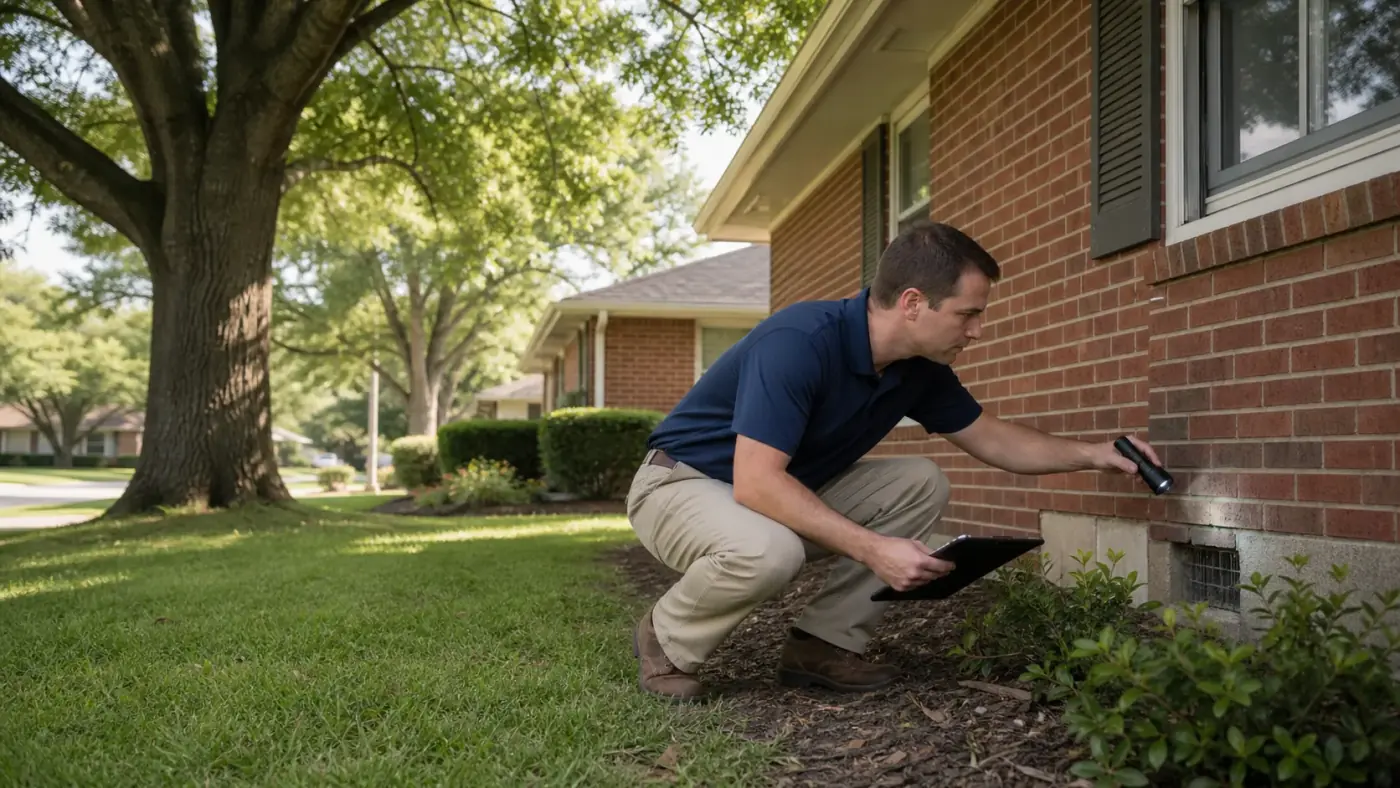
The first-week checklist after an Oklahoma storm is one slow lap around the house with a flashlight. On a one-story ranch it takes an hour.
| Where to look | What you are looking for | Why it matters |
|---|---|---|
| Gutters and downspouts | Leaves, shingle grit, overflow stains, downspouts emptying at the foundation | OSU says gutters should stay clear and water should drain away from the house |
| Pots, toys, tarps, bird baths | Anything still holding rainwater | The CDC says mosquitoes lay eggs in or near water |
| Mulch beds and soil along the slab | Ground that stays wet for days, mulch heaped against the brick | Wet soil is what OSU calls conducive conditions for termites |
| Foundation walls | Mud tubes a quarter to half an inch wide running up from the soil | OSU Extension describes these as termite travel tubes |
| Roofline, soffits and vents | Loose panels, torn screens, limbs resting on the roof | A gap a quarter inch tall is enough for a mouse, per UC IPM |
| Storm debris and woodpiles | Limbs and lumber stacked against the house | Shelter for rodents and termites, and the CDC warns snakes hide under debris |
| Kitchen, baths and under sinks | Ant trails, damp cabinet floors | MSU Extension says heavy rain can drive ants indoors |
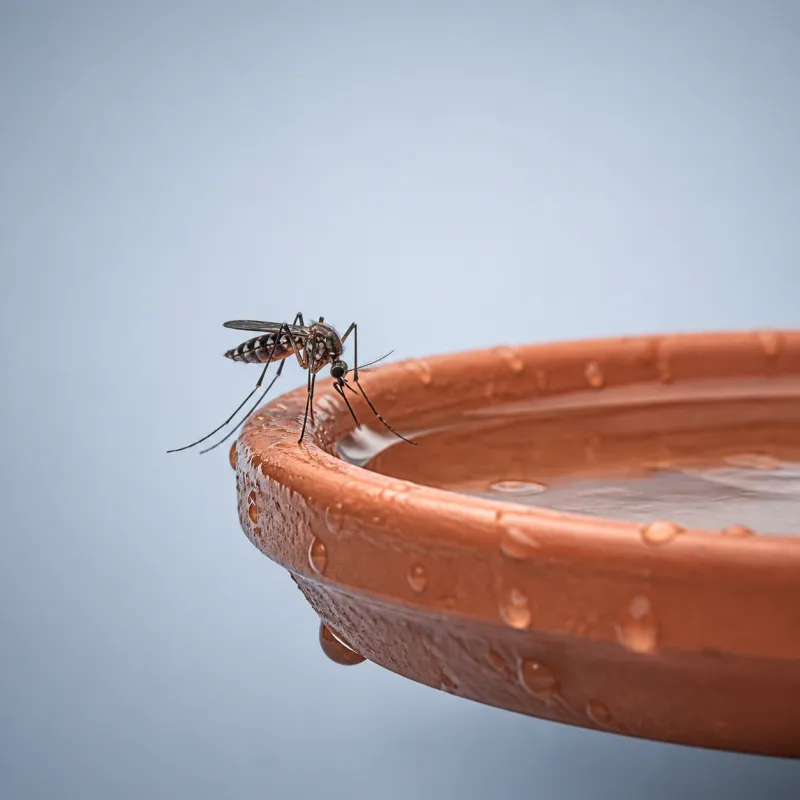
If you only do two rows, do the gutters and the woodpile. A clogged gutter feeds termites and mosquitoes at once, and our Tulsa mosquito control page lists the less obvious water spots. If the bites keep coming weeks after the storm, the backyard mosquito audit tracks down the drains, tarps and tree holes still holding water.
What you can fix yourself this weekend
Almost everything on that checklist is homeowner work, and a Saturday spent on it beats any spray you could buy. In this order:
- Gutters first. Scoop, flush, and add downspout extensions so water lands well away from the slab.
- Dump the water. Once a week, empty and scrub, turn over, cover or toss anything holding water, the CDC routine after floods.
- Pull the mulch back. Kard recommends raking mulch at least six inches away from the exterior walls and keeping firewood off the house.
- Close the gaps with the right stuff. Reattach soffit panels, replace torn vent screens, trim limbs off the roof. UC IPM says foam, rubber, vinyl and wood are ineffective for plugging holes, so use metal or concrete; our Tulsa rodent control page covers the usual entry points.
- Erase the ant trails. Mississippi State University Extension entomologist Santos Portugal suggests wiping trails with soapy water or vinegar, then baiting close to where they march. More ants for a day or two means it is working.
- Move debris like it has teeth. Gloves, boots, and a rake instead of bare hands. The CDC warns that snakes shelter under storm debris, and the Oklahoma Department of Wildlife Conservation places the copperhead across eastern and central Oklahoma. See one, back away slowly.

When DIY is not enough: five signs
A storm problem is beyond do-it-yourself once the pest is living in the structure rather than around it. Clean gutters will not evict a colony already in the wall. Five signs:
- Swarmers or loose wings indoors. Mississippi State University Extension calls termite swarmers inside a building a clear indication that the building is infested.
- Mud tubes on the foundation. Photograph them and leave them intact for the inspector.
- Noise or droppings overhead. Scratching at night, droppings in the attic, or chewed insulation on a wire.
- Ants that will not quit. Trails still running after two weeks of baiting, or big ants leaving damp wood, where Portugal notes carpenter ants nest.
- Something bigger moved in. Squirrels or raccoons using a storm-torn roofline. In Oklahoma, removing wildlife for pay takes a Nuisance Wildlife Control Operator permit from the Oklahoma Department of Wildlife Conservation.
If any of those describes your house, the sensible next step is a phone call rather than another hardware store run. Call (844) 212-9836 and we connect you with a licensed local provider in your part of Green Country who can inspect the structure, tell you what actually moved in and price the fix. One inspection settles whether those wings came from the stump in the yard or the wall by the tub.
The good news: most storms leave nothing behind
Most spring storms leave a Tulsa house with nothing worse than a gutter full of leaves and a rough week of mosquitoes, and an afternoon with a ladder handles both. The houses with real damage tend to be the ones where the same soggy corner got ignored three springs running. Yours does not have to be one.
If wings turned up this spring, our guide to termite swarm season in Oklahoma explains how to tell where they came from. If big roaches came up the drains after the rain, read the guide on American cockroaches and Tulsa storm sewers. Everything else starts with that one slow lap around the house.
How the call works
- Describe the problem. A recluse in a shoe, termite swarmers on a window sill, ticks coming in on the dog. A sentence or two is plenty.
- Get routed by ZIP code. The call lands with an independent, licensed company that already services your neighborhood, whether that is midtown Tulsa or Claremore.
- Set the appointment. Most companies can give you an inspection or treatment window before you hang up.
Whether a same-day or 24/7 visit is possible comes down to provider participation in your area, technician availability and demand on that day. It is never guaranteed, and open slots vary by market and by how full the schedule already is.
Frequently asked questions
Why do ants show up in the kitchen after a heavy rain?
Ants come inside after heavy rain looking for dry shelter, food and water, and Mississippi State University Extension entomologist Santos Portugal lists heavy rains among the extreme weather that drives them indoors. Wipe the trail with soapy water or a vinegar solution to remove the scent marks, then set a liquid bait close to where they march and expect more ants for a day or two before the numbers drop.
Do termites swarm after rain in Oklahoma?
Yes. Oklahoma State University lists March, April and May as the swarming months for termites in Oklahoma and ties swarming conditions to warming temperatures and spring rainfall. Swarmers seen outdoors may have come from a stump or the yard, but Mississippi State University Extension calls swarmers inside a building a clear indication that the building is infested.
How soon after a storm do mosquitoes get bad?
Usually within the following few weeks. The CDC says floodwater mosquitoes hatch in very large numbers in the weeks after flooding, though most are nuisance biters that do not spread disease. The species that can spread viruses may build up two weeks to two months after heavy rain, and the Oklahoma State Department of Health puts West Nile risk highest from July through October, so emptying containers weekly in spring pays off in late summer.